

Window replacement for mountain homes involves considerations that differ from projects at lower elevations. In Colorado’s high-altitude communities, homeowners contend with stronger UV exposure, wider daily temperature swings, frequent freeze–thaw cycles, higher wind events, and seasonal snow loads. These conditions shape how window systems are specified, measured, and installed, and they often influence the planning process more than homeowners initially expect.
Rather than assuming a single solution applies to every property, mountain homeowners benefit from understanding how elevation, exposure, and access conditions interact with window materials and installation practices. This article outlines key factors commonly considered when planning window replacement in Colorado’s mountain environments, helping homeowners approach the process with clearer context and realistic expectations.
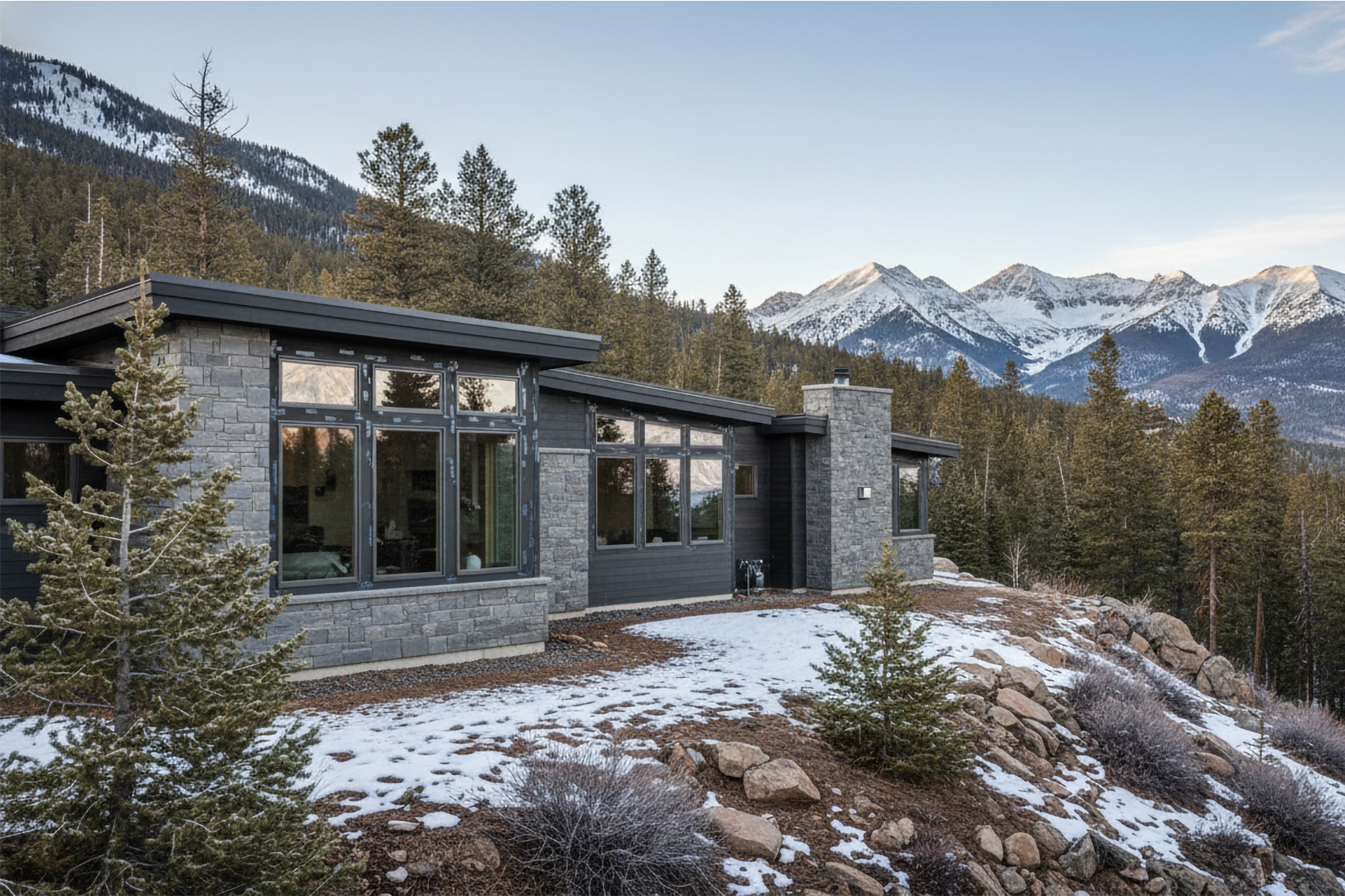
Why Mountain Climate Changes the Window Replacement Conversation
At higher elevations, sunlight intensity is often greater throughout the year, which can influence how exterior surfaces and finishes change visually over time. Mountain homes also experience wider temperature variations between daytime warmth and nighttime cold, leading to repeated expansion and contraction cycles within building components. These cycles are part of the normal environmental conditions mountain homes experience and are often considered during product selection and installation planning.
Freeze–thaw patterns are another common characteristic of mountain regions. Moisture may enter small gaps during warmer periods and then freeze as temperatures drop again, which is why water-management detailing is typically emphasized in these environments. Wind exposure and snow accumulation are also common considerations, as they influence how openings are secured and how surrounding materials are detailed to account for pressure changes and prolonged snow contact.
How Frame Materials Behave in Mountain Conditions
Window frame materials respond to temperature changes, sunlight exposure, and environmental conditions in different ways. Understanding these behavioral differences helps homeowners evaluate how various materials may interact with mountain climates without assuming uniform outcomes.
Fiberglass frames expand and contract at a rate similar to glass, which affects how the frame and glazing move together as temperatures change. Wood is a natural material whose movement is influenced by both temperature and moisture conditions, making surface protection and interior environment considerations part of long-term ownership. Vinyl responds to temperature changes differently than fiberglass or wood, which is why measurement timing and installation detailing are often discussed when vinyl is considered for high-swing climates. Aluminum frames are structurally rigid and conduct heat readily, so design features such as thermal separation are commonly reviewed as part of comfort planning in colder environments.
These material characteristics are not indicators of superiority or deficiency; rather, they describe how different materials interact with environmental conditions commonly found in mountain homes.
Measurement Timing and Seasonal Conditions
In mountain regions, measurement timing is often given additional attention because frame temperatures can vary significantly depending on weather, sun exposure, and time of day. Openings measured during very cold periods may present differently than those measured under moderate conditions, and shaded elevations of a home may remain colder longer than sun-exposed areas.
Because installation timelines in mountain areas may span different seasons, professionals often document measurement conditions and consider how seasonal variation fits into the overall project plan. This approach helps align expectations around ordering, scheduling, and installation without assuming a single “ideal” measurement scenario applies to every home.
Installation Considerations for Mountain Homes
Installation practices in mountain environments are commonly planned with local exposure conditions in mind. Moisture management, air-sealing strategies, and attachment methods are reviewed in the context of wind, snow, and temperature movement rather than relying on assumptions drawn from lower-elevation installations.
Attention is often given to how windows integrate with existing wall systems, how drainage paths are addressed, and how materials are detailed to account for environmental exposure. These considerations are part of a broader planning process that recognizes mountain homes experience different stresses than homes in more moderate climates.

Project Planning and Scheduling at Elevation
Mountain window replacement projects may involve additional logistical considerations related to access, weather windows, and seasonal conditions. Snowfall, road access, and temperature swings can influence when work is scheduled and how long projects take to complete.
For this reason, planning often includes flexibility around installation timing and coordination with weather patterns. Taking these factors into account early helps homeowners and installers approach the project with realistic expectations.
Additional Resource Before You Continue
For broader context on how window systems change over time and what factors influence aging and performance considerations, the following resource provides helpful background:
Reviewing this article alongside mountain-specific considerations helps connect environmental exposure with the broader factors that influence how windows are used and maintained in Colorado homes.
Our Take
At Five Seasons Windows & Doors, we work with homeowners across Colorado’s mountain communities and foothill regions, where elevation, exposure, and access vary widely from home to home. In these environments, window replacement planning often benefits from a site-specific approach that considers local conditions rather than applying uniform assumptions.
When homeowners understand how climate, materials, and installation practices interact, they are better positioned to make choices that reflect their home’s location and use patterns. Mountain projects are not inherently more complex, but they often involve considerations that differ from standard low-elevation replacements.
Final Takeaway
Window replacement for mountain homes involves planning around Colorado’s high-altitude conditions, including UV exposure, wind, snow, freeze–thaw cycles, and daily temperature swings. By recognizing how different materials respond to environmental factors, giving appropriate attention to measurement timing, and planning installation around realistic mountain conditions, homeowners can approach replacement projects with clearer expectations.
Thoughtful preparation and professional guidance help ensure window replacement decisions align with the realities of mountain living, without assuming uniform outcomes across every home or environment.
Get Started Today
Five Seasons Windows & Doors is Colorado’s top-rated local window company with 230+ 5-star reviews. We offer expert advice, no-pressure quotes, and flexible project options — including phased installs. Schedule your consult today.