

Low-E glass, short for low-emissivity glass, uses a microscopically thin metallic-oxide coating to reflect heat and most ultraviolet light back toward its source while still letting visible light pass through. For a Denver home sitting more than a mile above sea level, that selective filtering is what stands between the interior of your home and the unusually intense sun that defines the Front Range. The right Low-E coating reduces summer heat gain, slows winter heat loss, and blocks most of the UV that fades furniture and finishes, all without dimming the daylight that makes Colorado homes feel like Colorado homes.
The reason this matters more in Denver than in most of the country is altitude. The Environmental Protection Agency notes that UV radiation increases by roughly 2 percent for every 1,000 feet of elevation gain, which puts Denver's UV exposure about 10 to 12 percent higher than at sea level on any given day. The Skin Cancer Foundation places that increase higher still, at 4 to 5 percent per 1,000 feet, which would put the mile-high city closer to 25 percent above sea-level UV. Either figure paints the same picture: more UV, more often, year-round, with the high desert sky doing less to slow it down before it reaches your windows.
This guide explains what Low-E glass actually does, why high-altitude sun makes the right Low-E choice meaningful here, how the coatings differ between climates, and what to look for when comparing glass packages on a Denver replacement project. The science is well understood, the technology is mature, and the difference a well-chosen Low-E package makes in a Front Range home is real and measurable.
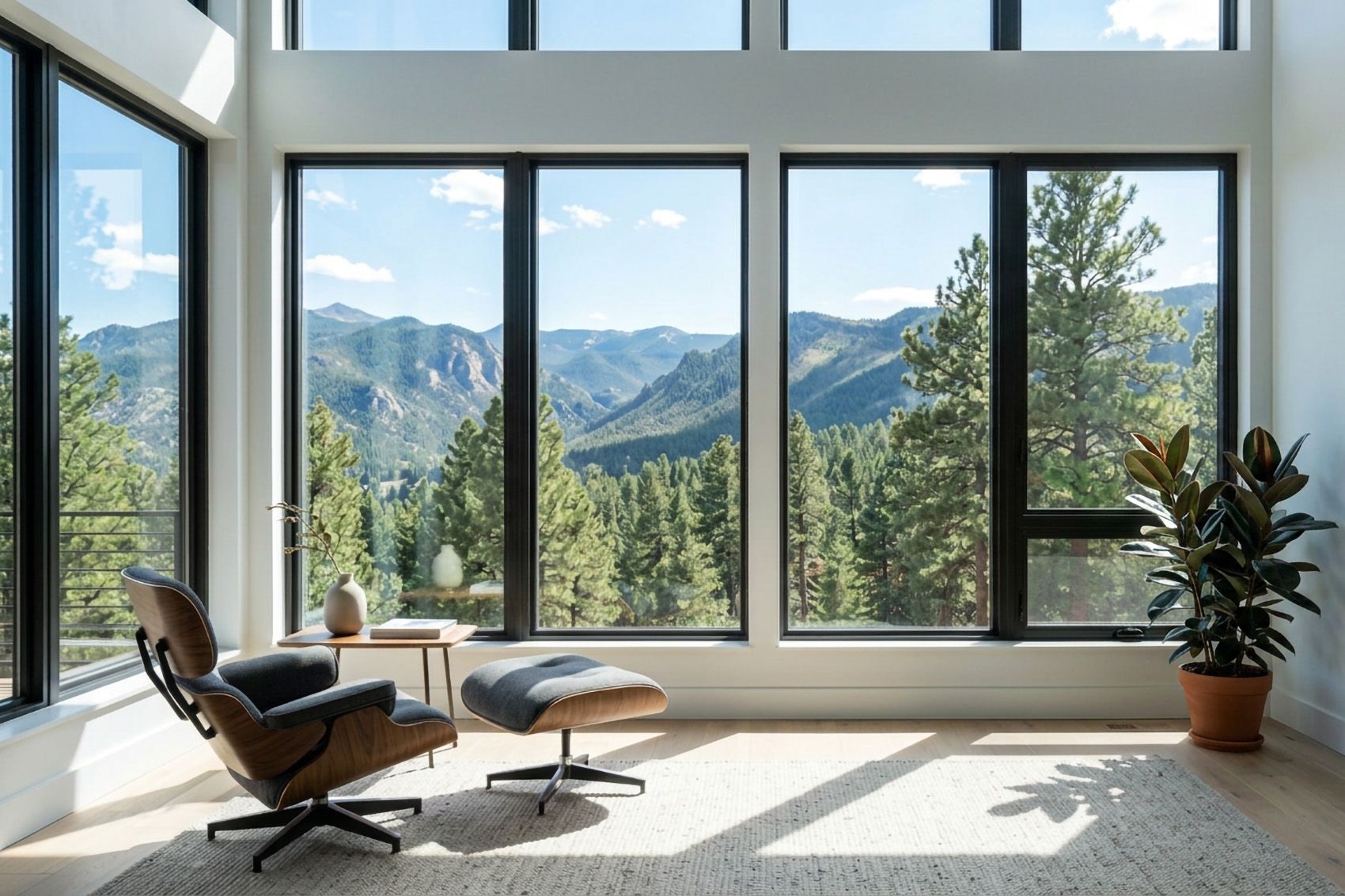
What Low-E Glass Is and How It Works
The Coating Itself
A Low-E coating is a microscopically thin layer of metallic oxides applied to the surface of the glass, often only nanometers thick, that changes how the glass interacts with different wavelengths of light. Visible light, the part our eyes can see, passes through largely unchanged, which is why a Low-E window looks like a normal window. Infrared radiation, the wavelengths that carry heat, and ultraviolet radiation, the wavelengths that fade fabrics and damage skin, are reflected rather than transmitted.
The result is a window that behaves selectively. It lets in the daylight you want, blocks much of the heat and UV you do not, and reflects interior heat back into the room in winter so it stays where you want it. Standard clear glass, by contrast, has an emissivity around 0.84, meaning it readily passes heat in both directions. Low-E glass with its coating has a much lower emissivity, which is the property that gives it its name and its performance.
Two Types of Low-E, Two Climates
Not all Low-E coatings are designed for the same job. The industry generally separates them into two categories. Passive Low-E, also called pyrolytic or hard-coat, is applied during glass manufacturing and is optimized for cold climates, where the priority is letting solar heat in to help warm the home while still reducing heat loss. Solar control Low-E, also called sputtered or soft-coat, is applied after manufacturing inside a sealed insulating unit and is optimized for warm climates, where the priority is keeping solar heat out to reduce cooling loads.
Denver sits in an interesting middle ground. The winters are cold and long enough that some passive solar heat gain is genuinely useful, especially through south-facing windows. The summers are hot and the sun is intense enough that excessive heat gain can drive cooling bills higher than necessary. Many Colorado homes therefore benefit from balanced or multi-layer Low-E coatings that thread the needle, or from different Low-E specifications on different orientations of the house. A skilled installer treats the glass package as something to match to the home and the openings, not as a one-size-fits-all default.
Why High-Altitude Sun Changes the Equation
More UV, Reaching More of Your Home
At sea level, the atmosphere absorbs a substantial portion of the sun's UV radiation before it ever reaches the ground. The thinner air at Denver's elevation absorbs less of it, which is why dermatologists, sunscreen brands, and weather services all flag high-altitude UV as a real and underestimated concern. The same physics that matters for skin matters for the interiors of your home. UV is what causes hardwood floors near south-facing windows to lighten over time, fabrics to fade, leather to dry and crack, and artwork to lose its tone.
Guardian Glass, one of the major glass manufacturers, attributes roughly 50 percent of interior furnishing and fitting fading to UV exposure. That figure assumes a typical climate; in Denver, with UV running noticeably higher than the national average, the share is meaningfully larger for an unprotected interior. A standard untreated double-pane window passes most UV through. A window with a quality Low-E coating blocks the great majority of it, often well over 70 percent depending on the specific coating, and laminated glass options can push UV blocking close to 99 percent.
Heat Without Asking for It
The other half of the high-altitude story is heat. Untreated clear glass has a solar heat gain coefficient, or SHGC, of roughly 0.80, meaning about 80 percent of the solar heat striking the window passes through into the room. Real-world starting points are lower because existing double-pane windows already cut some of that, but on a clear July afternoon in Denver, with the sun at its high-altitude strongest, a great deal of unwanted heat still pours through every south- and west-facing window in the house, especially when the existing glass is older or single-pane. Cooling systems compensate, electricity bills climb, and rooms with significant glazing get uncomfortable.
Low-E coatings designed for solar control bring that SHGC down substantially, with options that fall in the 0.20 to 0.40 range depending on the package. The visible light still comes through, the rooms still feel bright and connected to the outside, but the heat is reflected rather than absorbed. For a Denver homeowner, that translates directly into a more comfortable home in summer and a smaller cooling bill, both of which compound year after year for as long as the window is in service.
How Low-E Fits Into a Colorado Window Project
What the Label Tells You
Every Energy Star certified window carries an NFRC label that lists the key performance numbers, including U-factor (the rate of heat loss through the window), SHGC (the share of solar heat transmitted), visible light transmittance, and air leakage. For a Colorado homeowner, the U-factor and SHGC are the two numbers worth understanding most clearly. A lower U-factor means better insulation. A lower SHGC means less unwanted summer heat, while a moderately higher SHGC can help capture useful winter solar gain on the right elevations.
Energy Star Version 7.0 sets the maximum allowable U-factor and the SHGC range for products certified for the Northern Climate Zone, which Colorado now requires for any new window sold in the state. Any window meeting that standard will have a Low-E coating; the question is which Low-E package and how its numbers fit the home. For a fuller view of how the 2026 law, altitude, frame materials, and resale all fit together, our Ultimate Guide to Window Replacement in Denver: 2026 Edition covers the broader picture.
Matching the Glass to the Home
A well-designed replacement project does not put the same glass package in every opening. South- and west-facing windows take the brunt of the summer sun and benefit from lower SHGC coatings that limit heat gain. North-facing windows see far less direct sun and can use packages that prioritize visible light and insulation over solar control. East-facing windows fall somewhere between, with morning sun that is meaningful but rarely overwhelming. A larger picture window in a south-facing living room is a different problem from a small bathroom window on the north wall.
Triple-pane configurations, increasingly common under the current Energy Star standard, give designers another lever for fine-tuning performance because each pane can carry its own Low-E layer. The most advanced packages stack multiple Low-E surfaces to push U-factor and SHGC numbers well below what double-pane glass can achieve. Whether that level of performance is the right investment for a particular home depends on the budget, the climate exposure of each window, and how long the homeowner plans to stay, all of which a thoughtful consultation should weigh.
Beyond the Numbers, What Low-E Actually Feels Like
Comfort You Notice Every Day
Performance ratings on a label do not always translate intuitively to daily experience, but Low-E glass changes how a home actually feels in ways homeowners notice quickly. Rooms with significant south- or west-facing glass stop getting uncomfortably hot in summer afternoons. Spots near windows in winter no longer feel cold or drafty even when the glass surface is right next to you. Curtains and blinds, which many homeowners rely on to manage glare and heat, become optional rather than necessary, opening up rooms visually and letting more natural light in throughout the day.
This is one of the underappreciated arguments for investing in a quality Low-E package rather than the minimum that meets the standard. The functional difference between a basic Northern Zone-compliant Low-E and a premium multi-layer package is not just on the label; it is in how the house lives day to day across Colorado's full range of weather.
Protecting What's Inside
The fading question is worth a moment of its own, because it is one of the slowest-moving but most cumulative costs of underperforming windows. Hardwood floors near unprotected glass lighten unevenly over years. Rugs near south-facing windows develop bleached patches that are obvious once you see them. Upholstery, leather, artwork on display, and even paint on walls all gradually lose their depth and color under steady UV exposure. None of this is dramatic in any given week, which is part of why it goes unaddressed.
A quality Low-E coating, particularly one paired with laminated glass on the most exposed openings, dramatically slows this kind of damage. For homes with valuable artwork, fine furniture, or simply finishes the owners want to keep looking new, the UV protection is part of why Low-E pays back over the long life of the windows, not just on the next utility bill.
People Also Ask About Low-E Glass in Denver
1. Does Low-E glass make my home look darker inside?
No, not in any noticeable way for modern coatings. Quality Low-E glass is designed to maintain high visible light transmittance, meaning the daylight passing through looks essentially the same as through clear glass. Some coatings introduce a very slight tint that most homeowners do not detect once the window is installed, and many Low-E units are visually indistinguishable from untreated glass to the naked eye.
The selectivity is the point. Low-E coatings reflect the parts of the solar spectrum you do not want, namely infrared heat and ultraviolet light, while letting the visible spectrum through. A Denver home with quality Low-E windows feels just as bright and connected to the outdoors as one with standard glass, while staying cooler in summer and warmer in winter.
2. Does Low-E glass block enough UV to prevent fading?
It blocks the majority of it, which is a substantial improvement over untreated glass. A typical Low-E coating blocks well over 70 percent of UV in most products, and high-performance packages with multiple Low-E layers or laminated glass can push UV blocking close to 99 percent. That kind of reduction dramatically slows the fading of floors, furniture, fabrics, and artwork compared to standard double-pane glass.
Even the best windows do not block 100 percent of UV, and fading from cumulative exposure can still happen slowly over decades. For most Colorado homes, however, a quality Low-E package combined with sensible use of window coverings on the most exposed elevations is a substantial level of protection that addresses the bulk of the concern.
3. What's the difference between Low-E and tinted glass?
They are different technologies that solve overlapping problems. Tinted glass absorbs solar energy and reduces visible light transmittance, which makes the interior darker and the glass itself look colored from outside. Low-E coatings reflect specific wavelengths while keeping visible light transmittance high, so the glass looks normal and the room stays bright. Tint can be useful in specific commercial or specialty applications, but for residential windows in Colorado, Low-E is the standard approach because it controls solar heat and UV without dimming the home.
Some premium glass packages combine Low-E with subtle tints or specialty interlayers for particular performance goals. These are specialized choices that a window professional can walk through based on a specific home's needs, but for the vast majority of Denver replacements, a well-chosen Low-E coating handles the job on its own.
4. Are all Low-E windows the same?
No. The category covers a wide range of products, from basic single-layer pyrolytic coatings that meet minimum efficiency requirements to advanced multi-layer sputtered coatings stacked across multiple panes for premium performance. The difference shows up in the NFRC label numbers, in how the glass performs across Colorado's seasonal extremes, and in the longevity of the coating itself when properly sealed inside an insulating glass unit.
Manufacturers also tune their Low-E offerings differently. Some specialize in high solar gain coatings for cold climates; others optimize for low solar gain in cooling-dominant regions. The best Low-E choice for a particular Denver home depends on its orientation, glazing area, and how it actually uses each room. A general assumption that "Low-E is Low-E" misses meaningful performance differences worth understanding before buying.
5. How long does a Low-E coating last?
When properly sealed inside an insulating glass unit, a Low-E coating is engineered to last the full service life of the window, which for quality products typically spans decades. The coating sits on a glass surface inside the sealed airspace between panes, protected from weather, abrasion, and the chemicals that would degrade an exposed coating. As long as the IGU seal remains intact, the Low-E performance does not degrade in any meaningful way.
This is one of the reasons sealed unit quality and installation matter so much in Colorado. A failed seal, particularly at altitude where pressure differentials work harder on the unit, can compromise the gas fill that supports the Low-E's performance and shorten the practical life of the glass package. Quality construction and quality installation are what let a Low-E coating do its job for as long as the window is in the wall.
Our Take
At Five Seasons Windows & Doors, the conversation about glass packages is often where a window project gets interesting. The 2026 efficiency standard means every new window sold in Colorado now has a Low-E coating of some kind; what separates a basic window from one that actually performs in this climate is which Low-E package, how many layers, and how well it is matched to the home and its orientations. That is where good consultation pays off and where homeowners get real value beyond simply meeting the minimum.
We work with the brands we trust most for Colorado homes, Marvin, ProVia, and Anlin, each of which offers quality Low-E packages. For homeowners who want premium glass performance paired with architectural quality, the Marvin Signature collection, especially the Ultimate line, offers the advanced glazing and engineering that suit the most demanding Front Range applications, from large south-facing picture windows to specifications where look and performance both need to be best in class. It is also the line that most reflects the detail we bring to a project.
What we would tell any Colorado homeowner is that the label numbers tell part of the story, but the experience of living with the right glass package is what makes the difference real. A well-chosen Low-E window does not announce itself; it just makes the home cooler in July, warmer in January, and protects everything inside from the intensity of the Mile High sun. Talking through the orientation of each opening, the budget, and what the home actually needs lets us match the glass package to the home rather than selling a single product to every customer.
Final Takeaway
Low-E glass is the technology that makes a window actually fit Denver's climate rather than just meeting a minimum efficiency requirement. The thin metallic-oxide coatings reflect heat and most ultraviolet light while letting visible daylight through, and at a mile above sea level, where UV runs 10 to 25 percent higher than at sea level depending on the methodology, with EPA figures landing at the lower end and Skin Cancer Foundation figures at the upper end, that selective filtering is what protects the interior of your home from a sun that simply hits harder here.
The science is mature, the standards are clear, and the right Low-E package can be matched to the orientation and use of each opening rather than applied as a one-size-fits-all default. Solar control coatings reduce summer heat gain on south- and west-facing windows; passive coatings preserve useful winter solar gain where it makes sense; multi-layer packages push performance further for homes that want the best the technology offers. Combined with current Energy Star Northern Climate Zone certification, a thoughtfully specified Low-E package supports a home that stays comfortable across Colorado's seasonal extremes and protects interiors from cumulative UV damage over decades.
For a Denver homeowner planning a replacement project, the Low-E conversation is worth having early and in detail. The minimum that meets code is real progress over older glass, but the difference between minimum and well-specified shows up every summer afternoon and every winter morning the home is lived in. Choosing well, and matching glass to home, is how a window does its real job once it is in the wall.
Get Started Today
Five Seasons Windows & Doors is Colorado’s top-rated local window company with 230+ 5-star reviews. We offer expert advice, no-pressure quotes, and flexible project options — including phased installs. Schedule your consult today.