

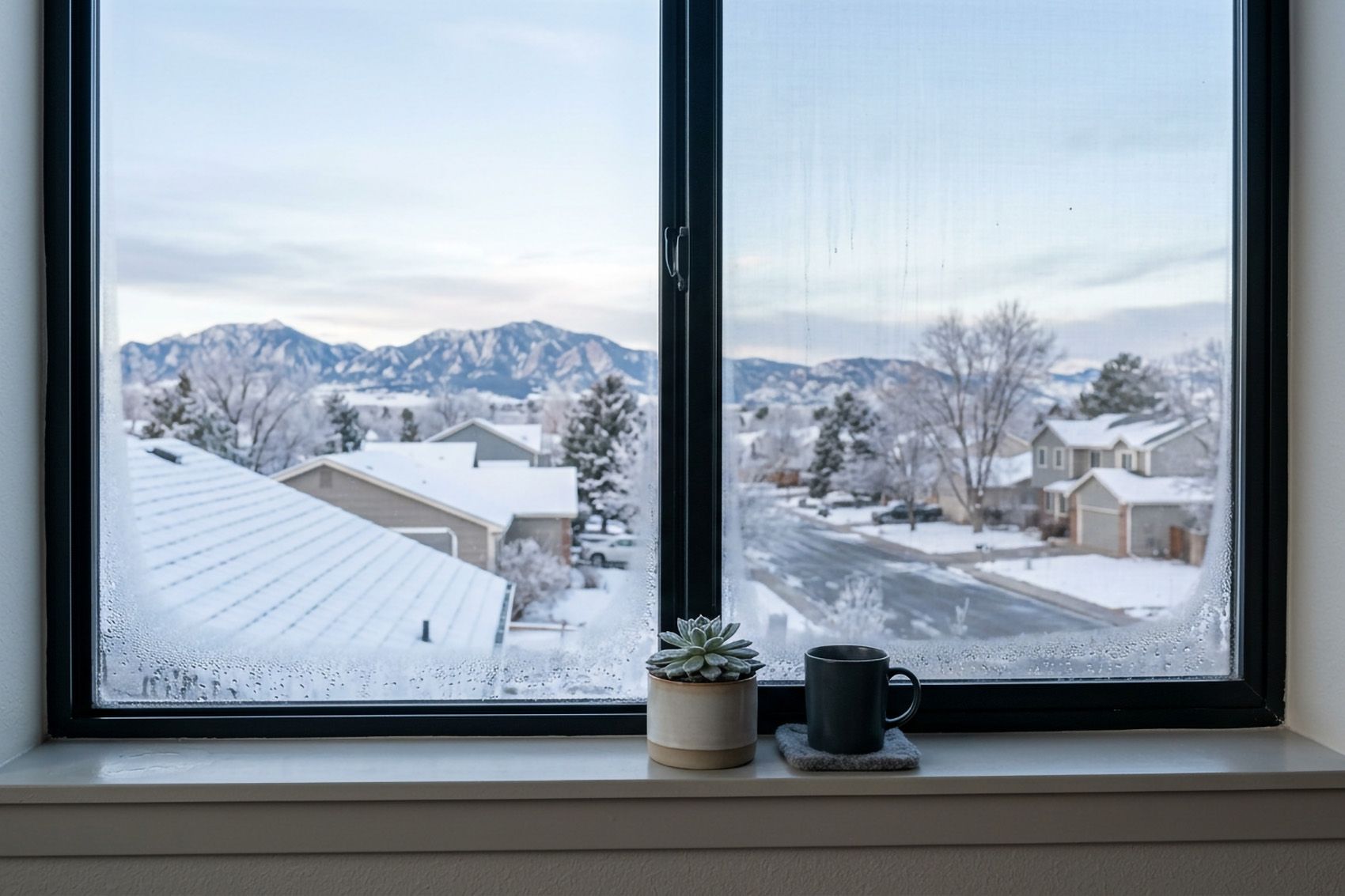
Yes, window condensation is usually normal and often a sign your windows are working properly. Condensation forms when a glass surface drops below the dew point of the air touching it. Interior condensation appears on the inside during cold weather when humid indoor air meets cold glass, exterior condensation appears outside on cool mornings as ordinary dew, and only moisture trapped between the panes signals an actual window problem. In Colorado's dry climate, interior sweat is less common than in humid regions but still occurs during cold snaps or in moisture-heavy rooms.
Condensation confuses many homeowners because it looks like a defect when it often is not. That foggy film on the glass, the droplets gathering at the corners, the morning dew on the outside pane all have straightforward physical explanations rooted in temperature and humidity. Understanding which type you are seeing tells you whether to adjust something in your home, do nothing at all, or call a professional.
This guide explains the science behind window sweat, distinguishes the three types you might encounter, and addresses how Colorado's characteristically dry air changes what homeowners should expect compared to more humid parts of the country.
The Science of Window Condensation
What Dew Point Actually Means
Condensation comes down to a single physical principle: air holds moisture, warm air holds more moisture than cold air, and when air cools to a certain temperature, it can no longer hold all its moisture. That temperature is the dew point, and when any surface drops below it, water vapor in the surrounding air turns to liquid on that surface.
This is the same phenomenon you see when a cold drink sweats on a summer day or when your bathroom mirror fogs after a hot shower. The glass or mirror sits below the dew point of the humid air around it, so water condenses out of that air onto the cool surface. Windows behave exactly the same way, with the glass acting as the cool surface where moisture collects.
The dew point rises as humidity increases. Air carrying more moisture reaches saturation at a higher temperature, meaning condensation can form on relatively warmer surfaces. Air carrying less moisture, as is typical in Colorado, has a lower dew point, requiring colder surfaces before condensation appears. This is why the state's dry climate affects how often homeowners see window sweat.
Why Windows Are Where It Shows
Windows are frequently the coldest interior surfaces in a home during winter and among the surfaces most exposed to outdoor conditions. Glass conducts temperature more readily than insulated walls, so the interior glass surface tends to run colder than nearby walls in cold weather. This makes windows the first place indoor moisture condenses when conditions are right.
The corners and bottom edges of windows typically show condensation first. These areas are hardest for warm indoor air to reach and sit closest to the spacers separating the glass panes, which can conduct outdoor cold more readily than the center of the glass. As a result, moisture tends to appear at the edges before spreading across the pane.
Understanding that windows reveal condensation because of their temperature, not because of a defect, reframes the whole phenomenon. The window is often simply the messenger, showing where indoor humidity meets a cold surface or where outdoor dew settles on a cool morning.
The Role of Temperature Difference
The greater the difference between indoor and outdoor temperatures, the colder the glass surfaces become and the more likely condensation is to form. On a bitterly cold Colorado night, the interior glass surface drops closer to the outdoor temperature, increasing the chance that humid indoor air will condense on it. The colder the night, the more condensation may appear, sometimes even freezing into frost.
This temperature dynamic explains why condensation is largely a cold-season phenomenon for interior glass and a cool-morning phenomenon for exterior glass. The conditions that create the temperature differences necessary for condensation align with specific weather patterns rather than occurring randomly.
Window efficiency also influences where and when condensation appears, which is why modern energy-efficient windows sometimes surprise homeowners with exterior dew that older windows never showed.
Interior Condensation: What It Tells You
Why It Happens
Interior condensation forms when warm, humid indoor air contacts the cold interior glass surface during cold weather. The moisture in that indoor air condenses onto the glass once the surface drops below the air's dew point. This is most common during fall and winter, particularly during cold snaps when outdoor temperatures plunge and interior glass surfaces cool accordingly.
The moisture itself comes from ordinary household activities. Cooking, showering, washing dishes, doing laundry, and even breathing and perspiration all add water vapor to indoor air. Houseplants contribute moisture too. In a tightly sealed modern home, this moisture accumulates rather than escaping, raising indoor humidity and, with it, the dew point at which condensation forms.
Interior condensation therefore reflects indoor humidity levels more than window quality. When it appears consistently, it usually indicates that indoor air holds more moisture than the cold glass can tolerate without condensing, pointing toward humidity management rather than window replacement.
What To Do About It
Managing interior condensation centers on controlling indoor humidity. During cold months, keeping relative humidity in a moderate range, often cited as roughly 30 to 35 percent, helps prevent condensation on even well-insulated windows. Higher humidity raises the dew point and increases the likelihood of moisture forming on cold glass.
Ventilation is the most direct remedy. Running kitchen and bathroom exhaust fans during and after moisture-producing activities removes humid air before it spreads. Opening windows briefly to exchange stale humid air for drier outdoor air helps, particularly in Colorado where outdoor air tends to be dry. Improving air circulation so warm air reaches window surfaces also reduces condensation at the cold edges.
For homes where humidity remains persistently high, a dehumidifier can actively lower moisture levels. Addressing the moisture source matters because persistent interior condensation, left unchecked, can contribute to problems like mold growth or damage to wood sills and frames over time.
When Interior Condensation Signals Concern
Occasional interior condensation during extreme cold is normal and not cause for alarm. The concern arises when it becomes persistent or excessive, especially on newer energy-efficient windows. Consistent interior fogging on quality windows typically indicates indoor humidity running higher than ideal rather than a window fault.
Left unaddressed, chronic moisture can lead to real consequences. Water pooling on sills can damage wood, and sustained high humidity encourages mold and mildew. These outcomes are why interior condensation, while usually a humidity signal rather than a window defect, deserves attention when it persists.
In Colorado's generally dry climate, persistent interior condensation is less common than in humid regions, so when it does appear consistently, it often points to a specific moisture source worth identifying, whether a humidifier running too high, inadequate ventilation, or a moisture-heavy room.
Exterior Condensation: Usually Good News
Why It Forms on the Outside
Exterior condensation appears on the outside glass surface, typically on cool, clear mornings following cooler nights. It forms when the exterior glass drops below the dew point of the outdoor air, causing moisture to condense on it just like dew forming on grass or on a car windshield overnight. As the sun rises and warms the air and glass, this condensation evaporates naturally.
This type of condensation is most common in spring and fall when humidity levels are higher and cool nights precede warmer days. Homeowners may notice it only a handful of times a year, appearing in the morning and vanishing as temperatures climb. It reflects outdoor atmospheric conditions rather than anything happening inside the home.
The key insight is that exterior condensation forms on the outside of the glass, meaning indoor moisture plays no role. It is purely a product of outdoor temperature and humidity interacting with a cool glass surface, the same way dew settles on any outdoor surface overnight.
Why It Signals Efficiency
Exterior condensation is often a sign that windows are performing well. Energy-efficient windows insulate so effectively that they keep interior heat from escaping to warm the exterior glass. As a result, the outside pane stays closer to the cold outdoor temperature, dropping below the dew point and collecting dew.
Older, less efficient windows leak heat outward, warming the exterior glass enough to prevent it from reaching the dew point. That is why homeowners who upgrade to efficient windows sometimes notice exterior condensation they never saw before. The dew is not a defect but rather evidence that the new windows are retaining heat as designed, keeping warmth inside where it belongs.
Reframing exterior condensation as a performance indicator rather than a problem helps homeowners appreciate it. The window is acting like a well-insulated exterior wall, keeping heat in and letting the outer surface behave like any other cool outdoor surface at dawn.
What To Do About It
Exterior condensation requires no action. It is an atmospheric phenomenon that resolves on its own as the sun warms the glass through the morning. Since outdoor surfaces regularly get wet from rain and dew anyway, this moisture causes no harm to a properly functioning window.
Homeowners bothered by the temporary morning appearance have limited options because the cause is outdoor conditions beyond easy control. Factors like nearby trees, shrubs, or shading can slightly influence how much dew forms, but generally the phenomenon simply runs its course as the day warms.
The practical takeaway is reassurance. Seeing dew on the outside of your windows on a cool Colorado morning means the windows are insulating well, and the moisture will disappear without any intervention as temperatures rise.
Condensation Between the Panes: The Real Warning Sign
What It Indicates
The one type of condensation that signals a genuine problem is moisture forming between the glass panes of a sealed insulated unit. Modern windows use two or more panes with a sealed space between them, often filled with insulating gas. When that hermetic seal fails, moisture enters the sealed space and condenses where you cannot wipe it away.
This between-panes fogging appears as persistent cloudiness or droplets trapped inside the unit, visible but unreachable. Unlike surface condensation that wipes off or evaporates, this moisture stays because it exists within the sealed assembly. No amount of cleaning removes it because the water is inside the glass unit itself.
Seal failure means the window has lost the insulating performance it was designed to provide. The gas fill escapes, moisture intrudes, and the unit no longer performs as intended. This is a structural failure of the glass unit rather than a humidity or atmospheric issue.
Why It Happens and What To Do
Insulated glass seals can fail over time due to age, temperature cycling, manufacturing issues, or the pressure stresses that affect windows, particularly at Colorado's elevations. Once the seal breaks, the problem cannot be reversed by managing humidity or ventilation because the moisture is sealed inside the unit.
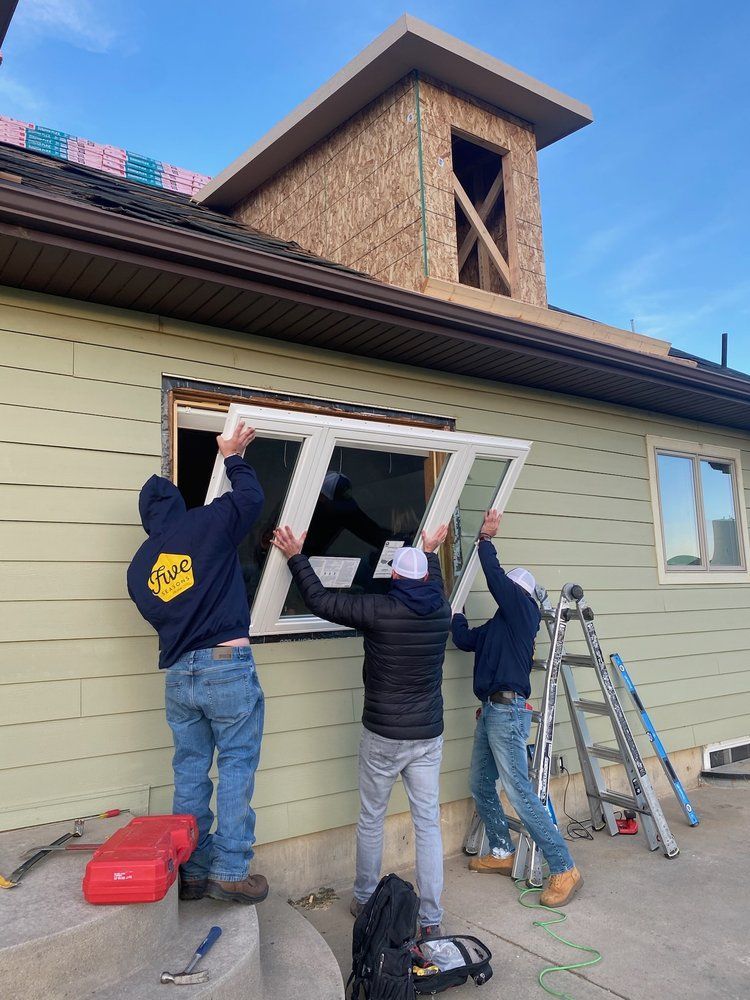
The appropriate solution for between-panes condensation is replacement. Depending on the window, this may mean replacing the insulated glass unit itself or the entire window. A qualified installer can assess whether glass-only replacement is feasible or whether full window replacement makes more sense given the unit's overall condition.
Distinguishing this failure from harmless surface condensation matters because it prevents both unnecessary worry over normal surface sweat and unwise dismissal of genuine seal failure. When moisture appears between the panes, it is time to plan for replacement rather than adjust household habits.
Condensation in Colorado's Dry Climate
How Dry Air Changes the Picture
Colorado's characteristically dry air means lower indoor and outdoor humidity than many regions experience, which lowers the dew point and reduces how often condensation forms. Because dry air reaches saturation only at colder temperatures, glass surfaces must get colder before interior condensation appears, making it less frequent than in humid climates.
This does not mean Colorado homes never see condensation. During cold snaps, interior glass surfaces can still drop below even a low dew point, especially in rooms with added moisture. Winter heating combined with indoor humidity sources can create conditions for interior condensation despite the generally dry air, particularly when homes are sealed tightly against the cold.
The dry climate also means homeowners sometimes run humidifiers to add comfort during arid winters. This intentional humidity addition can raise indoor dew points enough to produce window condensation, illustrating how even in a dry state, indoor moisture management influences whether sweat appears on the glass.
Colorado-Specific Considerations
Elevation intensifies some condensation dynamics. The temperature swings common at altitude, where days can be warm and nights cold, create the conditions that produce exterior dew on cool mornings. Colorado's abundant clear nights, which allow surfaces to cool efficiently, further contribute to morning exterior condensation on efficient windows.
The state's intense winter sun can help resolve condensation quickly, warming glass surfaces and evaporating both interior and exterior moisture as the day progresses. This means condensation that appears overnight or early morning often clears faster than it might in cloudier climates, particularly on sun-exposed windows.
For Colorado homeowners, the practical result is that surface condensation, when it appears, tends to be manageable and often self-resolving. Understanding the dry climate context helps set realistic expectations: interior sweat is less common but still possible, exterior dew signals efficiency, and only between-panes fogging warrants concern.
Working With Local Expertise
Because Colorado's climate creates specific condensation patterns, working with installers familiar with the region helps homeowners interpret what they see. Local professionals understand how the dry air, elevation, temperature swings, and intense sun interact to produce the condensation patterns Colorado homes experience.
This regional knowledge matters when distinguishing normal surface condensation from genuine window problems. An installer experienced with Colorado conditions can help homeowners determine whether the moisture they see reflects normal physics, a humidity issue worth addressing, or a seal failure requiring replacement.
For homeowners uncertain about what their window condensation means, professional guidance provides reassurance or appropriate action depending on the situation, avoiding both unnecessary expense and overlooked problems.
People Also Ask About Window Condensation
Is condensation on windows a bad sign?
Usually not. Surface condensation, whether on the interior or exterior of the glass, is typically normal and often indicates windows are working properly. Interior condensation reflects indoor humidity meeting cold glass, while exterior condensation is ordinary dew that signals energy-efficient windows keeping heat inside. The only condensation that indicates a real problem is moisture trapped between the glass panes, which points to a failed seal requiring replacement.
Why do my windows have condensation if Colorado is so dry?
Even in Colorado's dry climate, condensation can form when glass surfaces drop below the dew point of the air touching them. During cold snaps, interior glass gets cold enough that indoor humidity from cooking, showering, or humidifiers condenses on it. The dry air makes this less frequent than in humid regions, but moisture-heavy rooms or added indoor humidity can still produce condensation on cold winter days.
Does exterior window condensation mean my windows are bad?
No, exterior condensation usually means the opposite. It forms when energy-efficient windows insulate so well that the exterior glass stays cold, dropping below the outdoor dew point and collecting dew like grass on a cool morning. Older, less efficient windows leak enough heat to keep the exterior glass warmer, preventing this dew. Seeing exterior condensation on cool mornings is generally a sign your windows are performing well.
How do I stop condensation on the inside of my windows?
Interior condensation is controlled by managing indoor humidity. Run kitchen and bathroom exhaust fans during moisture-producing activities, open windows briefly to exchange humid air for Colorado's dry outdoor air, and improve air circulation so warm air reaches window surfaces. During cold months, keeping indoor relative humidity in a moderate range, often around 30 to 35 percent, helps prevent condensation. A dehumidifier can help if humidity stays persistently high.
When should I worry about window condensation?
Worry when condensation appears between the glass panes of a sealed unit, since this indicates the seal has failed and the window has lost insulating performance. This fogging cannot be wiped away because it is inside the glass unit, and replacement is the appropriate solution. Also pay attention to persistent, excessive interior condensation, which can signal indoor humidity high enough to risk mold or damage to sills and frames over time.
Related Reading
Understanding condensation connects closely to understanding window performance ratings, since the efficiency that produces exterior dew is measured on the labels windows carry. Knowing how to read those ratings helps homeowners choose windows suited to Colorado's climate.
For a guide to interpreting the performance numbers on window labels, see our article on U-Factor vs. SHGC and reading NFRC labels.
Our Take
At Five Seasons Windows & Doors, we field plenty of questions about window condensation, and most of the time we get to deliver good news. Surface sweat on the interior or exterior usually reflects normal physics or even efficient window performance rather than a defect. We help Colorado homeowners understand what they are seeing so they can address humidity when needed and relax when the moisture is harmless.
When condensation does signal a real problem, such as fogging between the panes, we help homeowners understand their options clearly. Our familiarity with Colorado's dry climate, elevation, and temperature swings means we can interpret condensation patterns accurately and recommend action only when it is genuinely warranted.
Final Takeaway
Window condensation is usually normal and often a sign your windows are doing their job. It forms when glass drops below the dew point of the surrounding air, a simple physical process that shows up as interior sweat during cold weather, exterior dew on cool mornings, or, in the one problematic case, fogging trapped between the panes. Interior condensation points to indoor humidity worth managing, exterior condensation signals efficient windows keeping heat inside, and between-panes moisture indicates a failed seal that calls for replacement.
In Colorado's dry climate, interior condensation is less common than in humid regions but still appears during cold snaps or in moisture-heavy rooms, while exterior dew and the state's intense sun that quickly clears it are both routine. Understanding which type you are seeing turns a moment of worry into simple knowledge, letting you manage humidity when it helps, appreciate efficient windows when dew appears, and recognize the rare case that genuinely warrants professional attention.
Get Started Today
Five Seasons Windows & Doors is Colorado’s top-rated local window company with 230+ 5-star reviews. We offer expert advice, no-pressure quotes, and flexible project options — including phased installs. Schedule your consult today.