

Window needs change significantly between Denver and Breckenridge because of the roughly 4,000-foot elevation difference between them. Denver, at about 5,280 feet, has a semi-arid climate with cold winters but relatively moderate mountain-town conditions, while Breckenridge, near 9,600 feet, faces a high-alpine climate with far heavier snow, colder temperatures, more intense sun, and greater atmospheric pressure differences. These differences mean High Country windows often need pressure-managing capillary tubes, more robust structural ratings for snow loads, and careful attention to thermal performance, while Front Range windows can prioritize energy efficiency and solar management without the same altitude-driven constraints.
The distance from Denver to Breckenridge is short by highway, but the environmental gap between them is substantial. As elevation climbs from the Mile High City into Summit County, nearly every factor that stresses a window intensifies. The air thins, the sun grows stronger, temperatures drop and swing more dramatically, and snowfall multiplies. Windows that perform beautifully in a Denver suburb may face conditions in Breckenridge that demand different specifications entirely.
This guide compares how window needs shift across Colorado's elevation gradient, explaining what changes between the Front Range and the High Country and why matching windows to their specific location matters for lasting performance.
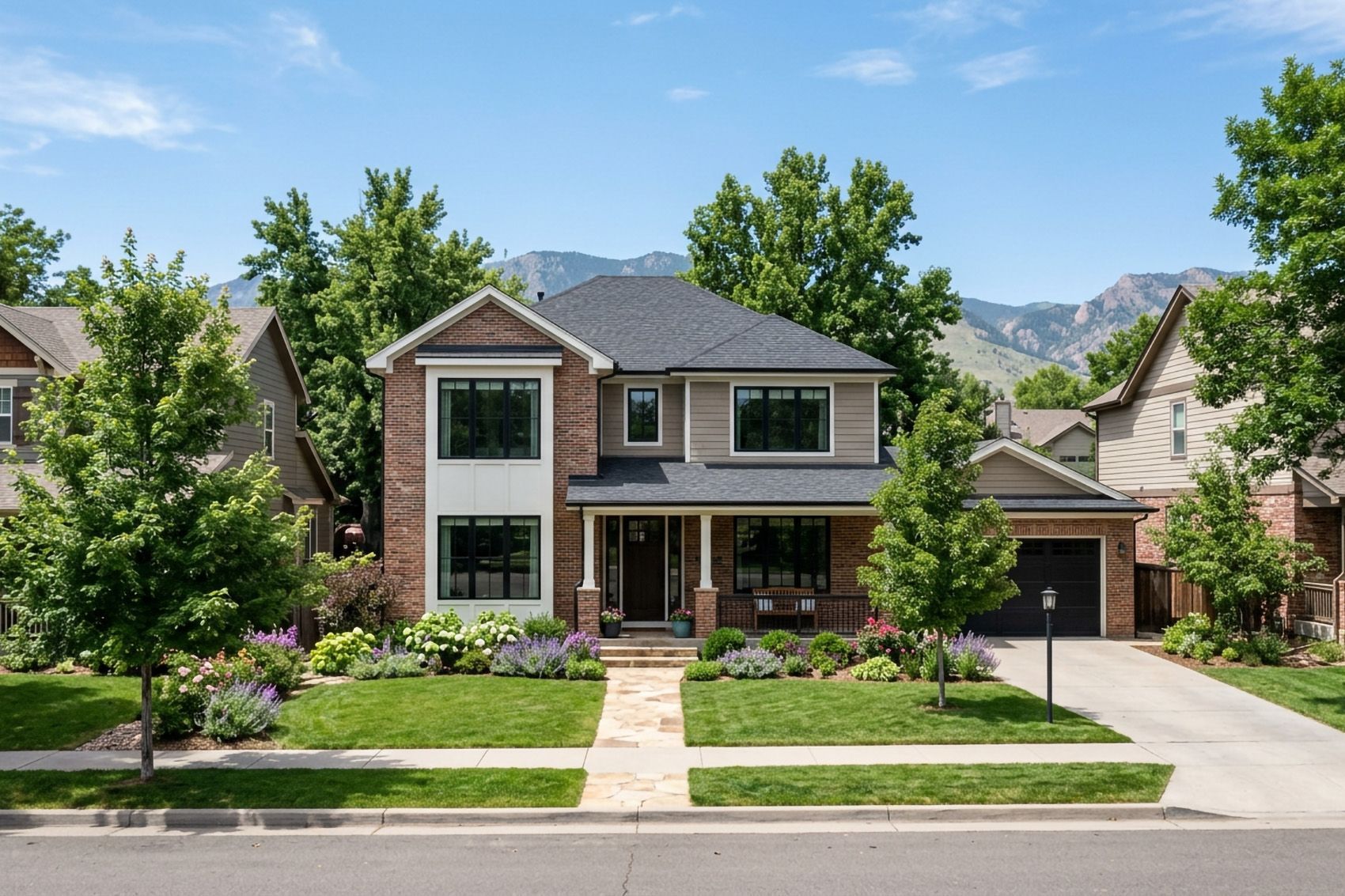
Two Colorado Climates, One Short Drive
The Front Range Environment
Denver and its surrounding Front Range communities sit at roughly 5,280 feet, earning the region its Mile High nickname. The climate here is semi-arid, characterized by cold winters, warm summers, low humidity, and abundant sunshine. While winters bring real cold and periodic snow, the Front Range experiences milder conditions than the mountains to the west, with chinook winds sometimes moderating winter temperatures considerably.
The Front Range receives relatively modest snowfall compared to the mountains, and its snow often melts quickly under Colorado's intense sun. Temperature swings between day and night are notable, as they are throughout the state, but the overall conditions remain within a range that most quality windows handle well. The dry air keeps humidity low, and the elevation, while significant compared to sea level, does not create the extreme pressure differentials that higher installations face.
For Front Range homeowners, window selection focuses primarily on energy efficiency for cold winters, solar heat management for the intense sun, and durability against the temperature cycling that characterizes Colorado's climate. These are meaningful considerations, but they operate within a relatively forgiving envelope compared to what mountain installations demand.
The High Country Environment
Breckenridge sits at approximately 9,600 feet, placing it in a high-alpine climate zone with dramatically different conditions. The town averages around 300 inches of snow annually, receives winter daytime highs around 28 degrees with nighttime lows near 15 degrees, and can see snowfall in nearly any month of the year. This is a genuinely severe winter environment that persists for much of the year.
The thin atmosphere at this elevation allows significantly greater solar radiation penetration, intensifying UV exposure well beyond Front Range levels. Temperature swings can be extreme, with sunny days giving way to bitterly cold nights, and freezing temperatures possible even during summer months. The combination of severe cold, heavy snow, intense sun, and thin air creates demanding conditions that stress windows in ways Front Range installations rarely experience.
For High Country homeowners, these conditions elevate window requirements substantially. The heavy snow loads, extreme temperature cycling, intense UV, and the atmospheric pressure differential at altitude all factor into window selection in ways that go beyond the standard efficiency and solar considerations that dominate Front Range decisions.
Why the Difference Matters
The roughly 4,000-foot elevation gap between Denver and Breckenridge might seem modest, but it transforms the environment a window must withstand. Each factor that challenges windows intensifies with elevation, and several factors that barely register at Front Range elevations become critical in the High Country.
Understanding this gradient helps homeowners and installers avoid the mistake of specifying windows identically across elevations. A window package well-suited to a Denver suburb may underperform or even fail prematurely in Breckenridge, while High Country specifications applied to a Front Range home might add cost without corresponding benefit. Matching windows to their actual elevation and climate optimizes both performance and value.
Altitude and Air Pressure
The Pressure Challenge Intensifies
One of the most significant differences between Front Range and High Country window installations involves atmospheric pressure. Sealed insulated glass units trap air or gas at their manufacturing elevation, and when installed at a substantially higher elevation, the pressure differential can cause the glass to bow outward, stressing seals and risking failure.
At Front Range elevations around 5,280 feet, this pressure differential from lower-elevation manufacturing is meaningful but often manageable. At Breckenridge elevations near 9,600 feet, the differential becomes severe enough that pressure management is frequently essential rather than optional. The thinner air at high altitude pushes back far less against the pressure sealed inside the glass unit.
This is why High Country installations often require capillary tubes, narrow tubes that equalize the pressure between the sealed glass space and the outside atmosphere. These tubes prevent the bowing and seal stress that would otherwise threaten windows at extreme elevation, though they involve tradeoffs that Front Range installations typically avoid.
Consequences for Window Selection
The need for pressure management at High Country elevations affects window selection in concrete ways. Capillary tubes that equalize pressure also allow insulating gas like argon to escape, meaning high-altitude windows may sacrifice the thermal benefit of gas fills to gain the pressure protection that altitude requires. This tradeoff rarely applies at Front Range elevations, where standard sealed units often perform well.
Front Range homeowners can generally select windows with argon fills for enhanced efficiency without worrying about pressure-induced bowing. High Country homeowners face a more complex decision, weighing the pressure protection of capillary tubes against the thermal benefit of gas fills, or exploring alternatives like pre-equalized units engineered for the destination elevation.
This fundamental difference illustrates how the same product category requires different specifications across Colorado's elevation range. What works in Denver may need modification for Breckenridge, and understanding why helps homeowners make appropriate choices for their location.
Snow, Cold, and Structural Demands
Snow Load Considerations
The snowfall difference between the Front Range and High Country is dramatic. While Denver sees periodic snow that often melts quickly, Breckenridge averages around 300 inches annually, with snow accumulating and persisting through long winters. This heavy snow creates structural demands that Front Range installations rarely face.
Windows in heavy-snow environments must handle the loads that accumulated snow and ice can impose, particularly for windows near rooflines, in walls that collect drifting snow, or in configurations where snow can pile against the glass. The structural integrity of the window, its frame, and its installation must account for these loads in ways that milder snow environments do not require.
High Country window installations therefore emphasize robust construction and proper structural specification. Frames must resist the stresses that heavy snow and ice impose, and installation methods must ensure windows remain weathertight under conditions far more severe than Front Range norms. This structural emphasis distinguishes mountain window projects from their Front Range counterparts.
Extreme Cold and Thermal Performance
Both regions experience cold winters, but the High Country's cold is more severe and prolonged. Breckenridge's winter temperatures run substantially colder than Denver's, and the cold season extends far longer at high elevation. This intensifies the thermal performance demands on windows, making insulation even more critical for mountain homes.
The extreme cold also amplifies condensation dynamics and the temperature differentials that stress window seals and frames. Windows in the High Country face harsher thermal cycling as brutally cold nights alternate with sun-warmed days, placing greater demands on frame materials and glazing systems to accommodate the movement without degrading.
For High Country homes, prioritizing excellent thermal performance helps maintain comfort through long, severe winters while managing heating demands. The colder environment makes low heat-transfer windows even more valuable than they are along the Front Range, where winters, though cold, are comparatively moderate.
Material Response to Temperature Swings
Colorado's characteristic temperature swings intensify at altitude, where thin air allows rapid heating under intense sun and rapid cooling once the sun sets. This cycling stresses window frame materials, which expand and contract with temperature changes. Materials that handle this cycling well, maintaining tight seals and stable dimensions, perform better in the demanding High Country environment.
The greater temperature extremes at high elevation make material selection more consequential for mountain homes. Frame materials with dimensional stability across wide temperature ranges help maintain seal integrity and operational reliability through the severe cycling that High Country windows endure. Front Range windows face temperature cycling too, but the less extreme swings place somewhat lower demands on material performance.
Understanding how frame materials respond to temperature helps homeowners at both elevations choose appropriately, with the choice carrying greater weight as elevation and its associated extremes increase.
Sun, UV, and Solar Management
Intensifying UV Exposure
Colorado's intense sunlight grows stronger with elevation as the thinner atmosphere filters less ultraviolet radiation. The Front Range already experiences strong UV compared to lower-elevation regions, but the High Country faces even more intense exposure. This affects both the windows themselves and the interiors they protect.
Intense UV degrades window components over time, challenging frame finishes, seals, and coatings. High Country windows face this degradation more aggressively than Front Range windows, making UV-resistant materials and quality finishes more important at elevation. The stronger sun also fades interior furnishings more rapidly, increasing the value of low-emissivity coatings that block UV while admitting light.
For both regions, managing UV matters, but the intensity at High Country elevations raises the stakes. Windows engineered to withstand and manage intense solar exposure serve mountain homes better than standard specifications, while Front Range homes benefit from solar management calibrated to their still-considerable but somewhat less extreme exposure.
Solar Heat Gain Across Elevations
Both the Front Range and High Country receive abundant sunshine, creating opportunities to capture beneficial solar heat during cold months. The orientation-based approach to Solar Heat Gain Coefficient applies at both elevations, with south-facing windows able to admit warming winter sun while east and west exposures may benefit from limiting summer heat gain.
The colder, longer winters of the High Country can make passive solar gain particularly valuable, as captured solar warmth offsets heating demand during extended cold seasons. At the same time, the intense high-elevation sun makes managing unwanted solar gain and glare important, particularly for windows exposed to direct afternoon light.
These solar considerations apply across Colorado's elevations, though the specific balance may shift with the more extreme conditions at altitude. Both Front Range and High Country homeowners benefit from thoughtful solar management, tailored to their orientation, exposure, and the particular demands of their elevation.
Choosing Windows for Your Elevation
Front Range Priorities
For Denver and Front Range homes, window selection can focus on energy efficiency, solar management, and durability without the altitude-driven constraints that complicate High Country installations. Homeowners here can generally select windows with argon fills for enhanced insulation, choose orientation-appropriate solar heat gain coefficients, and prioritize the thermal and solar performance that Colorado's climate rewards.
The relatively forgiving Front Range environment, while still demanding by national standards, allows a broader range of window choices to perform well. Quality double-pane windows with appropriate coatings and gas fills serve most Front Range homes effectively, delivering the efficiency and comfort that cold winters and intense sun make valuable.
This does not mean window selection is trivial along the Front Range, but rather that the constraints are more manageable. Homeowners can optimize for efficiency and solar performance without navigating the pressure and structural complexities that define High Country projects.
High Country Priorities
For Breckenridge and High Country homes, window selection must address the altitude-driven factors that Front Range installations can often set aside. Pressure management through capillary tubes or pre-equalized units becomes a central consideration, structural robustness for snow loads takes priority, and thermal performance for severe cold demands attention.
The complexity of High Country window selection benefits from expertise specific to mountain installations. Understanding elevation thresholds for pressure management, specifying appropriate structural ratings, and balancing the tradeoffs between pressure protection and thermal performance all require knowledge that general window selection does not encompass.
High Country homeowners are well served by approaching window projects with these elevated demands in mind, recognizing that mountain conditions require specifications beyond standard Front Range norms. The investment in appropriate windows pays off through reliable performance in an environment that punishes inadequate choices.
Working Across Elevations
Because Colorado spans such a range of elevations and climates, working with installers experienced across the state's varied conditions helps homeowners at any elevation. Companies familiar with both Front Range and High Country installations understand how requirements shift with elevation and can specify windows appropriate to each location's specific demands.
This cross-elevation expertise matters because the differences are consequential. An installer who understands why Breckenridge windows need pressure management, how snow loads affect structural requirements, and where Front Range specifications suffice provides guidance that generic window selection cannot match. For Colorado homeowners, this regional knowledge helps ensure windows suit their actual location rather than a one-size-fits-all standard.
People Also Ask About Window Needs by Elevation
Do mountain homes need different windows than Denver homes?
Yes, in meaningful ways. Mountain homes at high elevations like Breckenridge face heavier snow loads, more severe cold, more intense UV, and greater atmospheric pressure differentials than Denver homes. These conditions often require pressure-managing capillary tubes, more robust structural specifications for snow, and careful thermal performance attention. Denver homes, while still facing Colorado's cold winters and intense sun, can generally prioritize efficiency and solar management without the same altitude-driven constraints.
Why do high-altitude windows need capillary tubes but Denver windows often do not?
Capillary tubes equalize the pressure between a sealed glass unit and the outside atmosphere. At Breckenridge's elevation near 9,600 feet, the pressure differential from lower-elevation manufacturing is severe enough that standard sealed units risk bowing and seal failure, making pressure management frequently necessary. At Denver's elevation around 5,280 feet, the differential is more moderate, so standard sealed units, including argon-filled ones, often perform well without capillary tubes.
Does snow affect window requirements in the mountains?
Yes. High Country areas like Breckenridge average around 300 inches of snow annually, far more than the Front Range. This heavy snow imposes structural loads on windows near rooflines or in walls that collect drifting snow. Mountain window installations emphasize robust construction and proper structural specification to handle these loads and remain weathertight, demands that milder Front Range snow environments rarely require.
Is UV exposure worse in Breckenridge than Denver?
Yes. UV exposure intensifies with elevation as the thinner atmosphere filters less ultraviolet radiation. Denver already experiences strong UV compared to lower-elevation regions, but Breckenridge at nearly 9,600 feet faces even more intense exposure. This more aggressively degrades window finishes, seals, and coatings, and fades interior furnishings faster, making UV-resistant materials and quality low-emissivity coatings more important at high elevation.
Can I use the same windows for a Denver home and a mountain cabin?
It is generally better to specify windows appropriate to each location's elevation and climate. A window package suited to a Denver home may underperform or fail prematurely in a high-elevation mountain setting due to pressure, snow, cold, and UV differences. Conversely, High Country specifications applied to a Denver home might add cost without corresponding benefit. Matching windows to their actual elevation optimizes both performance and value.
Related Reading
Understanding how elevation affects window needs connects to understanding the moisture behavior windows exhibit across Colorado's climates. Condensation patterns, for instance, reflect the same temperature and humidity dynamics that vary from the Front Range to the High Country.
For a closer look at what window moisture means in Colorado's dry climate, see our article on interior versus exterior window condensation.
Our Take
At Five Seasons Windows & Doors, we serve homeowners across Colorado's elevation range, from Front Range suburbs to mountain communities, and we understand how window needs shift as elevation climbs. Our experience means we can specify windows appropriate to each location, whether that involves standard efficient units for a Denver home or pressure-managed, structurally robust windows for a High Country property.
We believe matching windows to their actual environment matters, so we guide homeowners toward specifications suited to their elevation rather than applying uniform standards everywhere. Whether your project sits in the city or high in the mountains, we help ensure your windows are equipped for the conditions they will actually face.
Final Takeaway
The drive from Denver to Breckenridge covers a short distance but a substantial environmental gap. As elevation climbs roughly 4,000 feet from the Front Range into the High Country, nearly every factor that stresses a window intensifies: the air thins and creates pressure challenges, snowfall multiplies and imposes structural loads, cold deepens and lengthens, and UV grows more punishing. These changes mean High Country windows often need pressure-managing capillary tubes, robust structural specifications, and careful thermal attention, while Front Range windows can prioritize efficiency and solar management within a more forgiving envelope.
Understanding these differences helps Colorado homeowners choose windows suited to their actual location rather than applying one standard across dramatically different environments. A window that excels in a Denver suburb may need different specifications entirely for a Breckenridge home, and recognizing why helps ensure lasting performance. Working with installers experienced across Colorado's elevations provides the regional knowledge that matches windows to the specific demands of each place, from the Mile High City to the high peaks of Summit County.
Get Started Today
Five Seasons Windows & Doors is Colorado’s top-rated local window company with 230+ 5-star reviews. We offer expert advice, no-pressure quotes, and flexible project options — including phased installs. Schedule your consult today.