

On an NFRC label, U-Factor measures how well a window insulates against heat flow, while SHGC (Solar Heat Gain Coefficient) measures how much of the sun's heat the window lets through. For Colorado homes, you generally want a low U-Factor on every window to handle cold winters, then vary the SHGC by orientation: higher SHGC on south-facing windows to capture free winter warmth, and lower SHGC on east and west-facing windows to limit summer heat gain and afternoon glare.
Both numbers use scales that make comparison straightforward once you know them. U-Factor typically ranges from about 0.20 to 1.20, where lower means better insulation, and a basic single-pane window sits near the high end around 1.09. SHGC runs from 0 to 1, where a rating of 0.30 means the window admits roughly 30 percent of the sun's heat and blocks the rest. Both are set by the National Fenestration Rating Council, an independent body that has tested and certified fenestration products since 1989.
The NFRC label is the standardized sticker found on windows that lets homeowners compare energy performance across brands using these independently tested numbers. Understanding what those numbers mean transforms window shopping from guesswork into informed decision-making. The two most important figures, U-Factor and SHGC, work together to determine how a window performs, but they measure fundamentally different things.
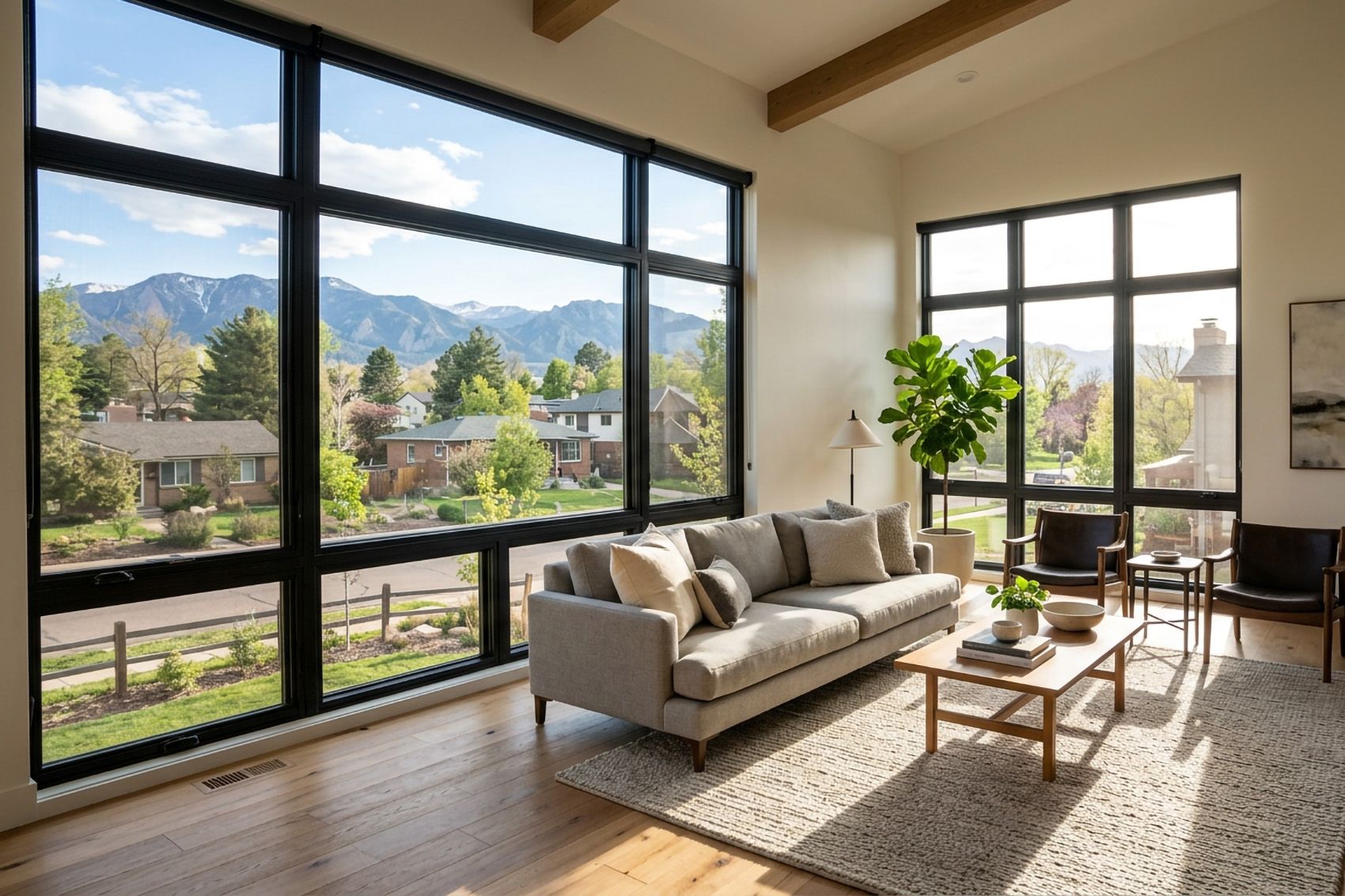
This guide explains what each rating means, how they differ, and how Colorado's unique combination of cold winters and intense high-altitude sun makes window orientation a key factor in choosing the right numbers for each facing of your home.
Understanding the NFRC Label
What the Label Represents
The National Fenestration Rating Council, established in 1989, tests and certifies windows, doors, and skylights based on standardized energy performance measurements. The NFRC label provides independently verified ratings that let homeowners compare products on equal footing, functioning much like a nutrition label for window energy performance.
Because every rated window carries the same standardized measurements, the label enables genuine apples-to-apples comparisons. A U-Factor of 0.28 means the same thing whether it appears on a Marvin, Anlin, or any other certified window. This standardization removes marketing spin from the comparison, giving homeowners objective data to inform their choices.
Every ENERGY STAR qualified window carries an NFRC label, though ENERGY STAR qualification specifically depends on U-Factor and SHGC ratings. These two numbers form the foundation of window energy performance, which is why understanding them matters most.
The Four Main Ratings
A standard NFRC label displays four primary performance ratings, each measuring the window as a complete unit rather than individual components. U-Factor appears near the top, indicating insulation performance. SHGC sits nearby, showing how much solar heat the window admits. Visible Transmittance indicates how much natural light passes through. Air Leakage, when shown, reflects how much air infiltrates around the window.
Each rating uses a consistent scale, making interpretation straightforward once you know the direction that represents better performance. For U-Factor and SHGC, lower numbers mean less heat transfer. For Visible Transmittance, higher numbers mean more natural light. For Air Leakage, lower numbers mean tighter construction.
These ratings work together to describe overall window performance. No single number tells the complete story, but U-Factor and SHGC carry the most weight for energy efficiency, particularly in a climate as demanding as Colorado's.
Why the Whole-Unit Measurement Matters
An important detail about NFRC ratings is that they measure the entire window assembly, not just the glass. The U-Factor shown represents an area-weighted average that includes the center of glass, the edge of glass, and the frame. This matters because frames and edges typically conduct heat differently than the glass center.
This whole-unit approach gives a more accurate picture of real-world performance than glass-only ratings would. A window with excellent glass but a poorly insulating frame will show a higher U-Factor than the glass alone might suggest. The NFRC rating captures this reality, helping homeowners avoid windows that look good on paper but underperform in practice.
Understanding this helps explain why frame material and construction quality affect the numbers. The complete system determines performance, and the NFRC label reflects that complete system.
U-Factor Explained
What U-Factor Measures
U-Factor measures the rate at which a window transmits non-solar heat flow, essentially describing how well the window insulates against conductive heat transfer. This is the number that tells you how effectively a window keeps warm air inside during winter and prevents outside temperatures from penetrating your home.
The scale typically ranges from around 0.20 to 1.20, and lower numbers indicate better insulation. A window with a U-Factor of 0.25 insulates far better than one rated 0.50. For perspective, a standard single-pane clear glass window rates around 1.09, which explains why single-pane windows feel cold and drafty compared to modern insulated units.
U-Factor is essentially the opposite of the R-value used to describe wall insulation. Where higher R-values indicate better insulation for walls, lower U-Factors indicate better insulation for windows. The two are mathematically related as reciprocals, which is why the direction of "better" flips between them.
Why U-Factor Matters in Colorado
Colorado's cold winters make U-Factor critically important for every window in a home. The state's heating season is long and can be severe, particularly at elevation, so windows that insulate well directly affect comfort and heating costs. A low U-Factor keeps conditioned warmth inside where it belongs rather than letting it bleed out through the glass.
For Colorado homes, prioritizing a low U-Factor on every window regardless of orientation makes sense. Unlike SHGC, which benefits from variation by facing, U-Factor should generally be as low as practical throughout the home. The insulating benefit applies to north, south, east, and west windows equally because all of them lose heat during cold weather.
Windows that achieve U-Factors in the range often associated with quality double and triple-pane units help Colorado homes maintain comfort through the coldest months while reducing the energy needed to stay warm.
Achieving Low U-Factors
Several construction features contribute to low U-Factor ratings. Multiple panes of glass create insulating air spaces that slow heat transfer. Low-emissivity coatings reflect heat back toward its source. Insulating gas fills, where appropriate for the elevation, further reduce conductive transfer. Quality spacers at the glass edges minimize heat loss where panes meet.
Frame material and construction also affect U-Factor because the rating includes the whole assembly. Frames that conduct less heat contribute to lower overall U-Factors. This is one reason material choice matters for energy performance, not just appearance and durability.
For Colorado homeowners, understanding that multiple factors contribute to U-Factor helps set realistic expectations. The lowest ratings come from windows engineered specifically for cold-climate performance, combining several heat-reduction features in a single unit.
SHGC Explained
What SHGC Measures
Solar Heat Gain Coefficient measures the fraction of solar radiation that passes through a window and becomes heat inside the home. Expressed as a number between 0 and 1, it indicates how much of the sun's energy the window admits. A window with an SHGC of 0.30 allows roughly 30 percent of solar heat through while blocking the remaining 70 percent.
Unlike U-Factor, which addresses non-solar heat flow, SHGC specifically concerns heat from sunlight. This distinction matters because the two describe different physical processes. A window can insulate excellently against conductive heat loss while still admitting significant solar heat, or vice versa. The two numbers together describe the complete thermal picture.
Lower SHGC values block more solar heat, which benefits cooling during summer. Higher SHGC values admit more solar heat, which can benefit heating during winter. This is where orientation becomes important, because the value of solar heat gain depends heavily on which direction a window faces and what season it is.
The Colorado Sun Factor
Colorado's high-altitude location creates unusually intense solar radiation. The thinner atmosphere at elevation filters less sunlight, meaning windows face stronger solar energy than they would at lower elevations. This intensity makes SHGC particularly relevant for Colorado homes, where the sun can contribute meaningful warmth in winter but create uncomfortable heat and glare in summer.
The state's combination of cold winters and abundant sunshine creates an interesting dynamic. Colorado receives substantial sunny days even in winter, meaning south-facing windows can capture significant free solar warmth during the heating season. This passive solar benefit can reduce heating demand when windows are chosen to take advantage of it.
At the same time, that intense sun creates cooling challenges in summer, particularly for windows exposed to direct afternoon light. Managing SHGC by orientation lets Colorado homeowners capture beneficial winter warmth while limiting unwanted summer heat, optimizing comfort across seasons.
Balancing SHGC With Other Priorities
SHGC does not exist in isolation. It interacts with Visible Transmittance because the coatings that reduce solar heat gain can also affect how much light passes through. Modern low-emissivity coatings have improved this relationship, allowing windows to block solar heat while still admitting good natural light, but some tradeoff often remains.
Homeowners choosing SHGC values should consider not just heating and cooling but also glare, fading of furnishings, and natural light quality. A very low SHGC that blocks summer heat effectively might also reduce the pleasant winter warmth and bright light that make south-facing rooms enjoyable. The right balance depends on how each room is used and what matters most to the homeowner.
This complexity is why orientation-based SHGC selection works better than applying one value throughout. Different rooms with different exposures and uses benefit from different balances of solar heat gain.
Matching Ratings to Home Facings
South-Facing Windows
South-facing windows receive the most consistent sunlight throughout the day and across seasons. In Colorado's climate, these windows offer an opportunity to capture free solar warmth during the long heating season. A moderately higher SHGC on south-facing windows allows winter sun to contribute heat, potentially reducing heating demand on sunny days.
The winter sun sits lower in the sky, allowing south-facing windows to admit warming rays when they are most welcome. During summer, the higher sun angle naturally reduces direct penetration through south windows, particularly with appropriate overhangs or shading. This seasonal dynamic makes south-facing windows well-suited to capturing beneficial solar gain without excessive summer penalty.
For these windows, pairing a low U-Factor with a moderate to higher SHGC often serves Colorado homes well. The low U-Factor maintains insulation through cold nights, while the SHGC captures daytime solar warmth. Homeowners should still consider glare and fading, but the passive solar benefit frequently justifies a higher SHGC on southern exposures.
East and West-Facing Windows
East and west-facing windows present different challenges because they receive direct sun at low angles during morning and afternoon. West-facing windows in particular can admit intense afternoon heat and glare during summer, when the sun drives directly at them late in the day. This low-angle exposure is difficult to shade with overhangs.
For these orientations, a lower SHGC generally serves Colorado homes better. Limiting solar heat gain on east and west windows reduces summer cooling demand and mitigates the harsh glare that low-angle sun creates. The winter solar benefit from these facings is less valuable than from south-facing windows because the exposure is briefer and harder to control.
Pairing a low U-Factor with a lower SHGC on east and west windows balances year-round performance. The insulation benefits winter comfort while the reduced solar gain limits summer heat and glare. This orientation-specific approach optimizes each window for its actual exposure rather than applying a compromise value everywhere.
North-Facing Windows
North-facing windows receive little direct sunlight, making SHGC less critical for these exposures. They admit minimal solar heat regardless of their SHGC rating because direct sun rarely strikes them. This means the primary consideration for north windows is insulation, captured by U-Factor.
For north-facing windows, prioritizing the lowest practical U-Factor makes sense because these windows lose heat without the compensating solar gain that other orientations enjoy. During Colorado's cold winters, north exposures can be the coldest side of a home, receiving little warming sun while still losing heat to the outdoors.
The SHGC value matters less for north windows, so homeowners can focus on insulation performance and natural light quality. A low U-Factor keeps these cold-side windows from becoming significant heat-loss points, improving comfort in north-facing rooms.
Making Practical Decisions
Reading the Label in the Showroom
When comparing windows, locate the U-Factor and SHGC on each NFRC label to make informed comparisons. Remember that both numbers are lower-is-better for heat control, though SHGC involves the orientation nuance discussed above. Checking these numbers across products reveals real performance differences that marketing language often obscures.
Because the ratings are standardized, you can compare directly across brands. A window claiming superior efficiency should have the NFRC numbers to support the claim. If a salesperson emphasizes efficiency but the label numbers are unremarkable, the ratings tell the real story regardless of the pitch.
Homeowners benefit from noting both numbers rather than focusing on just one. A window with an excellent U-Factor but an SHGC poorly matched to its intended orientation may not perform as well in practice as the insulation number alone would suggest.
Working With Knowledgeable Installers
Selecting optimal ratings for each home facing involves more nuance than picking the lowest numbers everywhere. Installers experienced with Colorado's climate understand how orientation, room use, shading, and elevation interact to determine ideal window specifications. Their guidance helps homeowners avoid both under-performing choices and unnecessary expense.
A quality installer can assess your home's specific exposures and recommend SHGC values that capture beneficial solar gain where appropriate while limiting it where it causes problems. This orientation-aware approach delivers better real-world comfort than applying uniform specifications throughout.
For Colorado homes, this expertise matters because the state's intense sun and cold winters create genuine optimization opportunities. Windows chosen thoughtfully for each facing perform better than windows selected on price or a single number alone.
Beyond the Two Main Numbers
While U-Factor and SHGC carry the most weight, the other NFRC ratings deserve consideration too. Visible Transmittance affects how bright and naturally lit your rooms feel. Air Leakage, when reported, indicates how tightly the window seals against drafts. Both contribute to overall satisfaction with your windows.
For rooms where natural light matters most, checking Visible Transmittance ensures the windows will not feel dim. For homes concerned about drafts, a low Air Leakage rating indicates tighter construction. These secondary ratings round out the picture that U-Factor and SHGC begin.
Considering all the ratings together, weighted by what matters for each room and exposure, leads to the most satisfying window choices for Colorado homes.
People Also Ask About NFRC Labels
What is a good U-Factor for Colorado windows?
For Colorado's cold climate, lower U-Factors serve homes well, with quality double and triple-pane windows achieving ratings well below the level of basic units. Since the state's heating season is long and can be severe at elevation, prioritizing a low U-Factor on every window regardless of orientation makes sense. The insulating benefit applies equally to all facings because all windows lose heat during cold weather.
Should SHGC be high or low in Colorado?
It depends on orientation. Colorado's combination of cold winters and intense sun means south-facing windows can benefit from a higher SHGC to capture free winter warmth, while east and west-facing windows generally perform better with a lower SHGC to limit summer heat and glare. North-facing windows receive little direct sun, so SHGC matters less for them. This orientation-based approach optimizes comfort across seasons.
What is the difference between U-Factor and SHGC?
U-Factor measures non-solar heat flow, describing how well a window insulates against conductive heat transfer in both directions. SHGC measures the fraction of solar radiation the window admits as heat. In short, U-Factor addresses insulation against temperature-driven heat loss, while SHGC addresses heat from sunlight. Both use lower-is-better scales for heat control, but SHGC involves orientation considerations that U-Factor does not.
Do all windows have an NFRC label?
Not all windows carry NFRC labels, but all ENERGY STAR qualified windows do, and the label is standard on quality certified products. The NFRC label provides independently tested ratings that enable fair comparison across brands. If a window lacks an NFRC label, you cannot verify its energy performance through standardized measurements, which makes objective comparison difficult.
Does the NFRC rating include the window frame?
Yes, NFRC ratings measure the entire window assembly rather than just the glass. The U-Factor shown is an area-weighted average that includes the center of glass, edge of glass, and frame. This whole-unit approach gives a more accurate picture of real-world performance because frames and glass edges conduct heat differently than the glass center. It also explains why frame material and construction affect the numbers.
Related Reading
NFRC ratings help Colorado homeowners choose windows suited to their climate, but altitude introduces additional considerations beyond the label numbers. High-elevation installations face pressure challenges that affect both window construction and long-term performance.
For a closer look at how elevation affects window construction and what mountain homeowners should know, see our article on capillary tubes and high-altitude breathing.
Our Take
At Five Seasons Windows & Doors, we help Colorado homeowners read past the marketing and understand what NFRC numbers mean for their specific home. Our experience with the state's intense sun and cold winters means we can recommend U-Factor and SHGC combinations tailored to each home's orientation rather than applying one-size-fits-all specifications.
We believe homeowners who understand these ratings make better decisions and end up more satisfied with their windows. Whether you are drawn to Marvin, Anlin, or another option we carry, we help you match the performance numbers to your home's actual exposures so your windows deliver comfort across Colorado's demanding seasons.
Final Takeaway
Reading NFRC labels transforms window selection from guesswork into informed decision-making. U-Factor tells you how well a window insulates against heat flow, and for Colorado's cold climate, a low U-Factor benefits every window regardless of facing. SHGC tells you how much solar heat a window admits, and here orientation matters: higher values on south-facing windows capture free winter warmth, while lower values on east and west exposures limit summer heat and glare.
Understanding both numbers, and how they should vary by home facing, helps Colorado homeowners optimize comfort and efficiency across seasons. The intense high-altitude sun and long heating season make thoughtful window selection genuinely worthwhile. Working with installers who understand how orientation, elevation, and climate interact ensures your windows are specified to perform their best on every side of your home.
Get Started Today
Five Seasons Windows & Doors is Colorado’s top-rated local window company with 230+ 5-star reviews. We offer expert advice, no-pressure quotes, and flexible project options — including phased installs. Schedule your consult today.