

At Denver's elevation of 5,280 feet, the air pressure outside a window is noticeably lower than it is at sea level, and that difference puts real stress on a sealed double-pane window. A window's insulating glass unit is sealed at the factory with a fixed amount of gas trapped between the panes. Carry that sealed unit up to altitude and the trapped gas, now at higher pressure than the thinner air around it, pushes outward against the glass hard enough to bow the panes, stress the seals, and shorten the window's life if nothing is done to relieve it. The standard industry solution is a tiny capillary tube, sometimes called a breather tube, that lets the pressure equalize. It works, and it comes with one modest tradeoff worth understanding.
The physics is the same thing you have seen with a sealed bag of chips on a mountain drive. Sealed at the grocery store near sea level, the bag puffs up tight as you gain elevation because the air inside is now at higher pressure than the air outside. A sealed window unit does exactly the same thing, except the "bag" is two panes of glass that do not flex as easily as a chip bag, so the pressure has to go somewhere. A 2,000-foot gain in elevation can create roughly 1 PSI of pressure difference, which on a window of about two by four feet adds up to over a thousand pounds of outward force, with larger glass seeing proportionally more.
This guide explains, in plain terms, why altitude matters for Denver windows, what argon gas actually does, how capillary tubes solve the pressure problem, and what the tradeoff is. The short version is that the problem is genuine, the solution is well established, and the quality of the manufacturing and installation is what determines how well a window holds up at altitude over the long run.
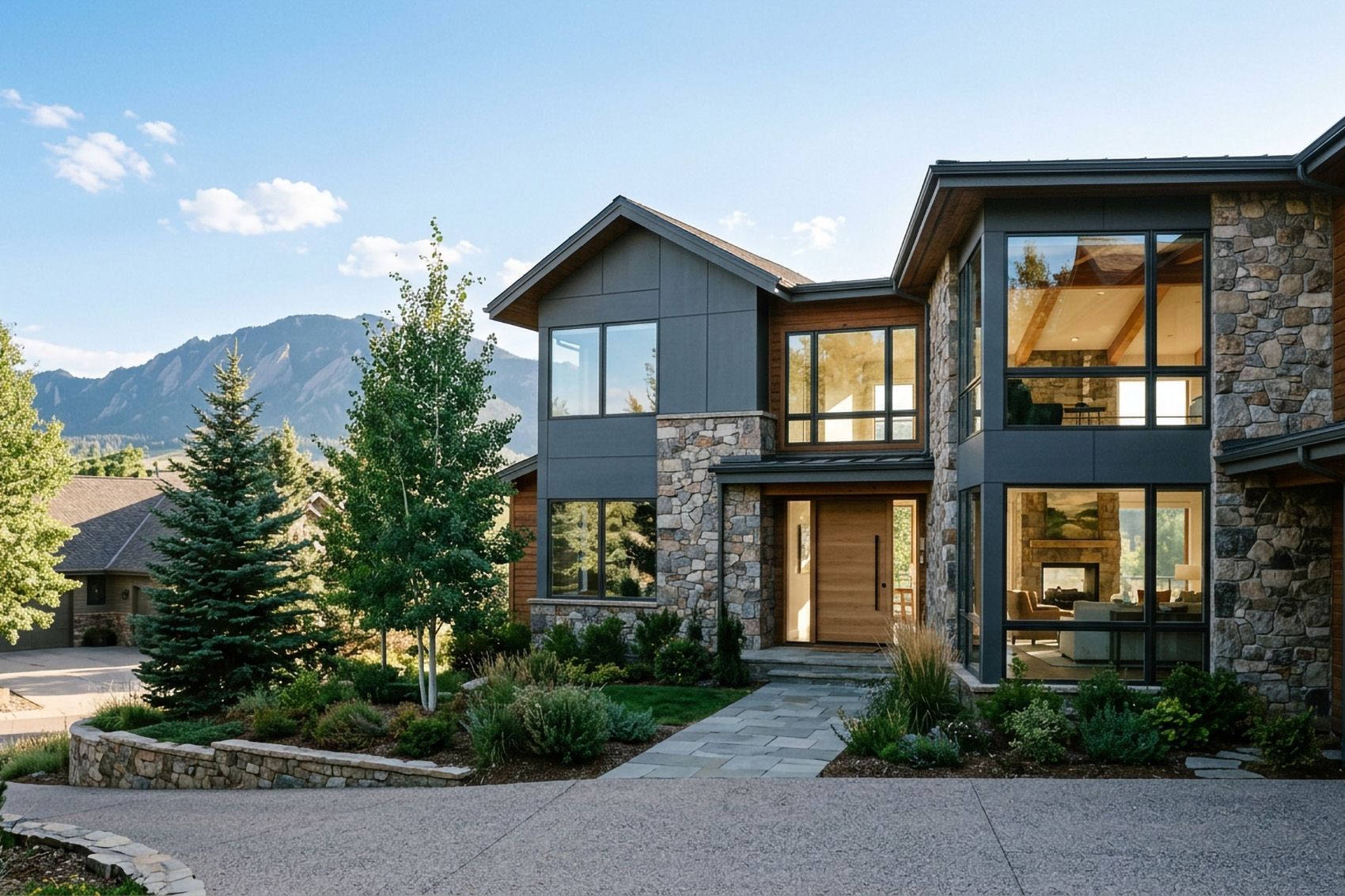
The Pressure Problem at 5,280 Feet
Why Sealed Windows Struggle at Altitude
A modern energy-efficient window is built around a sealed insulating glass unit: two or three panes of glass with a sealed space between them. That sealed space is the heart of the window's insulating performance, and it is filled and closed at the factory, capturing whatever the air pressure was at the manufacturing location. Most windows are manufactured at or near sea level, or at least well below Denver's elevation.
When that sealed unit travels up to 5,280 feet, the outside air pressure drops but the pressure inside the sealed space does not. The trapped gas pushes outward, and because glass is rigid, the panes bow outward to relieve some of that pressure. You can sometimes see this as a visible distortion in the reflection off a window that was not built for altitude. More importantly, the constant outward pressure works on the edge seals over time, and seal failure is what leads to the foggy, condensation-filled look of a window that has reached the end of its life.
How Much Force Are We Talking About?
The numbers are larger than most people expect. A pressure difference of about 1 PSI, which is roughly what a 2,000-foot elevation change produces, translates to over a thousand pounds of total force pushing outward on a window of about two by four feet. Denver sits more than 5,000 feet above sea level, so a window manufactured near sea level and installed here faces a meaningful and sustained load. Larger windows face proportionally more force, since the pressure acts across the entire glass surface.
This is not a rare or exotic problem. It is a standard, well-understood engineering consideration for any window manufacturer that ships product to the Mountain West, and the major manufacturers have established methods for dealing with it. The point for a Denver homeowner is not to worry, but to understand that altitude is a genuine factor, and that how a window is built to handle it matters here in a way it simply does not at sea level.
What Argon Gas Actually Does
The Role of the Gas Fill
The space between the panes of a quality window is often filled with argon, an inert, harmless gas that is denser than ordinary air. Because argon is denser and moves less freely than air, it slows the transfer of heat through the window, which improves the insulating performance measured by the window's U-factor. In a cold climate like Colorado's, that better insulation means less heat escaping in winter, more comfortable rooms near the glass, and lower heating bills over the life of the window.
Argon is colorless, odorless, non-toxic, and makes up almost one percent of the air we already breathe, so there is nothing to be concerned about with its use in windows. It is simply a better insulator than plain air in the sealed space, and it has become a standard feature of energy-efficient windows, including those that meet Colorado's current Energy Star Northern Climate Zone requirement. The question at altitude is not whether argon is good, because it clearly helps, but how to keep the sealed unit performing well when the pressure problem has to be solved.
Why the Gas Fill Interacts With Altitude
Here is where argon and altitude meet. The pressure problem at altitude has to be relieved somehow, and the standard way to relieve it involves opening a path between the sealed space and the outside air. That same path, which lets the pressure equalize, can also allow some of the argon to gradually migrate out over time. The result is a modest tradeoff: the method that protects the glass from pressure stress can, over years, allow some of the insulating gas to slowly diminish.
This is the honest heart of the altitude question, and it is worth understanding rather than glossing over. It is also why the quality of the window and the way it is built and installed matter so much at altitude. A well-made unit from a quality manufacturer, properly installed, manages this tradeoff far better than a cheap window thrown in without regard for elevation. Understanding the tradeoff is what lets a homeowner ask the right questions and choose accordingly.
How Capillary Tubes Solve the Problem
What a Capillary Tube Is
A capillary tube, also called a breather tube, is a very thin metal tube installed into the sealed edge of the glass unit. It is tiny, hidden inside the window frame, and invisible once the window is installed. Its job is simple: it provides a controlled path for the pressure inside the sealed space to equalize with the air pressure outside, so the panes do not bow and the seals do not carry the full force of the altitude difference. The opening is so fine that the unit still functions as a sealed insulating unit for everyday purposes; the tube allows pressure to balance gradually rather than leaving the interior space wide open to the elements. As a general industry rule, capillary tubes are recommended for sealed units installed at elevations of about 5,000 feet or more, which includes essentially all of the Denver metro area.
Capillary tubes are the tried-and-true, industry-standard solution to the altitude pressure problem, used by major manufacturers across the board for windows destined for high-elevation installation. When a Denver homeowner buys a quality window appropriate for this elevation, a capillary tube or an equivalent engineered solution is part of what makes that window suitable for the altitude. It is a mature technology that has protected high-altitude windows for decades.
The Tradeoff, Stated Plainly
The tradeoff is the one already described: because the capillary tube provides a path between the sealed space and the outside air, it can allow some of the argon gas fill to slowly migrate out over the years. The pressure relief the tube provides is essential at altitude; the gradual gas migration is the cost that comes with it. In practice, the rate is slow, and a quality, well-sealed unit retains its performance well over its service life, but it is an honest characteristic of the technology rather than something to pretend away.
What this means practically for a Denver homeowner is that the manufacturer and installer matter. A quality manufacturer engineers the unit to manage this tradeoff, and a careful installer handles the window correctly so that the altitude solution works as intended. This is one of several reasons that buying windows specified for Colorado's elevation, from a company that installs at altitude every day, produces a better long-term result than a generic window selected without regard to where it will live. For a fuller view of how altitude fits alongside the 2026 efficiency law, frame materials, and resale value in a Colorado window project, our Ultimate Guide to Window Replacement in Denver: 2026 Edition pulls the broader picture together.
What This Means When Buying Windows in Denver
Questions Worth Asking
Understanding the altitude issue gives a homeowner a few useful questions to ask any window company. The first is simply whether the windows being quoted are specified for Denver's elevation, which any company that works here regularly should answer without hesitation. The second is how the manufacturer handles the pressure equalization, whether through capillary tubes or another engineered approach. The third is whether the window will still carry an argon fill at altitude, since the answer affects the insulating performance reflected on the NFRC label.
The goal is not to become a glazing engineer, but to confirm that whoever is selling and installing the windows can answer these clearly. A confident, specific response is reassuring; hedging or unfamiliarity with the altitude question is a sign to look more carefully before committing.
What "Specified for the Elevation" Actually Means
When a window is described as appropriate for Denver's elevation, a few concrete things are usually behind that phrase. The sealed unit either has a capillary tube or an equivalent engineered method to relieve the altitude pressure. The manufacturer has made a deliberate decision about the gas fill, since the choice between an argon-filled unit and an air-filled one affects both the altitude behavior and the insulating performance. And the NFRC label reflects the actual configuration being installed, so the U-factor and other numbers describe the window that ends up in the wall rather than a sea-level version of it.
For a homeowner, the value of understanding this is mostly in being able to confirm it. A window quoted without any mention of elevation, gas fill, or pressure equalization is a window that may not have been specified with altitude in mind, which is worth catching before installation rather than discovering years later through bowing or a failed seal.
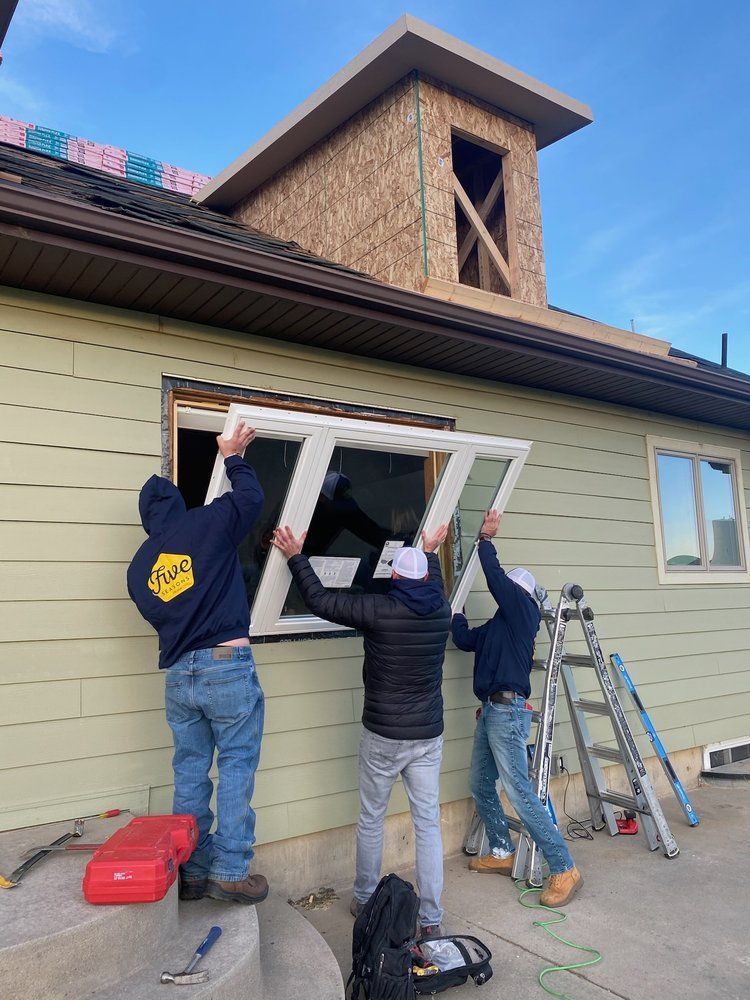
Setting Realistic Expectations About Altitude and Windows
What You Can Reasonably Expect
A quality window, properly specified for Denver's elevation and correctly installed, will handle the altitude without drama. The pressure problem is solved by the capillary tube or equivalent solution, the glass does not bow, the seals are not overstressed, and the window delivers its rated performance for many years. The modest gas-migration tradeoff is present but slow, and a well-built unit manages it well enough that the homeowner experiences a window that performs as expected season after season.
What a homeowner should be wary of is any claim that sounds too absolute, in either direction. A company that dismisses altitude entirely is not being straight, and one that makes the tradeoff sound catastrophic is overstating it to sell something. The accurate picture is in the middle: a real, well-understood engineering issue with a mature, effective solution, where quality and proper installation determine the long-term outcome.
The Bottom Line on Altitude
For a Denver homeowner, the altitude question comes down to choosing a window properly specified for the elevation and installing it correctly. Get those pieces right and altitude becomes a non-issue in daily life: the window simply works, stays clear, and insulates as it should. Get them wrong, with a generic window selected without regard to elevation, and the pressure problem can shorten the window's life and undermine its performance.
The honest truth about argon gas and breather tubes is that both are part of a sensible, well-established system for making windows work at altitude. The argon improves insulation, the capillary tube relieves the pressure that altitude creates, and the modest interaction between the two is managed through quality and care. None of it is cause for worry when the windows are chosen and installed properly.
People Also Ask About Altitude, Argon, and Windows in Denver
1. Will my windows really bow or break at Denver's altitude?
A window not built for altitude can visibly bow, and in some cases the stress on the seals can lead to early failure, though an outright break is uncommon. The more typical outcome is glass that bows enough to create a visible distortion in reflections, along with added stress on the edge seals that can shorten the window's life. This is exactly why capillary tubes or equivalent pressure-equalization solutions are standard for windows installed at Denver's elevation.
A quality window specified for this elevation does not have this problem, because the pressure is relieved by design. The bowing and seal-stress issues are associated with sealed units that were built for lower elevations and installed at altitude without the right solution. Buying a window appropriate for Denver's elevation is what prevents it.
2. Is argon gas in windows safe?
Yes. Argon is a colorless, odorless, non-toxic, inert gas that already makes up nearly one percent of the air we breathe. In a window, it sits in the sealed space between the panes, where it improves insulation by slowing heat transfer. There is no health concern associated with argon-filled windows, even if a seal eventually fails and the small amount of gas in the unit is released, because it is the same gas already present in the atmosphere.
The reason argon is used is purely performance. It is a better insulator than ordinary air in the sealed space, which improves the window's U-factor and helps with heating bills in a cold climate like Colorado's. It is a standard, well-proven feature of energy-efficient windows.
3. Do capillary tubes mean my windows will lose their argon?
They can allow some gradual gas migration over time, but the rate is slow and a quality, well-sealed unit retains its performance well over its service life. The capillary tube provides the pressure relief that altitude requires, and the gas migration is the modest tradeoff that comes with that path. It is not a sudden or dramatic loss; it is a slow characteristic of the technology that quality manufacturing and proper installation manage effectively.
The practical takeaway is that the quality of the window matters. A well-engineered unit from a reputable manufacturer, installed correctly by a company experienced at altitude, handles this tradeoff far better than a cheap window installed without regard to elevation. The argon still does its job, and the window still performs well, when the product and the installation are sound.
4. Are there windows that don't need breather tubes at altitude?
The pressure problem at altitude is universal for sealed insulating glass units, so every such window installed at Denver's elevation needs some method of dealing with it. Capillary tubes are the standard, well-established solution. Some manufacturers have developed alternative engineered approaches to pressure equalization, and the specifics vary by manufacturer and product line. The key point is that a sealed window at altitude needs some solution; the capillary tube is the most common and most proven one.
For a homeowner, the useful question is not whether a window has a breather tube specifically, but whether the window is properly specified for Denver's elevation by a manufacturer and installer who understand the issue. That is what ensures the pressure problem is handled, whatever the specific method.
5. How can I tell if my current windows are struggling with altitude?
The most visible sign is distortion in the glass. If you notice the panes looking slightly bowed, or see a warped, funhouse-like quality in the reflections off your windows, that can indicate the sealed unit is under pressure stress from the elevation. The effect is usually easiest to spot from outside, at an angle, when the glass is reflecting a straight line like a rooftop or fence that then appears to curve.
The other common sign points to a seal that has already given way: fogging, haze, or condensation trapped between the panes that you cannot wipe away from either side. That cloudiness means the sealed space has been compromised and any insulating gas has largely escaped, which at altitude is often the end stage of pressure stress working on the seals over time. A window doing either of these things is signaling that it was not built or specified for the elevation, and it is worth having assessed. Neither problem can be repaired in place in most cases; it typically means the affected unit has reached the point of replacement.
Our Take
At Five Seasons Windows & Doors, the altitude question comes up constantly, and our approach is to be straight about it. The pressure problem at 5,280 feet is real, the capillary tube solution is the established industry standard, and there is a modest tradeoff in gas retention that we would rather explain honestly than pretend does not exist. None of it should trouble a homeowner when windows are specified for the elevation and installed by people who do this every day, which is exactly what we do across the Front Range.
We work with the brands we trust most for Colorado homes, Marvin, ProVia, and Anlin, each specified appropriately for our elevation. For homeowners who want the highest level of build quality and long-term durability, the Marvin Signature collection, especially the Ultimate line, stands out for its dimensional stability and the rigidity of its frame construction, qualities that matter in a climate that puts sustained stress on windows through both altitude and Colorado's dramatic temperature swings. A frame that holds its shape and seals well over decades is part of what makes a window perform reliably in a demanding environment, and that engineering quality is where Signature Ultimate earns its place.
What we would tell any Denver homeowner is that altitude is one of several reasons local experience matters. The pressure problem, the argon fill, and the capillary tube solution are all manageable, but they are managed best by people who understand the elevation they are working at and choose products built for it. We would rather a homeowner understand the actual tradeoffs and choose confidently than be sold on marketing that papers over how windows really work at altitude.
Final Takeaway
The truth about argon gas and breather tubes at Denver's altitude is more reassuring than alarming, once it is understood. The thin air at 5,280 feet creates a real pressure difference that pushes outward on a sealed window, enough force to bow the glass and stress the seals if nothing is done about it. The standard solution, a tiny capillary or breather tube, relieves that pressure and has protected high-altitude windows reliably for decades. The one honest tradeoff is that the same path which relieves pressure can allow some of the insulating argon to migrate out slowly over the years, which is why quality manufacturing and proper installation matter so much here.
For a Denver homeowner, none of this should be intimidating, but it is worth understanding. Argon improves a window's insulation and is completely safe. Capillary tubes solve the altitude pressure problem that would otherwise shorten a window's life. The modest interaction between the two is managed through quality construction and careful installation by a company that understands the elevation. A window specified for Denver's altitude and installed correctly simply works, stays clear, and insulates as it should for many years.
The larger point is that altitude is one of several ways Colorado asks more of its windows than most of the country, alongside the temperature swings and the intense high-altitude sun. A window built and installed with all of that in mind performs reliably for decades; a generic window selected without regard to where it will live does not. Understanding why altitude matters, and choosing accordingly, is what turns a potential problem into a non-issue and lets a Denver home enjoy windows that do exactly what they are supposed to do.
Get Started Today
Five Seasons Windows & Doors is Colorado’s top-rated local window company with 230+ 5-star reviews. We offer expert advice, no-pressure quotes, and flexible project options — including phased installs. Schedule your consult today.