

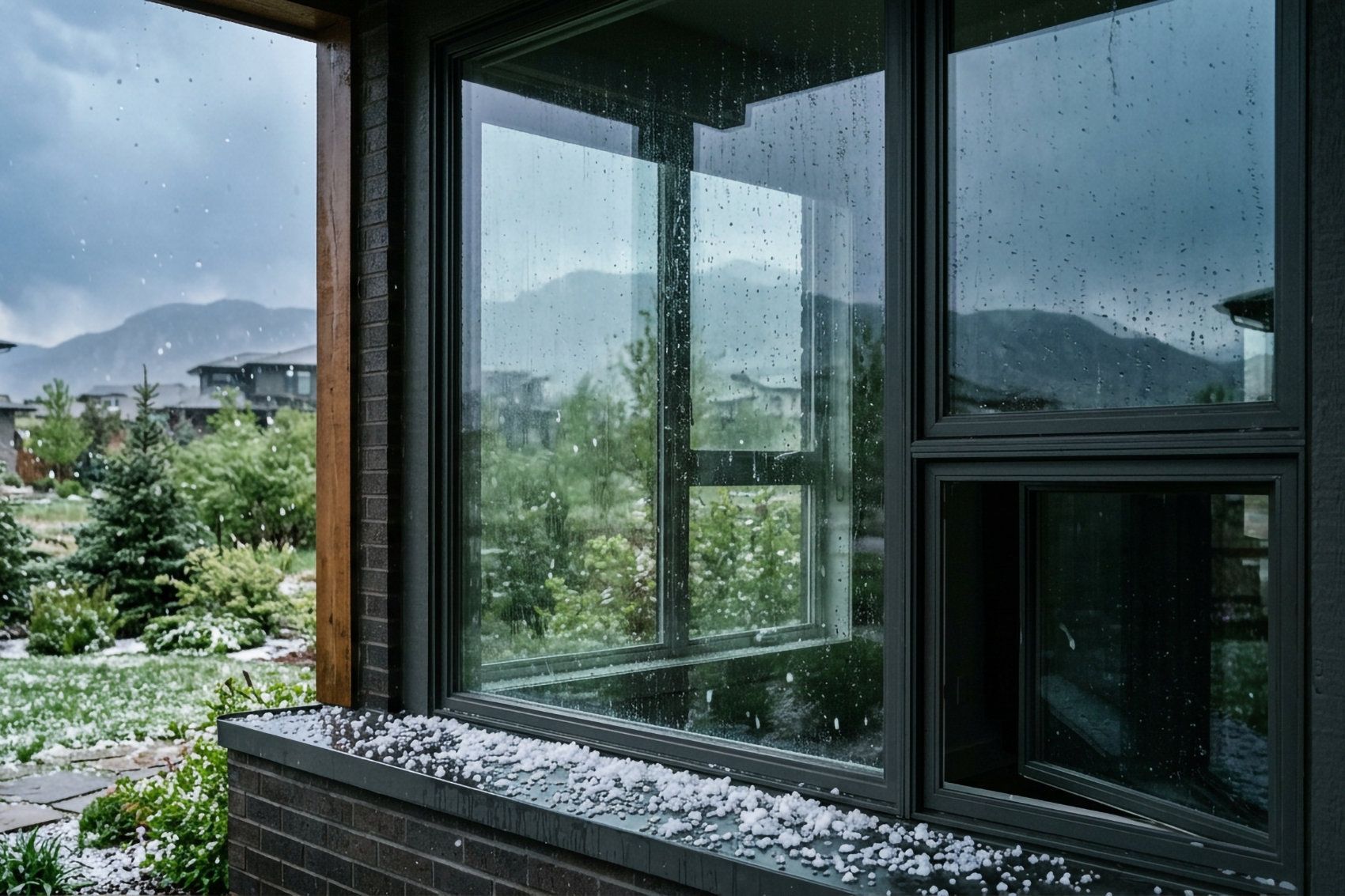
If a major hailstorm rolled across your neighborhood tomorrow, would your windows hold? For most Colorado homes the honest answer is uncertain, because standard residential windows are not built to take an impact. Impact-resistant windows are. They use laminated glass, two panes bonded to a tough interlayer, set in reinforced frames, so that even when the glass cracks it holds together in place rather than shattering inward and exposing your home to wind, water, and debris. For homeowners along the Front Range, that difference is worth understanding before hail season arrives.
The reason this matters here is location. The Front Range sits in the heart of what meteorologists call Hail Alley, a corridor running from the Denver metro down toward Colorado Springs that sees some of the most frequent large hail in North America. According to the Rocky Mountain Insurance Information Association, the region can count on three to four catastrophic hailstorms in a typical year, each causing at least 25 million dollars in insured damage, and the Front Range averages roughly seven to nine hail days annually. The state has recorded hailstones larger than four inches across, and a single 2017 storm in the Denver metro caused an estimated 2.3 billion dollars in damage. The National Weather Service notes that once hail reaches about one inch in diameter, the size of a quarter, property damage becomes probable rather than just possible.
This guide explains what impact-resistant windows are, how they differ from standard glass, and how to think about window protection as part of preparing your home for spring storm season. Impact-resistant windows are a genuine upgrade in resilience for an exposed Colorado home, and spring, before the storms arrive, is the right time to consider them.
Understanding What Impact-Resistant Windows Are
How Laminated Glass Works
The core of an impact-resistant window is laminated glass. Rather than a single pane, laminated glass consists of two glass layers permanently bonded to a clear, flexible interlayer, often made of polyvinyl butyral. When something strikes the window hard enough to break it, the glass can crack, but the fragments stay adhered to the interlayer instead of shattering into the room. The result is a spider-web crack pattern that keeps the pane intact and the home's interior protected.
This is fundamentally different from standard annealed glass, which breaks into sharp pieces, and even from tempered glass, which crumbles into small fragments but still leaves the opening exposed. The U.S. Department of Energy's Building America program describes impact-rated glass as a laminated sheet sandwiched between glass panels, designed specifically so the window does not fail open when struck. Impact-resistant windows can be built with vinyl, fiberglass, or wood frames like any other window, but the frames, sashes, and locks are typically reinforced to hold the heavier glass and withstand the force of an impact.
The Standards Behind the Label
Impact-resistant windows earn their name by passing demanding tests. The recognized impact standards, including ASTM E1886 and E1996, the Miami-Dade County protocols, and AAMA 506, measure a window's ability to survive being struck by flying debris and to hold up under repeated wind pressure. A window that passes these tests is genuinely strong, with laminated glass and reinforced frames, sashes, and locks all working together so the window does not fail open when hit.
One point of context worth knowing: these standards were originally developed for hurricane-prone coastal regions, and unlike roofing, residential windows do not carry a separate hail-specific rating. That does not diminish the strength of the glass, which carries over meaningfully to hail and wind-driven debris, but it is the reason a responsible installer will describe impact-resistant windows in terms of real, substantial protection rather than a promise that any window is hail-proof. The strength is genuine, and being straight about what it is rated for is part of how you can trust it.
Why Hail Is a Serious Concern on the Front Range
The Scale of Colorado's Hail Risk
Colorado's hail exposure is not a minor seasonal nuisance; it is one of the defining weather risks of living along the Front Range. The region's geography, with high elevation and storms forming against the mountains, creates ideal conditions for frequent and sometimes very large hail. Hailstones of one to two inches, comparable to golf balls, occur regularly during the season, falling fast enough to dent vehicles, strip siding, and crack exposed glass. In the most severe storms, stones can grow far larger still, and the kinetic energy behind them rises sharply with size.
The season itself runs from roughly mid-April through September, with peak activity in late spring and early summer. That timing is exactly why spring is the right moment to think about preparation. By the time a major storm is in the forecast, there is no time to change a home's windows, so the planning has to happen ahead of the season.
What Hail Actually Damages
It helps to understand how hail interacts with a home. The roof takes the most direct exposure, which is why roofing carries hail-specific ratings, but windows are far from immune. Larger hail, wind-driven hail that strikes at an angle, and storms that pair hail with high winds all put glass at risk, and windows on exposed elevations or upper floors face more of it than sheltered ones. A shattered window during a storm is also a more urgent problem than a dented roof, because it opens the home's interior to wind, water, and debris in the moment.
That is what makes impact-resistant glass on exposed windows a meaningful part of a home's hail readiness. Upgrading the most vulnerable openings adds a real layer of protection where standard glass is weakest, and it does so in a way a homeowner can see and rely on. The right scope depends on the home, with a window facing a wide-open western exposure on a hill in a very different situation than a sheltered north-facing one, which is why a look at your specific exposure is the place to start.
What Impact-Resistant Windows Can and Cannot Do
The Real Benefits
For homes that do upgrade, impact-resistant windows offer genuine advantages beyond storm protection. Because the laminated glass holds together when struck, it provides a meaningful layer of defense against the glass failing open during a violent storm, which protects the home's interior from wind, water, and debris. The same laminated construction that resists impact also improves security, since the glass is far harder to break through than standard glass, and it reduces outside noise thanks to the dampening effect of the interlayer.
Laminated glass also blocks a high percentage of ultraviolet light, which helps reduce the fading of furniture, flooring, and fabrics over time. And because impact-resistant windows are typically built with reinforced, well-sealed frames, they can contribute to a home's overall energy efficiency when paired with the right glass package. These everyday benefits are part of why some homeowners choose impact glass even where the primary motivation is storm resilience.
The Honest Limitations
A measured view is part of trusting the product. No window is hail-proof: a large enough stone moving fast enough can still crack impact-resistant glass, and because the certification behind these windows was built around hurricane debris rather than hail, the protection is best described as a major reduction in risk rather than immunity from it. That is still a substantial, real benefit, and understanding it as a major reduction in risk, rather than a force field, is the honest and accurate way to value it.
Impact-resistant windows also cost more than standard windows, because of the laminated glass and reinforced framing. For a home with high exposure, a history of storm damage, or windows that are already due for replacement, that added cost buys real resilience along with the everyday benefits of security, quiet, and UV protection. The most practical approach is to focus impact-resistant glass where it does the most good, on the openings most exposed to storms, rather than treating it as all-or-nothing across the whole house. An honest assessment of a home's actual exposure is the best guide to where the investment pays off.
Preparing Your Windows for Colorado's Storm Season
Practical Steps Before the Storms
Spring hail preparation does not have to mean replacing every window. There are sensible steps any homeowner can take. Start by assessing which windows are most exposed, typically those on western and southern elevations or on higher, less sheltered parts of the home. Make sure existing windows are in good repair, since a window with a compromised seal or loose frame is more vulnerable in a storm. Trimming back branches that could become windborne in a storm reduces the debris risk to glass.
For homeowners considering an upgrade, spring is the time to plan rather than react. Replacing windows is not something that can be done with a storm bearing down, so the decision and the installation need to happen before the season is underway. This is also a natural moment to address any windows that are already failing, since a replacement project can incorporate more impact-resistant glass on the most exposed openings while bringing the windows up to Colorado's current efficiency standard at the same time.
Fitting Window Protection Into the Bigger Picture
Because the 2026 efficiency rules require any new window sold in Colorado to meet the Energy Star Northern Climate Zone standard, a hail-season upgrade is also an efficiency upgrade. A homeowner replacing exposed windows with laminated, impact-resistant glass is simultaneously meeting the current energy standard and adding storm resilience, which makes spring planning do double duty. The frame material, the glass package, and the impact resistance can all be considered together rather than as separate decisions.
For a fuller view of how window replacement fits Colorado's climate, laws, and market, our broader guide is a useful starting point. You can read The Ultimate Guide to Window Replacement in Denver: 2026 Edition for how impact resistance, efficiency, frame materials, and the 2026 law all fit together in a single project.
People Also Ask About Impact-Resistant Windows and Hail
1. Are my current windows impact-resistant?
Almost certainly not, unless they were specifically purchased and labeled as impact-resistant or laminated. Standard residential windows, including most double-pane units, use annealed or tempered glass that is not designed to withstand significant impact. Impact-resistant windows are a distinct product category that a homeowner chooses deliberately, and they come at a higher price than standard windows.
If you are not sure, you can check any documentation from when the windows were installed, look for a laminated glass designation on the unit, or ask a window professional to assess them. In most existing Colorado homes, the windows are standard glass and would need to be replaced to gain impact resistance.
2. Will impact-resistant windows survive Colorado hail?
They hold up far better than standard windows. Impact-resistant laminated glass is designed so that even if it cracks, it stays in the frame rather than shattering inward, which keeps the home's interior protected during a storm. Against the hail sizes common on the Front Range, that construction provides meaningful, real-world protection that ordinary glass simply does not offer.
The honest framing is that impact-resistant windows are a major reduction in risk rather than a guarantee against any damage, since a large enough hailstone can still cause harm. What you are getting is significantly lower odds of damage and significantly less severity when damage does occur, which on the hail-prone Front Range is a benefit well worth having.
3. Which windows are most worth upgrading to impact-resistant glass?
The openings most worth protecting are the ones most exposed to storms: windows on western and southern elevations, on upper floors, or on parts of the home that face wide-open terrain without sheltering trees or structures. Large windows and skylights also represent more glass area at risk. Focusing impact-resistant glass on these high-exposure openings concentrates the investment where it does the most good.
Windows also become a natural priority when they are already failing and due for replacement, since upgrading to laminated glass at that point adds storm resilience to a project that is happening anyway. Many homeowners take a phased approach, protecting the most exposed openings first and addressing others over time based on condition and exposure. An assessment of a specific home is the best way to decide where to start.
4. Do impact-resistant windows lower my insurance costs?
Some insurers offer premium discounts for impact-resistant features, but this varies widely by company, policy, and region, and it is more established for impact windows in hurricane zones than for hail in Colorado. It is not something to assume. A homeowner considering impact windows partly for insurance reasons should confirm directly with their insurer what discounts, if any, apply and what documentation is required.
It is also worth understanding your policy's treatment of hail damage generally, including any cosmetic damage exclusions or separate wind and hail deductibles, which have become more common in hail-prone states. These details affect the real economics of storm protection more than the window choice alone, so reviewing the policy with your agent is a sensible part of spring preparation.
5. When should I prepare my windows for hail season?
Spring, before the season gets underway. Colorado's hail season runs from roughly mid-April through September, with the most active period in late spring and early summer. Because windows cannot be replaced once a storm is approaching, any upgrade has to be planned and installed ahead of time.
Early spring is the natural window for assessment and planning. It gives time to evaluate which openings are most exposed, get quotes if an upgrade makes sense, and complete any installation before the busiest storm months. Pairing a hail-season assessment with any replacement already on the horizon is an efficient way to handle both at once.
Our Take
At Five Seasons Windows & Doors, we think impact-resistant windows are one of the smarter upgrades a storm-exposed Colorado home can make, and we want homeowners to understand why. The laminated glass genuinely holds together when struck, the reinforced frames are genuinely stronger, and the protection against a window failing open in a violent storm is real and valuable on the Front Range. On top of that, the same construction delivers year-round benefits in security, quiet, and UV protection, so the investment works for you every day, not just during hail season.
We are also straightforward about what impact-resistant windows are: a major reduction in storm risk rather than a promise that any window is hail-proof, with strength rated through hurricane-debris testing that carries over meaningfully to hail. We think that honesty is part of why homeowners can trust the recommendation. Where impact-resistant glass makes the most sense is on the openings most exposed to storms and on homes that have felt hail damage before, and it pairs naturally with any replacement already on the horizon, adding resilience while also meeting Colorado's Energy Star Northern Climate Zone requirement. We work with manufacturers who offer laminated and impact-resistant glass options within specific product lines, including Anlin vinyl windows, Marvin within lines like Elevate and Essential, and ProVia doors, and we help homeowners decide which openings genuinely warrant the upgrade.
What we would tell anyone preparing for spring is to start with a clear look at their home's exposure and protect the windows that need it most. That focused approach, putting impact-resistant glass where the risk is real, tends to serve homeowners better than either ignoring hail season or spreading the investment thin. Done well, it is a meaningful step toward a home that stands up to whatever the storm season brings.
Final Takeaway
For an exposed Colorado home, impact-resistant windows are a genuine upgrade in storm resilience, and spring is the right time to consider them. Built with laminated glass and reinforced frames, they hold together when struck instead of shattering inward, keeping wind, water, and debris out of the home during a violent storm. The same construction pays off year-round in added security, quieter rooms, and protection against UV fading, so the value extends well beyond hail season.
These windows are best understood as a major reduction in storm risk, a meaningful and reliable layer of protection where standard glass is weakest. The smartest approach is to concentrate impact-resistant glass on the openings most exposed to storms and on homes that have seen hail damage before, and to fold the upgrade into any replacement already planned, where it adds resilience while satisfying Colorado's 2026 efficiency standard at the same time.
The Front Range will keep earning its Hail Alley reputation, and spring is the season to prepare rather than react. A clear assessment of which windows are most exposed, attention to keeping existing windows in good repair, and impact-resistant glass where it genuinely matters together make for a sound hail-season strategy. Done thoughtfully, protecting your windows is one more way a Colorado home can stand up to whatever the storm season brings.
Get Started Today
Five Seasons Windows & Doors is Colorado’s top-rated local window company with 230+ 5-star reviews. We offer expert advice, no-pressure quotes, and flexible project options — including phased installs. Schedule your consult today.