

If both your windows and your siding are near the end of their life, replacing them together is usually the better plan. The wall around each window only has to be opened once, the flashing and water barrier can be layered in the right order around every opening, the exterior trim is built to fit the new windows, and one team is responsible for the seam where siding meets frame. The trade-off is a larger project and a larger budget at one time. If your windows are newer and still performing well, it can make sense to keep them and have the siding installer protect and re-flash around them instead.
The seam between window and wall is where much of the exterior work happens. James Hardie's installation instructions for its Artisan lap siding state that a water-resistive barrier "must be appropriately installed with penetration and junction flashing in accordance with local building code requirements," and that "Flashing is required over all horizonal and exposed trim." Every window is one of those penetrations, so when the siding comes off, the way each window is flashed and trimmed is part of the job either way.
This guide explains why that seam matters, what you gain by doing both projects together, when it makes more sense to wait, and what Colorado's wildfire code and climate add to the decision. We also share what our own reviews show about the place where siding meets a window or door frame, including a case where it was not handled well.
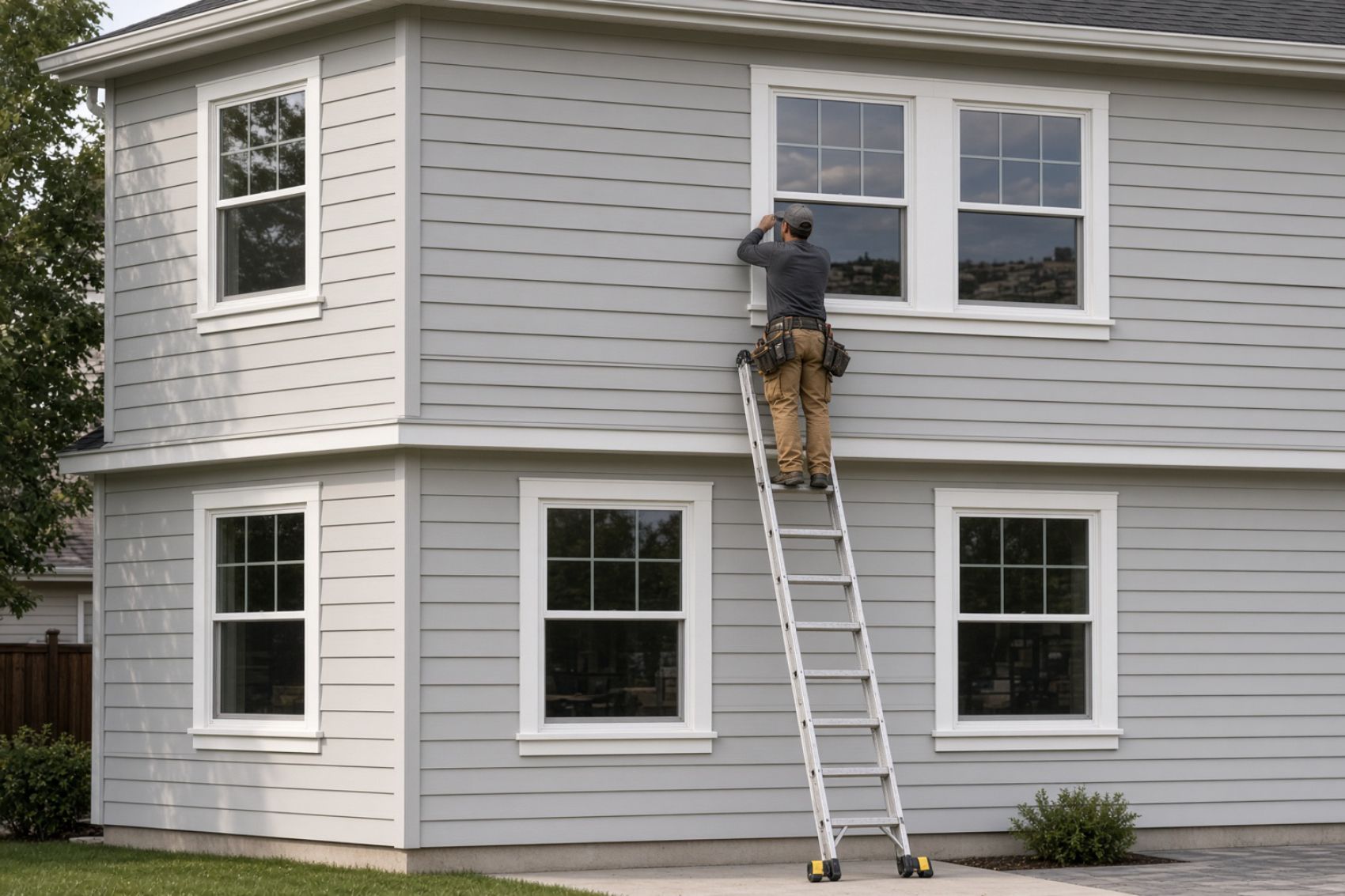
Why the Window-to-Wall Seam Matters
Where Water Gets In
Siding is the visible layer, but it is not the only thing keeping water out of your walls. Behind it is a water-resistive barrier, such as a housewrap, and around every window and door is flashing that directs water away from the opening. Siding, trim, and sealant are the outer defense; the barrier and flashing are what catch water that gets past them.
Window openings are among the most vulnerable points in those layers. Rain driven against the wall, snowmelt running down from above, and water that collects on a sill all head toward the joints around the frame. When the flashing is missing, installed in the wrong order, or cut through during a later project, water can reach the sheathing and framing without any sign on the outside.
Why the Order of the Layers Matters
Flashing works by overlapping like shingles on a roof: each upper layer laps over the one below it, so water running down the wall is always shed outward. Around a window, that means the sill flashing, the side flashing, the head flashing, and the water barrier all have to be layered in a specific sequence, with the siding and trim finishing the job on the outside.
When windows and siding are replaced at different times, that sequence is harder to get right. A window installed into existing siding has to be flashed into a wall that is already closed. Siding installed around existing windows has to tie into flashing that may be decades old and was never designed for the new materials. Doing both together lets the installer build each layer in order, around every opening, at the same time.
The Benefits of Doing Both at Once
One Wall Opening, One Set of Trim
When the siding is removed, the wall around each window is fully exposed. That is the best possible moment to replace the windows, because the installer can see the framing, fix any damaged sheathing, and flash the new windows into the new water barrier with nothing in the way.
The exterior trim is a good example of work you only want to pay for once. If you replace the windows first and the siding a few years later, the window trim is usually removed and rebuilt again for the siding. Done together, the trim is sized and built around the new windows and the new siding in a single step, and the finished look is consistent across the whole house.
One Schedule and One Point of Responsibility
Two separate projects mean two schedules, two crews working on the same walls, and two sets of warranties that each end at the seam where windows meet siding. When a leak shows up around a window after both projects are done, it is not always clear which contractor is responsible for it.
A single project with one company avoids that question. John Kroeger, our Founder and President, put the principle this way when a customer raised a concern about installation responsibility:
"We don't shift responsibility to our installers. Whether the installation is performed by one of our employees or one of our long-standing installation partners, the work is our responsibility, and we stand behind it."
When It Makes Sense to Wait or Split the Work
If Your Windows Are Newer
Replacing both at once only makes sense if both actually need it. If your windows are relatively new, perform well, and have no fog between the panes or drafts around the sash, there is little reason to replace them just because the siding is going.
In that case, the siding installer should remove the old trim carefully, inspect the existing window flashing, repair or add flashing where it is missing, and integrate the new water barrier around each window. Ask your contractor to explain how they will handle the existing windows before you sign, because this is the step that protects them.
Budget and Phasing
Doing both at once is the larger investment up front, and not every household can or wants to take it on in one step. If the budget only allows one project now, the order matters. When the siding is failing and letting water in, it usually comes first, because it protects the structure. When the siding is sound but the windows are drafty or failing, starting with the windows can make sense, as long as the windows are installed and flashed with the future siding in mind.
If you plan to phase the work, tell both contractors about the full plan. A window installer who knows new siding is coming can choose trim and flashing details that make the later project easier, and a siding installer who knows windows are coming can leave the openings ready for them.
Colorado Considerations
The Wildfire Code and Your Openings
In parts of Colorado, the Colorado Wildfire Resiliency Code can shape a combined project. In areas rated moderate or high fire intensity, replacing 25 percent or more of the exterior wall surface requires the entire exterior wall to meet the code's new-construction standards, which limits siding to noncombustible, fire-retardant-treated, or ignition-resistant materials.
Windows have their own section of the code. In those same areas, the code calls for exterior windows and glazed doors to use tempered glass, multilayered glazed panels, glass block, or glazing with a fire protection rating of at least 20 minutes. If you are replacing windows and siding together in a covered area, ask your contractor and your building department how both sections apply, so the windows and the wall are planned to the same standard.
Sun, Hail, and Freeze-Thaw Cycles
Colorado's climate is hard on both windows and siding. Strong high-altitude sun breaks down finishes and sealants, hail can damage siding and frames alike, and freeze-thaw cycles punish any joint where water can get in and expand. Those stresses concentrate at the seam between window and wall, which is one more reason to build that seam carefully.
Both siding brands we install are designed with these conditions in mind. James Hardie builds products by climate zone, with its HZ5 line described as "right at home in climates with freezing temperatures, extreme seasonal temperature variations, and snow and ice." LP SmartSide carries a warranty that names hail specifically. For windows, the brands we install include Marvin, Anlin, and ProVia, and the Marvin Signature Ultimate collection pairs a wood interior with aluminum cladding outside that protects the frame from sun and weather.
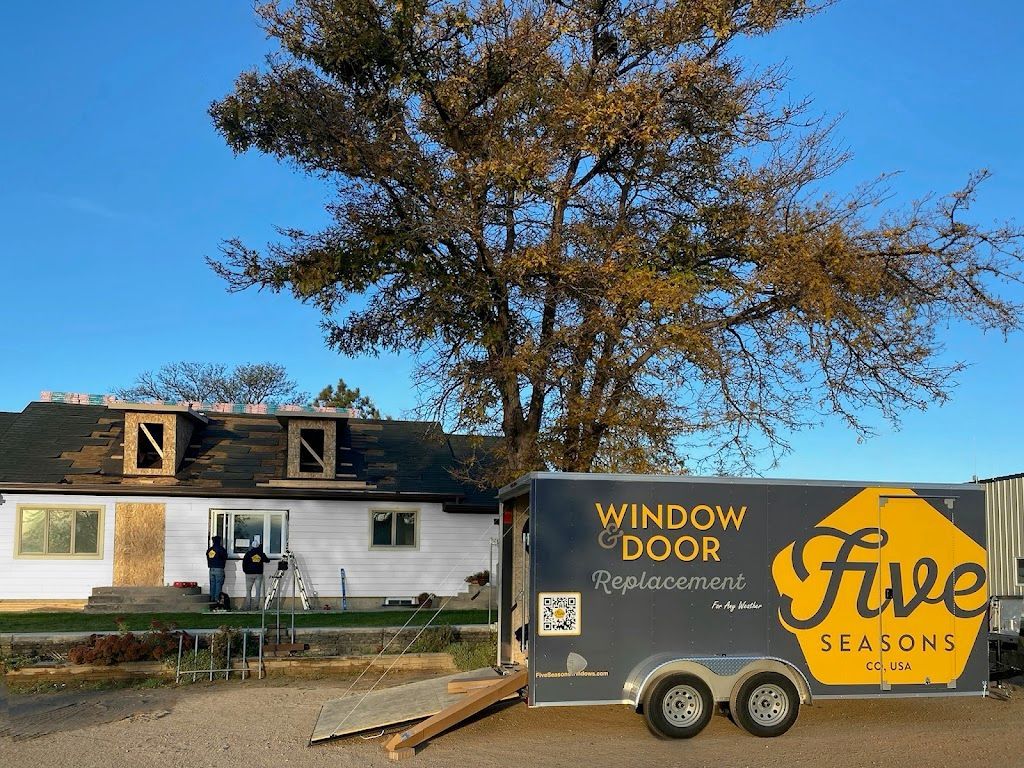
Planning a Combined Project
Questions to Ask Before You Sign
A combined project has more moving parts, so a few questions at the start are worth the time:
- Who installs the windows, who installs the siding, and who is responsible for the seam between them?
- In what order will the windows, flashing, water barrier, siding, and trim be installed?
- How will damaged sheathing or framing be handled if it is found once the siding comes off?
- Does my home fall under the wildfire code, and how does that affect the siding and the windows?
- What warranties cover the windows, the siding, and the installation, and do they overlap at the openings?
The answers tell you whether the company has planned the project as one job or as two jobs that happen to share a schedule.
What the Work Looks Like
On a combined project, the old siding comes off first, exposing the wall. The old windows are removed, any damaged sheathing or framing is repaired, and the new windows are set and flashed into the opening. The water barrier is installed and lapped around each window in the right order, and then the new siding and trim go on around the new windows. Final sealant and paint finish the job.
Every house is different, and the manufacturers' installation instructions set the exact details. What matters is that the sequence is planned in advance and the same team is accountable for each layer, so nothing is left for someone else to finish.
What We See in the Field
Our reviews show how easily the seam between trades gets missed. Jayme R. had a front door replaced on a project that also included basement windows and a patio door system, and the review describes what was left behind:
"They replaced the front door and left a chunk of bare wood exposed. They said since that's where siding was we would need to call out someone who does siding."
That is exactly the gap a combined project is meant to close. Wall material affects window work too. Andy P., whose project replaced several windows on the front of the house, listed an "Incorrect assessment of siding material (5 Seasons did offset some cost)" among the problems on that job. And Oscar, a Highlands Ranch homeowner who replaced 24 windows and a sliding door, explained why the wall matters from the start: "Stucco can be tricky in taking out old windows and replacing them with new ones. It's always easier on doing windows on brick or normal siding homes."
We include those reviews because they show what to hold any contractor to, including us: assess the wall correctly at the first visit, plan who finishes every seam, and leave no opening half done.
People Also Ask About Replacing Windows and Siding Together
Should I replace windows or siding first?
If you are doing both, the best approach is usually to do them together, so the windows can be flashed into the new water barrier as the siding goes on. If you have to choose one, start with whichever is failing worse. Siding that lets water into the wall usually comes first because it protects the structure. If you start with windows, tell the installer that new siding is coming so the trim and flashing are planned for it.
Is it cheaper to replace windows and siding at the same time?
It can be, because some work is only done once. When the projects are separate, the trim around each window is often removed and rebuilt twice, and two crews each have to set up and work around the same openings. The total for a combined project is still larger up front, so compare an itemized quote for the combined job with quotes for each project on its own.
Can I replace my siding without replacing my windows?
Yes, as long as the windows are in good condition. The siding installer should remove the old trim carefully, inspect the existing window flashing, repair or add flashing where needed, and tie the new water barrier into each window. Ask how they plan to protect and flash around your existing windows before you sign.
Does Colorado's wildfire code apply to windows when I replace my siding?
The code's exterior wall requirements apply in moderate and high fire intensity areas when 25 percent or more of the wall surface is replaced. Windows have their own requirements in those areas, calling for tempered glass, multilayered glazed panels, glass block, or a 20-minute fire protection rating. If you are replacing both, ask your building department how each section applies to your project.
Do I need a permit to replace windows and siding?
Often, yes. The Town of Castle Rock, for example, requires an exterior wall covering permit when work affects 25 percent or more of the exterior wall surface, in every wildfire hazard zone. Window permits depend on local rules. Requirements vary by city and county, so check with your local building department or ask your contractor, who should handle the permit as part of the job.
Related Reading
If you are replacing your siding, the choice of material affects everything from fire ratings to hail coverage and warranty terms. Comparing the two main options side by side can help you decide before you plan the windows around them.
For a full comparison, see our guide to James Hardie vs. LP SmartSide for Colorado homes.
Our Take
If your windows and your siding are both near the end of their life, replace them together. The seam between window and wall is one of the places where exterior projects can go wrong, and building it once, in the right order, by one accountable team is the most reliable way to get it right.
If only one of them needs replacing, do not replace the other just to match. Ask the contractor how they will protect, flash, and trim around what stays, and get that plan in writing. As John Kroeger has put it: "We focus on being honest about what we can deliver and then following through."
Final Takeaway
Replacing windows and siding at the same time lets the wall around each window be opened once, flashed in the right order, and trimmed to fit, with one team responsible for the seam where water problems often start. It is a larger project up front, but it avoids paying twice for trim work and leaves no question about who owns the result.
In Colorado, check whether the wildfire code applies to your home before you choose materials, and plan the windows and the wall to the same standard. If only one part of the exterior needs replacing, make sure the other is protected and properly flashed as part of the job.
Get Started Today
Five Seasons Windows & Doors is Colorado’s top-rated local window company with 280+ 5-star reviews. We offer expert advice, no-pressure quotes, and flexible project options including phased installs. Schedule your consult today.