

James Hardie and LP SmartSide are both durable, low-maintenance siding choices for Colorado, but they are built from different materials and suit different homes. James Hardie is fiber cement, a cement-based product that the manufacturer states is noncombustible under ASTM E136, which makes it the simpler choice in wildfire-prone areas. LP SmartSide is engineered wood, treated to resist moisture, termites, and fungal decay, and it carries a warranty that names hail damage specifically. For most Front Range homes, the decision comes down to wildfire exposure, hail priorities, the finish you want, and the warranty terms you value most.
Colorado adds pressures that many states do not. A statewide wildfire code, adopted in July 2025, limits exterior wall coverings in moderate and high fire intensity areas, and hail tests every exterior surface on the Front Range. Each brand is designed to hold up better than the original wood siding on many older homes, and each one offers a wide range of profiles and colors. The differences between them matter more here than in many other states.
This guide compares the two products on the points that count for a Colorado home: what each one is made of, how it handles snow, temperature swings, and hail, how it fits the state's wildfire code, and what each warranty actually covers. We also share what our own window and door work has taught us about the place where siding meets a window or door frame, because that seam is where many exterior problems start.
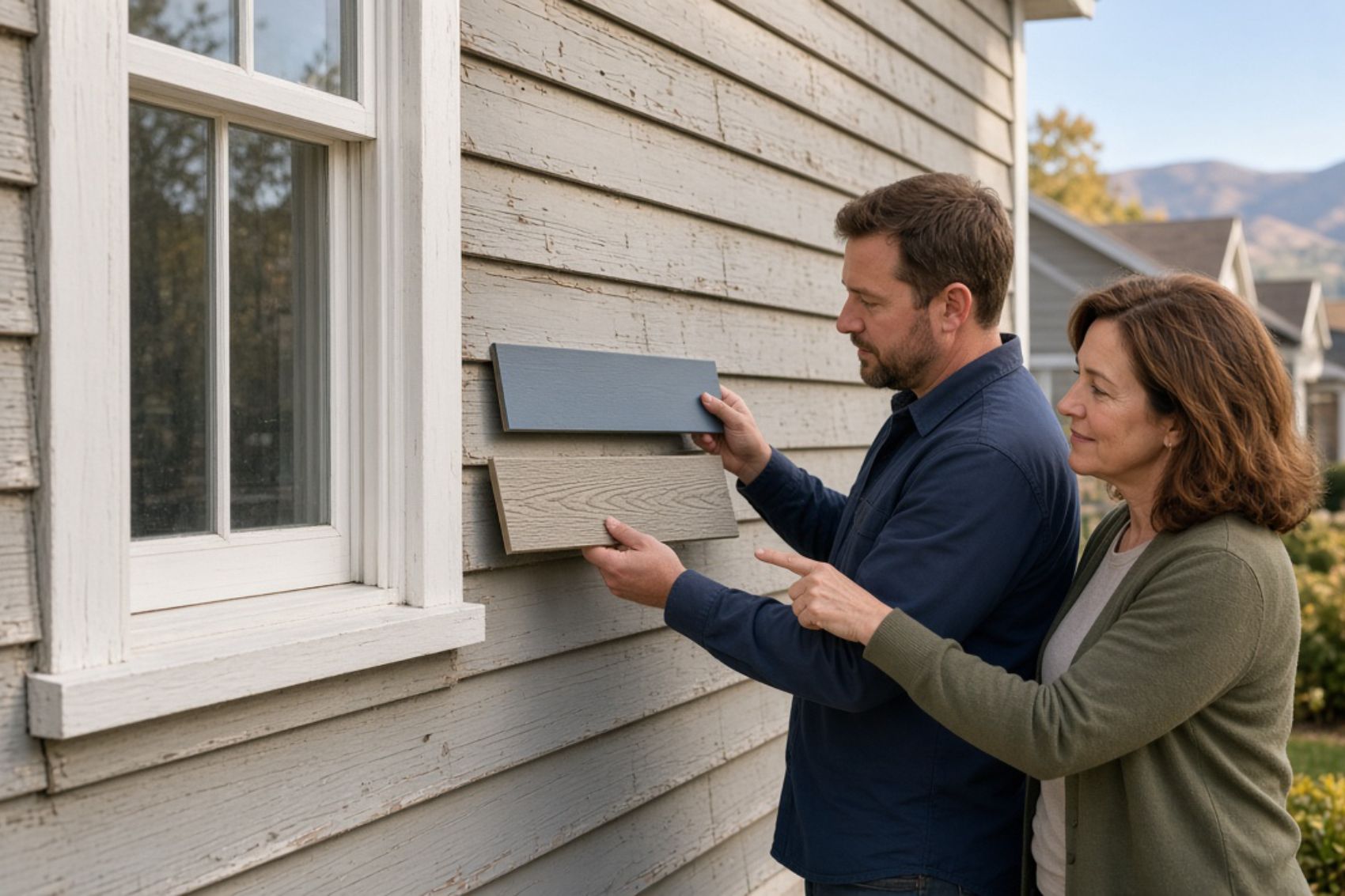
What Each Siding Is Made Of
James Hardie: Fiber Cement
James Hardie siding is fiber cement. It is a cement-based board, manufactured in lap siding, panels, shingles, trim, and soffit, and it is designed to look like painted wood without being wood. The company's lap siding product, HardiePlank, is the one most homeowners picture when they hear the brand name.
Because the board is cement-based rather than wood-based, it does not feed a fire the way wood does. James Hardie states that "Hardie® siding complies with ASTM E136 as a noncombustible cladding," and that it "will not contribute fuel to a fire." That single property explains much of the brand's appeal in the West.
James Hardie also builds its products for specific climates through what it calls the Hardie Zone System. Zones are assigned by zip code, and the HZ5 line is described as being "right at home in climates with freezing temperatures," along with "extreme seasonal temperature variations, and snow and ice." For a Colorado homeowner, it is worth confirming that the product quoted for your home is the one matched to your zip code.
LP SmartSide: Engineered Wood
LP SmartSide is engineered wood. Strands of wood are coated, bonded with resins, and pressed into boards, then treated through a manufacturing process LP calls SmartGuard.
According to LP, the SmartGuard process works on three fronts. Water-resistant waxes coat "each strand or fiber of wood for enhanced durability in rainy, humid environments." Industrial-grade adhesive resins contribute to what LP describes as "incredible resistance to impacts from hail." And zinc borate is added because, in LP's words, engineered wood treated with it has "been proven to effectively resist damage from termites and fungal decay for decades."
The result is a product that keeps the warmth and workability of wood while addressing the problems that usually shorten the life of traditional wood siding. It is still a wood-based product, though, and that difference shapes how it fits Colorado's wildfire code, which we cover below.
How Each One Handles Colorado Weather
Snow, Freezing Temperatures, and Big Seasonal Swings
Colorado siding has to handle a lot in a single year: intense high-altitude sun in summer, heavy snow in spring, and temperature drops that can swing many degrees within a day. Moisture is the common enemy in all of it. Water that gets behind or into siding and then freezes is what tends to cause damage over time.
James Hardie's answer is a product line engineered by climate zone, with HZ5 built for freezing temperatures, seasonal extremes, and snow and ice. LP's answer is the SmartGuard treatment, which coats the wood strands with water-resistant waxes and uses an overlay designed to resist moisture intrusion.
Both approaches depend on correct installation. Gaps, clearances from the ground and roof, flashing at windows and doors, and sealing at cut ends are spelled out in each manufacturer's installation instructions, and LP, for one, ties its warranty coverage to following them. A premium siding installed carelessly can still let water in at the seams.
Hail
Hail is a fact of life on the Front Range, and here the two brands present their information differently.
LP addresses hail directly in its warranty. LP SmartSide Trim and Siding is warranted to "resist damage from hail, up to 1.75 inches in diameter," when "properly installed and maintained according to the LP application instructions." That hail coverage applies to installations on or after January 1, 2017, in the U.S. and Canada.
James Hardie's published warranty language centers on the substrate and the finish rather than naming hail. If hail resistance is a top priority for your home, ask to see the full warranty documents for both products side by side, and look at how each one treats impact damage. In any case, damage from a major storm is usually a homeowners insurance matter first, and the warranty applies to how the product performs under the conditions it was designed for.
Fire Resistance and Colorado's Wildfire Code
Noncombustible vs. Engineered Wood
This is the clearest difference between the two products. James Hardie siding is noncombustible under ASTM E136, the standard that building codes use to define a noncombustible material, and James Hardie also cites a Class A flame spread rating under ASTM E84.
LP SmartSide is a wood-based product, so it does not carry a noncombustible classification. LP's own materials do not present SmartSide as a stand-alone wildfire solution. LP's approach for wildland areas is a wall assembly: SmartSide siding combined with a fire-rated sheathing, such as LP FlameBlock, or with half-inch gypsum board behind it. Multiple LP applications, including FlameBlock panels and SmartSide siding, are approved by the California Office of the State Fire Marshal.
Put simply, James Hardie can meet a fire requirement as the siding itself, while LP SmartSide is designed to meet it as part of a tested wall system.
What Colorado's Wildfire Resiliency Code Asks For
The Colorado Wildfire Resiliency Code was adopted on July 1, 2025, and local jurisdictions in wildland-urban interface areas were required to adopt it as a minimum by April 1, 2026. In areas rated moderate or high fire intensity, exterior wall coverings are limited to noncombustible materials, fire-retardant-treated wood, or ignition-resistant materials, or the wall assembly must meet specific fire-resistance requirements.
Re-siding can trigger the code. Garfield County, for example, states that in its medium and high classifications, if you replace "more than 25% of the siding, all the siding will be required to comply." Rules and thresholds can vary by jurisdiction, and a local building department may adopt stricter requirements than the state minimum.
The practical step is to check your property's fire intensity classification before you choose a product. If your home falls in a moderate or high zone, a noncombustible siding like James Hardie is the most straightforward path, and LP SmartSide would need the right assembly behind it, approved by your local building department.
Warranties Side by Side
James Hardie: 30-Year Substrate, 15-Year Finish
James Hardie siding, trim, and soffit are "backed by a transferable 30-year, non-prorated substrate limited warranty." Non-prorated means the coverage does not shrink year by year over the warranty period, which is a meaningful difference from many siding warranties.
For homeowners who choose a factory finish, James Hardie's ColorPlus Technology finishes "come with a 15-year limited warranty that covers paint and labor." The finish warranty is a separate document from the board warranty, so it is worth reading both.
LP SmartSide: 5/50 Limited Warranty, Plus Hail
LP calls its coverage the LP SmartSide 5/50 Limited Warranty. It has two parts: a 5-year period of 100% labor and replacement coverage, followed by a 50-year prorated limited warranty on the substrate. As noted above, it also includes hail coverage for hailstones up to 1.75 inches in diameter on qualifying installations.
The two warranties are structured differently, so a simple comparison of years can mislead. LP's 50-year term is longer on paper, but it is prorated after the first five years. James Hardie's 30-year term is shorter, but it is non-prorated. Here is how the published terms line up:
| James Hardie | LP SmartSide | |
|---|---|---|
| Material | Fiber cement | Engineered wood |
| Substrate warranty | 30 years, non-prorated, transferable | 50 years, prorated after year 5 |
| Early full coverage | Non-prorated for the full term | 5 years, 100% labor and replacement |
| Finish warranty | ColorPlus: 15 years, paint and labor | Check the finish chosen |
| Hail named in warranty | Not named in the summary language | Yes, up to 1.75 inches |
| Fire classification | Noncombustible (ASTM E136) | Wood-based; wildfire use relies on wall assembly |
Read the installation conditions in each warranty before you sign. A siding warranty protects the product, not the workmanship, which is why the installer you choose matters as much as the brand.
Choosing the Right Siding for Your Home
When James Hardie Makes More Sense
James Hardie tends to be the stronger choice when fire exposure is part of the picture. If your home sits in or near a moderate or high fire intensity area, or close to open space, the noncombustible classification simplifies both compliance and peace of mind.
It also suits homeowners who want a long, non-prorated warranty on the board and a factory finish with its own paint and labor coverage. And because James Hardie builds products by climate zone, a Colorado homeowner can confirm that the product is matched to local snow, ice, and temperature swings.
When LP SmartSide Makes Sense
LP SmartSide is a strong fit for homes outside higher wildfire classifications where hail is the bigger worry. Its warranty names hail directly, and its first five years carry full labor and replacement coverage.
It also appeals to homeowners who want the look and feel of wood siding without the rot and insect problems that come with traditional boards. For homes in fire-rated zones, LP SmartSide can still be part of the solution, but only as part of a wall assembly that your building department approves.
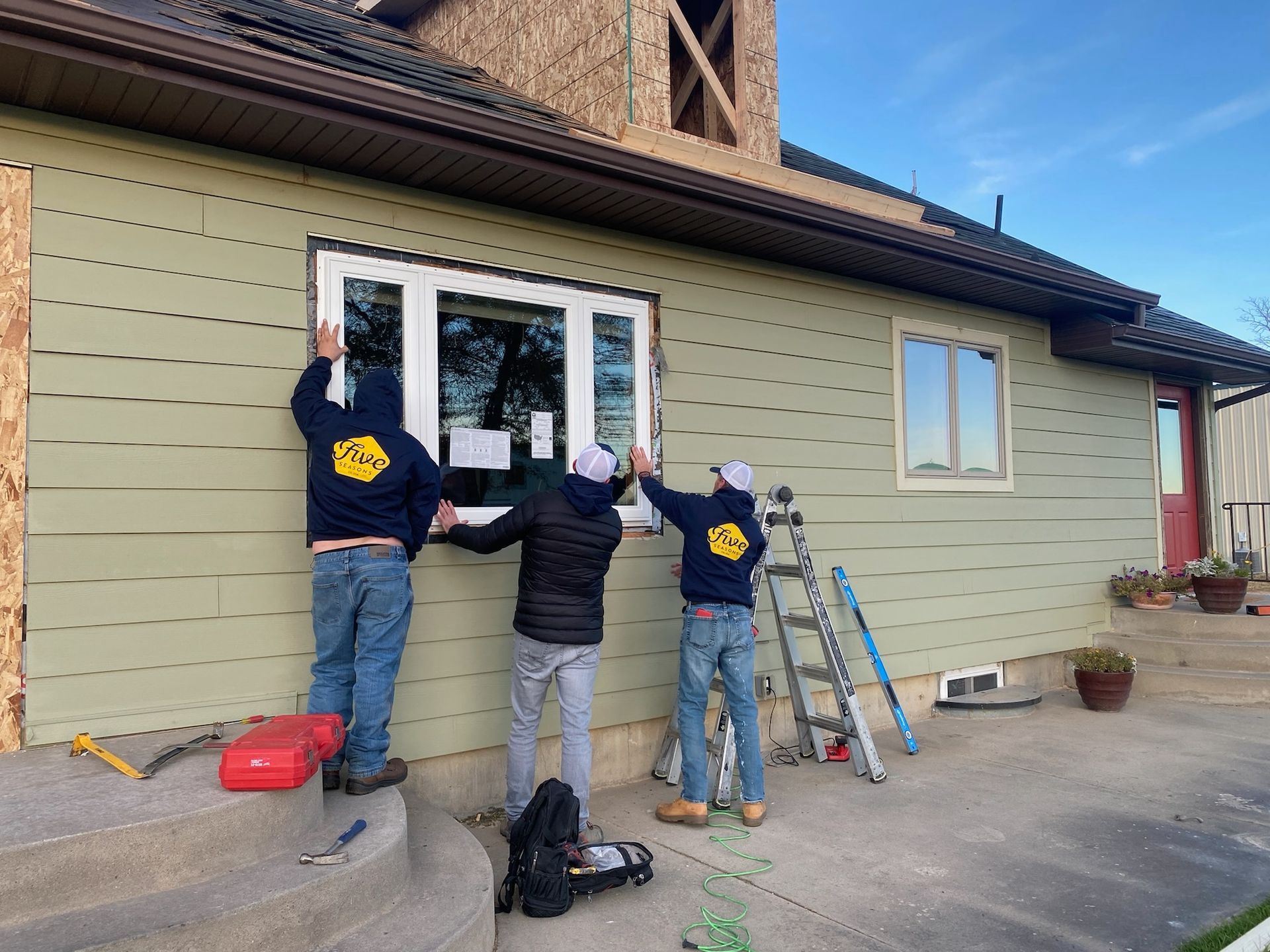
Whichever product you lean toward, plan the siding and the windows together when you can. The joint where siding meets a window or door frame depends on flashing, trim, and sealant being done in the right order, and that is easier to get right when one team is looking at the whole wall.
Before you sign a siding contract, a few direct questions will tell you whether the quote was built for your home or copied from a template. Any installer who knows the product should be able to answer them without hesitation:
- Which product line was quoted, and is it the one matched to my zip code?
- What is my property's fire intensity classification, and does this product or wall assembly meet it?
- Which finish is included, and what does its warranty cover?
- Who handles the flashing and trim where the siding meets my windows and doors?
- What workmanship warranty covers the installation itself?
If the answers are vague, ask for them in writing. The manufacturer's warranty only protects the product, so the installer's answers are the ones that protect your project.
What We See in the Field
Much of what goes wrong on a home's exterior happens exactly where the siding meets a window or door frame. Our customer reviews document a front door with bare wood left exposed where the siding met the frame, and a project where the siding material was not assessed correctly at the start. Both are the kind of mistakes that a good siding and window plan is meant to prevent.
Wall material also changes the work around every opening. Oscar, a homeowner in Highlands Ranch with 24 windows replaced, wrote:
"My home here in Highlands Ranch has stucco on the outside. Stucco can be tricky in taking out old windows and replacing them with new ones. It's always easier on doing windows on brick or normal siding homes. Mark and his team were very careful on the outer stucco walls as well as the inner textured drywall walls. Half the battle is getting windows installed properly."
That last line applies to siding too. Whatever product you choose, the installation is where its warranty either holds up or falls apart. John Kroeger, our Founder and President, has described our approach this way: "We focus on being honest about what we can deliver and then following through." On siding, that means telling you plainly which product fits your fire classification and your wall, even when the answer is not the one you expected.
People Also Ask About James Hardie and LP SmartSide
Is James Hardie better than LP SmartSide?
Neither one is better in every case. James Hardie is fiber cement and is noncombustible under ASTM E136, which gives it a clear advantage in wildfire-prone areas and under Colorado's wildfire code. LP SmartSide is engineered wood with a warranty that names hail specifically and includes five years of full labor and replacement coverage. The better choice depends on your home's fire classification, your hail exposure, and which warranty structure you value more.
Is LP SmartSide good in hail?
LP warrants LP SmartSide Trim and Siding to resist damage from hail up to 1.75 inches in diameter, as long as it is properly installed and maintained according to LP's instructions. LP credits industrial-grade adhesive resins in its SmartGuard process for much of that impact resistance. Larger hail or a severe storm can still cause damage, and that is usually a homeowners insurance question first.
Is James Hardie siding fire resistant?
Yes. James Hardie states that its siding complies with ASTM E136 as a noncombustible cladding and cites a Class A flame spread rating under ASTM E84. In Colorado, that classification helps homeowners meet the exterior wall requirements of the Colorado Wildfire Resiliency Code in moderate and high fire intensity areas. Check your local building department's adopted code, since requirements can vary by jurisdiction.
Can I use LP SmartSide in a wildfire zone in Colorado?
Possibly, but not as a stand-alone product. LP SmartSide is wood-based and does not carry a noncombustible classification, and LP itself recommends a wall assembly approach for wildland areas, pairing the siding with fire-rated sheathing such as LP FlameBlock or half-inch gypsum board. Whether that assembly is accepted for your home depends on your property's fire classification and your local building department.
Which siding has the better warranty?
They are structured differently. James Hardie offers a transferable 30-year non-prorated substrate warranty, plus a 15-year ColorPlus finish warranty covering paint and labor. LP SmartSide offers a 5/50 limited warranty: five years of 100% labor and replacement, then a 50-year prorated warranty on the substrate, along with named hail coverage. Read both full documents, including the installation and maintenance conditions.
Related Reading
If you are weighing new siding for your home, it helps to know how the products fit alongside the windows and doors already on the house.
For background on the James Hardie siding we install and why it suits Colorado homes, see our article on James Hardie siding as a match for Colorado homes.
Our Take
If your home is in a moderate or high fire intensity area, James Hardie is the simpler path. A noncombustible siding can meet the code as the product itself, while LP SmartSide depends on the right fire-rated assembly being built behind it and approved by your building department.
Outside those areas, both are solid choices, and we would not push you toward one over the other on brand alone. Put the two warranty documents side by side, decide whether a named hail warranty or a non-prorated board warranty matters more to you, and plan the siding with your windows and doors so the seams around every opening are done right.
Final Takeaway
James Hardie and LP SmartSide are both well suited to Colorado, but they solve different problems. James Hardie is fiber cement, noncombustible under ASTM E136, built by climate zone, and backed by a 30-year non-prorated warranty. LP SmartSide is engineered wood, treated to resist moisture, termites, and decay, and backed by a 5/50 warranty that names hail.
Start with your property's fire intensity classification, because it can narrow the choice for you. Then compare the warranties, choose the finish you want, and make sure the installer treats the joints around your windows and doors as part of the job, not an afterthought. That combination will do more for the life of your siding than the brand name alone.
Five Seasons Windows and Doors is a family-owned window, door, and siding company serving the Denver metro area, Colorado Springs, Boulder, and the Front Range from its Englewood headquarters. The company holds a 4.9-star rating across more than 280 Google reviews and backs its installations with a lifetime workmanship warranty. Founder and President John Kroeger personally responds to customer feedback.
Get Started Today
Five Seasons Windows & Doors is Colorado’s top-rated local window company with 230+ 5-star reviews. We offer expert advice, no-pressure quotes, and flexible project options — including phased installs. Schedule your consult today.