
Colorado's new 2026 window laws come from House Bill 23-1161 (HB23-1161), and they require any residential windows, doors, or skylights sold in the state to be certified to the Energy Star Northern Climate Zone standard. The rule took effect on January 1, 2026, and applies whether a window is purchased through a national chain, a local dealer, or a contractor. Every new window project in Colorado this year has to clear a higher efficiency bar than it did in 2025.
The rule was finalized by the Colorado Department of Public Health and Environment in June 2025 and pulls residential fenestration into the same efficiency framework as the appliances and plumbing fixtures already covered by the bill. The Energy Star Northern Climate Zone standard relies on Version 7.0 criteria, which the U.S. Environmental Protection Agency finalized in 2022 and put into effect nationally on October 23, 2023. Version 7.0 tightened U-factor requirements across every climate zone and added a minimum solar heat gain coefficient (SHGC) for products certified for Northern Zone use.
For homeowners thinking about replacing windows in 2026, the practical takeaway is that the shopping experience has changed. Some products that were available a year ago no longer comply. Manufacturers have rolled out new glass packages to meet the standard, and not every retailer or contractor has caught up. This guide walks through what HB23-1161 actually requires, what it means for the windows you might choose, and how to avoid getting caught with non-compliant product when it's time to install.
What HB23-1161 Means for Colorado Homeowners
The Basics of the Law
HB23-1161, formally titled Environmental Standards for Appliances, was passed by the Colorado General Assembly in 2023 and signed into law the same year. The legislation expanded the state's existing energy and water efficiency standards to cover a broader range of household products, including residential windows, doors, and skylights. The rules for fenestration were adopted by the Colorado Department of Public Health and Environment in June 2025 and took effect on January 1, 2026.
The law's underlying purpose is to reduce energy waste and improve indoor comfort by requiring that new products sold in Colorado meet a baseline level of efficiency. For homeowners, the most important thing to understand is that the rule does not require you to replace existing windows. It applies only to products newly sold or installed after the effective date.
Who and What Is Covered
The fenestration provisions apply to residential windows, residential doors, and residential skylights sold for installation in homes of three stories or fewer in Colorado. Commercial buildings have a separate regulatory track. The compliance obligation sits primarily with manufacturers and retailers, but it affects homeowners because non-compliant product simply isn't supposed to be available for purchase.
There is no grandfather clause for stock that was manufactured before the effective date. If a retailer wants to sell a window in Colorado on or after January 1, 2026, that window has to meet the standard. The Colorado Department of Public Health and Environment is responsible for verifying compliance, including online spot-checks of retailer listings.
Why the Northern Climate Zone Requirement Matters
Energy Star Zones and How Colorado Fits
Energy Star divides the United States into four climate zones for windows, doors, and skylights: Northern, North-Central, South-Central, and Southern. Each zone has its own efficiency targets, because what works well in Minneapolis isn't necessarily what works well in Atlanta. Colorado straddles the Northern and North-Central zones depending on elevation, with much of the Front Range falling into the North-Central zone under Energy Star's mapping.
Here's the wrinkle. HB23-1161 specifies that windows sold anywhere in Colorado must meet the Northern Climate Zone qualification, the most stringent of the four, even in parts of the state that would technically fall into North-Central under Energy Star's map. That means a product certified only for North-Central use doesn't satisfy the Colorado rule, even if it would be perfectly appropriate for the local climate.
What Version 7.0 Tightened
Energy Star Version 7.0 took effect on October 23, 2023, and represented a meaningful step up from Version 6.0. The new criteria lowered the maximum allowable U-factor (a measure of how well a window resists heat loss) for products sold in every climate zone and, for the first time, set a minimum SHGC requirement for Northern Zone products. A lower U-factor means better insulation. A higher SHGC means more passive solar heat gain in winter, which is genuinely useful in a Colorado climate.
The combined effect is that a Northern-Zone-certified window in 2026 is a different product than a Northern-Zone-certified window from 2022. Glass packages have shifted, frame designs have evolved, and triple-pane configurations have become more common as manufacturers chase the new numbers. Some product lines that comfortably qualified under Version 6.0 needed reformulation to meet Version 7.0, and a few were discontinued in favor of new models.
What This Means When You're Shopping for Windows
Reading the NFRC and Energy Star Labels
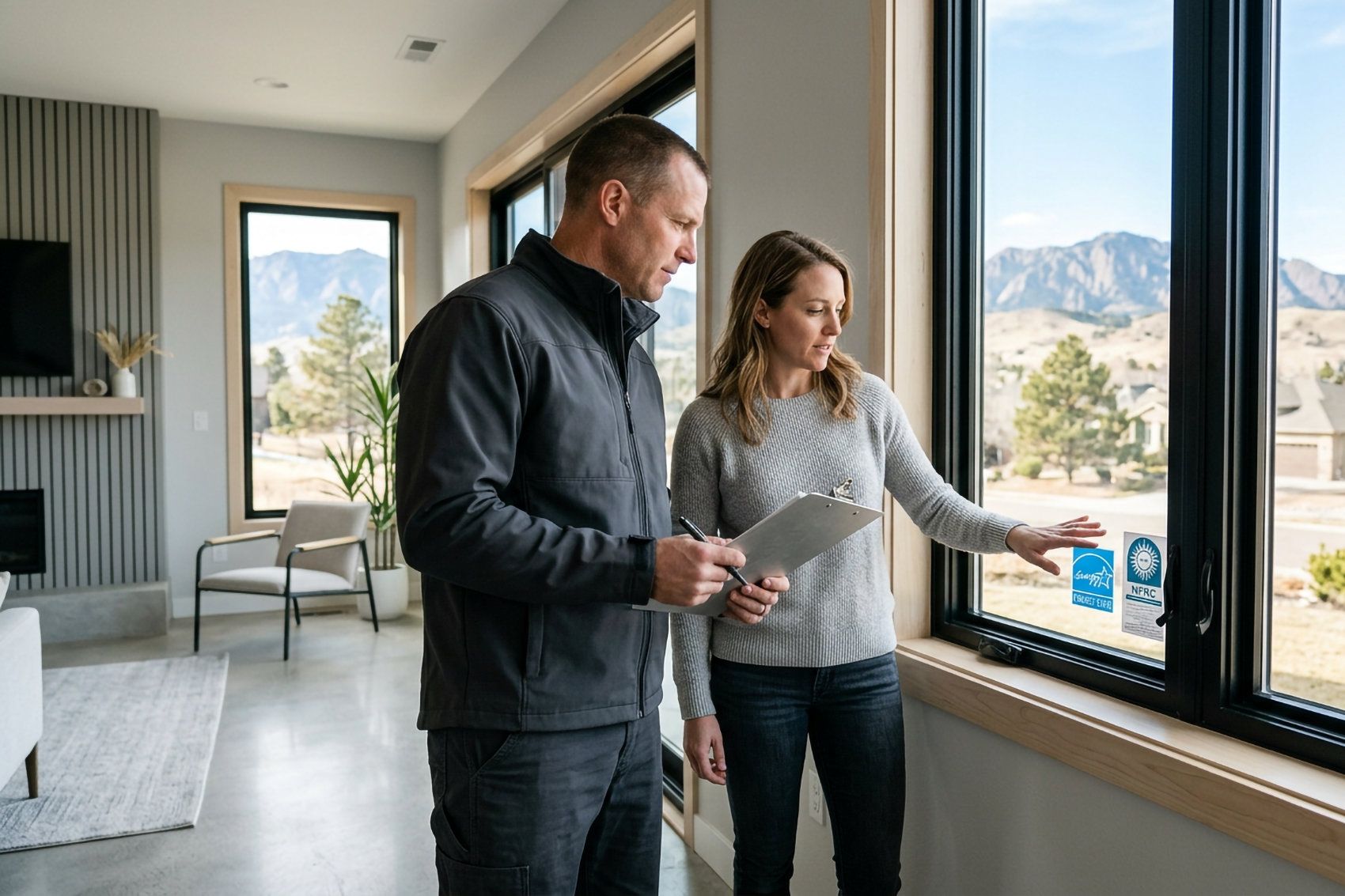
Every Energy Star certified window carries two stickers worth understanding. The blue Energy Star label confirms the product meets the criteria for one or more climate zones. For Colorado in 2026, you want to see the Northern Zone box checked. The NFRC label, issued by the National Fenestration Rating Council, lists the actual performance numbers: U-factor, SHGC, visible transmittance, and air leakage.
Don't rely on marketing language. A window described as "energy efficient" or "high performance" isn't necessarily compliant with the new Colorado rule. The certification mark and the NFRC numbers are what matter. If a salesperson can't show you both, that's a sign to slow down.
Questions to Ask Your Installer
A few questions can help you tell quickly whether a contractor is on top of the new rules. First, ask whether the windows they're quoting are Northern Zone certified under Energy Star Version 7.0. The answer should be immediate. Second, ask for the NFRC label data for the specific glass package being installed, not just the product line. Third, ask whether the manufacturer has issued any documentation related to HB23-1161 compliance.
A contractor who can answer all three without hesitation is probably already operating in the new environment. One who hedges or talks around the question may be working through older inventory.
Working With Compliant Manufacturers and Installers
How the Market Has Adjusted
The window industry had advance notice of HB23-1161, but the adjustment hasn't been uniform. Larger national manufacturers were generally ready well ahead of the deadline, often releasing Version 7.0-compliant glass options before Energy Star's national effective date. Some smaller brands struggled more, and a few exited the Colorado market rather than retool their product lines.
For homeowners, this means brand and product selection in Colorado looks slightly different now than it did two years ago. Some product lines that were widely available in 2024 are no longer offered here, while others have been replaced by updated versions with new model numbers. If you're returning to a brand you used previously, it's worth confirming that the current product is the same as what you remember.
What Compliance Looks Like at Installation
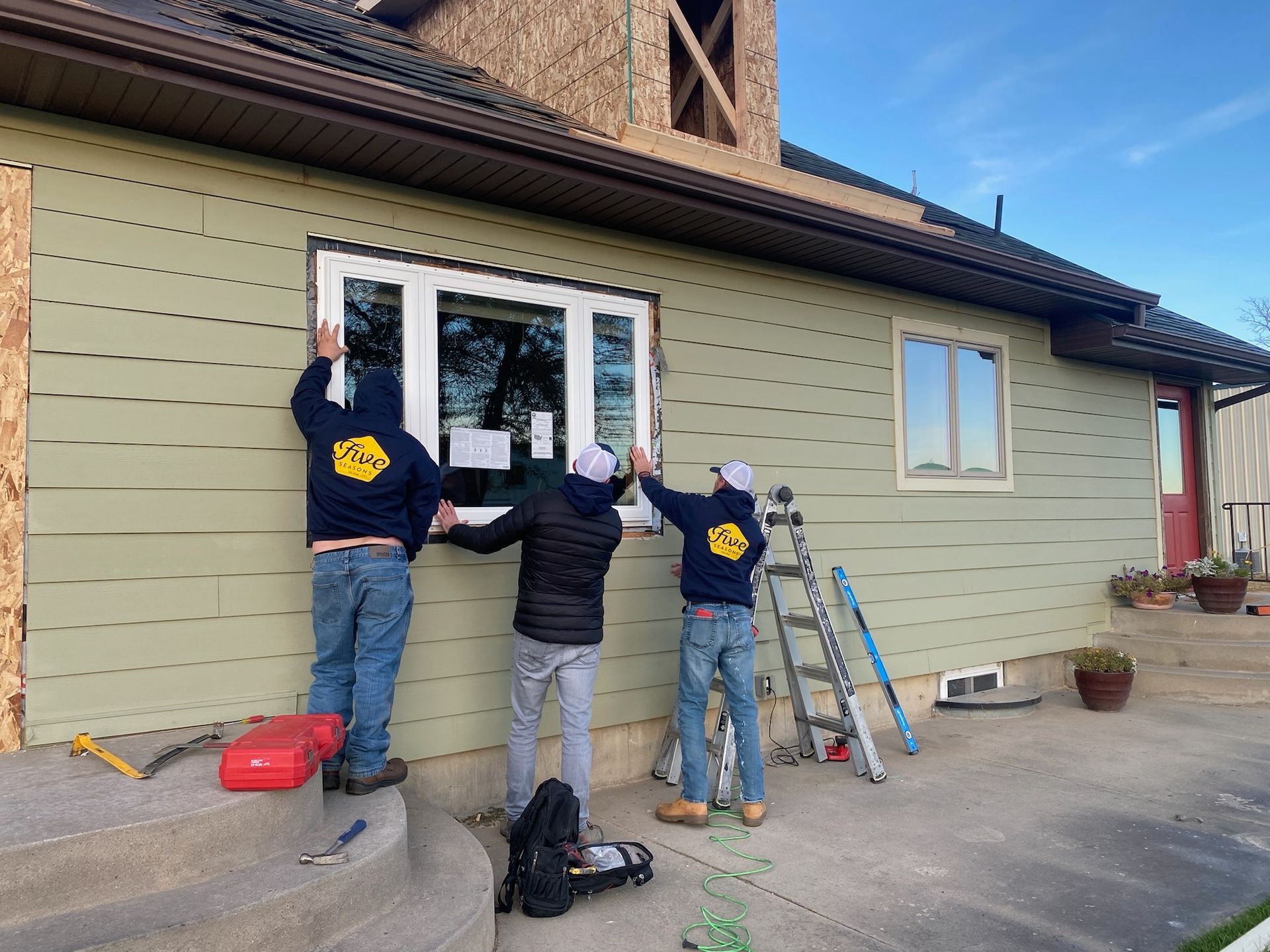
Compliance under HB23-1161 is primarily about the product, not the installation method. A poorly installed window can still underperform its rated specifications, which is one reason the Colorado Energy Office and the U.S. Department of Energy both emphasize professional installation. Air sealing around the frame, proper flashing, and correct sash alignment all matter for the window to actually perform the way its label indicates.
Reputable installers should be willing to share manufacturer certification documentation as part of the project record. Some homeowners keep this paperwork with their home maintenance file, particularly if they anticipate selling and want to be able to verify compliance to a future buyer.
Looking Beyond Compliance for Colorado's Climate
High-Altitude Glass Considerations
HB23-1161 compliance is the floor, not the ceiling. Colorado adds a complication that the national Energy Star framework doesn't address directly: altitude. Sealed insulating glass units manufactured at or near sea level can experience pressure differentials when transported to Denver's 5,280-foot elevation, which can cause glass deflection, seal stress, and gas-fill loss over time.
Manufacturers handle this in different ways. Some install capillary or breather tubes that allow the airspace to equalize with local pressure, though this approach has tradeoffs because gas fills like argon and krypton can escape through the tubes over time, reducing thermal performance. Other manufacturers use factory pre-equalization techniques that seal the unit at a target altitude. Asking a manufacturer how they handle high-altitude installation is a fair and useful question for any Colorado project.
Frame Materials for Temperature Swings
Colorado's dramatic daily temperature changes put a particular kind of stress on window frames. National Weather Service records for Denver show single-day temperature swings of 50 to 60 degrees Fahrenheit are not unusual, with the all-time record at 66 degrees in a single calendar day. Frames that handle this kind of expansion and contraction without warping or losing their seal tend to be the ones that hold up over decades.
Vinyl, fiberglass, and clad-wood all have track records in Colorado, with each offering different tradeoffs in price, longevity, and aesthetics within specific product lines. Vinyl is generally the most affordable and resists temperature-related warping well. Fiberglass expands and contracts at a rate similar to glass, which helps support seal longevity. Clad-wood combines the look of interior wood with a weather-resistant exterior shell, and is often chosen for high-end or historic-style homes.
People Also Ask About the New 2026 Colorado Window Laws
1. Do I have to replace my existing windows to comply with HB23-1161?
No. The law applies only to new products sold or installed in Colorado after January 1, 2026. Existing windows in your home are not affected. The rule kicks in when you decide to replace them. If your current windows are working fine and you're not planning a project, you have no obligation to do anything.
Still, many homeowners use this kind of regulatory shift as a prompt to think about whether their existing windows are still performing well. If you're seeing condensation between panes, drafts around frames, or rising heating bills, the new rule may simply align with a replacement decision you were already considering.
2. Does HB23-1161 apply to repairs and partial replacements?
The law covers products that are sold for installation. A like-for-like repair using a manufacturer's replacement part (for example, a new sash that fits into an existing frame) generally falls outside the new-product rule. However, full window unit replacements, even of a single window in a single opening, do trigger the compliance requirement because the unit being installed is a new product.
If you're working through a phased replacement project where you replace a few windows at a time, each phase needs to use compliant product going forward. Windows installed before January 1, 2026, are not retroactively affected.
3. What if I bought windows in 2025 but haven't installed them yet?
This is a real question for some homeowners who pre-ordered. The compliance trigger under HB23-1161 is the sale of the product in Colorado, not the installation. Product that was lawfully sold in 2025 under the prior rules can generally be installed in 2026 without issue. If you're working with an installer on stock purchased before the effective date, ask them to document the sale date in your project record.
This is also an area where guidance can vary, so if you have a high-value project with pre-purchased stock, it's worth confirming compliance status with the manufacturer directly.
4. Will the new law affect the cost of replacement windows in Colorado?
The short answer is that more efficient windows generally cost more than less efficient windows, and Version 7.0-compliant glass packages do tend to carry a small price premium over Version 6.0 equivalents. The size of that premium varies by product line, frame material, and manufacturer. Triple-pane configurations, which have become more common under the new standard, sit higher in the price range than dual-pane Northern Zone-compliant alternatives.
Over time, the more stringent efficiency standard may show up as lower heating bills, which can help offset the upfront cost. The U.S. Department of Energy and the EPA both publish energy savings estimates for Energy Star-certified windows, though actual savings depend on the home, the climate, and the windows being replaced.
5. How do I check whether a specific window product complies with HB23-1161?
The most reliable way is to look up the product in the Energy Star certified product directory at energystar.gov and confirm that it's certified for the Northern Climate Zone under Version 7.0. The directory is searchable by manufacturer and model. The NFRC certified products directory at nfrc.org offers a parallel cross-check of the underlying performance ratings.
If a product appears in the Energy Star directory with Northern Zone certification, it complies with HB23-1161. If it's certified only for North-Central, South-Central, or Southern zones, it does not, even if the numbers look reasonable for Colorado's climate.
Our Take
At Five Seasons Windows & Doors, we think HB23-1161 is a meaningful change for Colorado homeowners, but not one that should cause panic. The Northern Climate Zone standard pushes the market toward windows that perform better in our actual conditions, which is something we'd recommend regardless of the legal requirement. Cold winters, dramatic daily temperature swings, and high-altitude sun all argue for better glass and tighter frames.
We work with manufacturers whose product lines were already certified to Energy Star Version 7.0 Northern Climate Zone well ahead of the January 2026 deadline. That includes Marvin within specific product lines like the Signature collection, Elevate, and Essential, ProVia doors and windows, and Anlin vinyl windows. Each of these brands handles the standard in slightly different ways, and we walk homeowners through the differences in U-factor, SHGC, and frame construction during the quote process so the choice fits both the home and the budget.
What we'd flag for any homeowner shopping in 2026 is to take the certification question seriously and not let it be glossed over. The labels exist for a reason, and the manufacturer documentation is real. A contractor who can speak fluently about Version 7.0 numbers, who can produce NFRC labels on request, and who can explain how a product fits Colorado's altitude and temperature realities is doing what the new rules effectively ask everyone in this industry to do. That's what we try to bring to every project.
Final Takeaway
The new 2026 Colorado window laws under HB23-1161 represent the most significant change to residential fenestration standards the state has seen in years. The shift to mandatory Northern Climate Zone certification under Energy Star Version 7.0 raises the efficiency floor for every new window, door, and skylight sold in Colorado, which over time should mean better comfort and lower energy use in homes across the state.
For homeowners, the practical implications are manageable as long as you go in informed. Confirm certifications, ask for NFRC labels, and work with installers who treat compliance documentation as part of the job rather than an afterthought. Existing windows are unaffected, so there's no need to rush a project you weren't already planning. But if a replacement is on your horizon, the windows available to you now are better products than what was on offer two years ago, even if they cost a little more to start.
Colorado's climate has always asked a lot of windows. The new law nudges the market toward products that are genuinely up to that task. Choosing well within the new framework, paired with skilled installation, can help your replacement project hold up against everything from January cold snaps to August hailstorms for decades to come.
Get Started Today
Five Seasons Windows & Doors is Colorado’s top-rated local window company with 230+ 5-star reviews. We offer expert advice, no-pressure quotes, and flexible project options — including phased installs. Schedule your consult today.