

Replacing windows in one of Denver's historic homes is a different undertaking than a standard replacement, because the work has to satisfy two goals at once: preserving the architectural character that makes the home historic, and bringing the windows up to modern standards of efficiency and comfort. In neighborhoods like Wash Park, Park Hill, Capitol Hill, Congress Park, and Curtis Park, where homes carry real architectural significance, that balance is governed both by the practical challenge of matching old window profiles and by Denver's landmark preservation rules. The good news is that the two goals are reconcilable, and a well-planned historic replacement can honor a home's character while delivering the performance a Colorado climate demands.
This guide walks through what a historic window replacement actually involves in Denver, using the kinds of situations that come up again and again in the city's older districts. These are illustrative scenarios rather than a single specific project, chosen to show the recurring challenges and how they get solved: the regulatory review process, the work of matching original profiles and materials, the tension between preservation and energy performance, and the decisions a homeowner faces along the way. The aim is to give an owner of a historic Denver home a realistic picture of what the process looks like before they begin.
The throughline is that historic replacement rewards planning and expertise. The homes are worth protecting, the rules are real but navigable, and the right products and approach let a century-old home keep its soul while gaining the efficiency, comfort, and durability of a modern window. Understanding the landscape ahead of time is what turns a daunting-sounding project into a manageable one.
Understanding Denver's Historic Preservation Framework
When Landmark Review Applies
The first thing an owner of a historic Denver home needs to understand is whether their property falls under landmark preservation oversight. In Denver, exterior work that requires a building or zoning permit, which includes window replacement, triggers a Denver Landmark Preservation review when the property is an individually designated landmark or sits within a locally designated historic district. This applies in districts across the city, and notably the review requirement can apply to both contributing historic structures and non-contributing properties within a district, though the process differs between them.
A homeowner can confirm their property's status through Denver's landmark finder or by contacting Landmark Preservation directly. This matters because the review process needs to happen before permits are issued and before work begins, so identifying the requirement early is essential to avoiding delays or, worse, doing work that has to be undone. The simplest first step for anyone in an older district is to find out definitively whether their home is designated or sits in a historic district, since that single fact shapes everything that follows.
What the Review Process Looks Like
For homes subject to review, the process is more involved than a standard permit. Denver's guidelines follow the Secretary of the Interior's Standards for the Treatment of Historic Properties, and historic window replacement specifically calls for a pre-application meeting with Landmark Preservation staff to clarify what the project will require. When the windows being replaced are original or considered historic, the commission generally requires approval and often a professional third-party assessment of the existing windows' condition before replacement is approved, since the strong preference in preservation is always to repair an original window where it can reasonably be saved.
The level of scrutiny tends to track how character-defining a given window is. A window that is part of the home's architectural identity, particularly on a primary facade, receives the most careful review, while windows that are clearly not original, or that are less visible and less defining, can sometimes move through a more streamlined administrative review. It is worth noting that Denver's preservation guidelines evolve over time, with periodic updates that can change the specifics of what is allowed, so confirming the current rules with Landmark Preservation at the outset of a project is always the right move. An experienced local installer who works in these districts regularly can help a homeowner understand and prepare for the process.
The Challenge of Matching Historic Windows
Why Old Windows Are Hard to Replicate
Historic windows were built differently than modern ones, and that is precisely what makes them challenging to replace well. The original windows on a Denver Victorian, Foursquare, Tudor, or bungalow often have proportions, sightlines, muntin patterns, and profile depths that reflect both the architectural style and the manufacturing methods of their era. The thin sightlines of a true divided-lite window, the specific proportions of a double-hung sash, the depth and shadow lines of the trim, all contribute to a look that a generic replacement window simply cannot reproduce.
This is where many historic replacements go wrong. A stock window with chunky frames, the wrong proportions, or flat simulated grilles applied to a single sheet of glass reads as obviously modern and wrong on a historic facade, even to an untrained eye. Preservation guidelines exist precisely because these details matter, and the difference between a replacement that honors the home and one that cheapens it usually comes down to how faithfully the new window reproduces the original's proportions and character.
Consider a Typical Park Hill or Wash Park Home
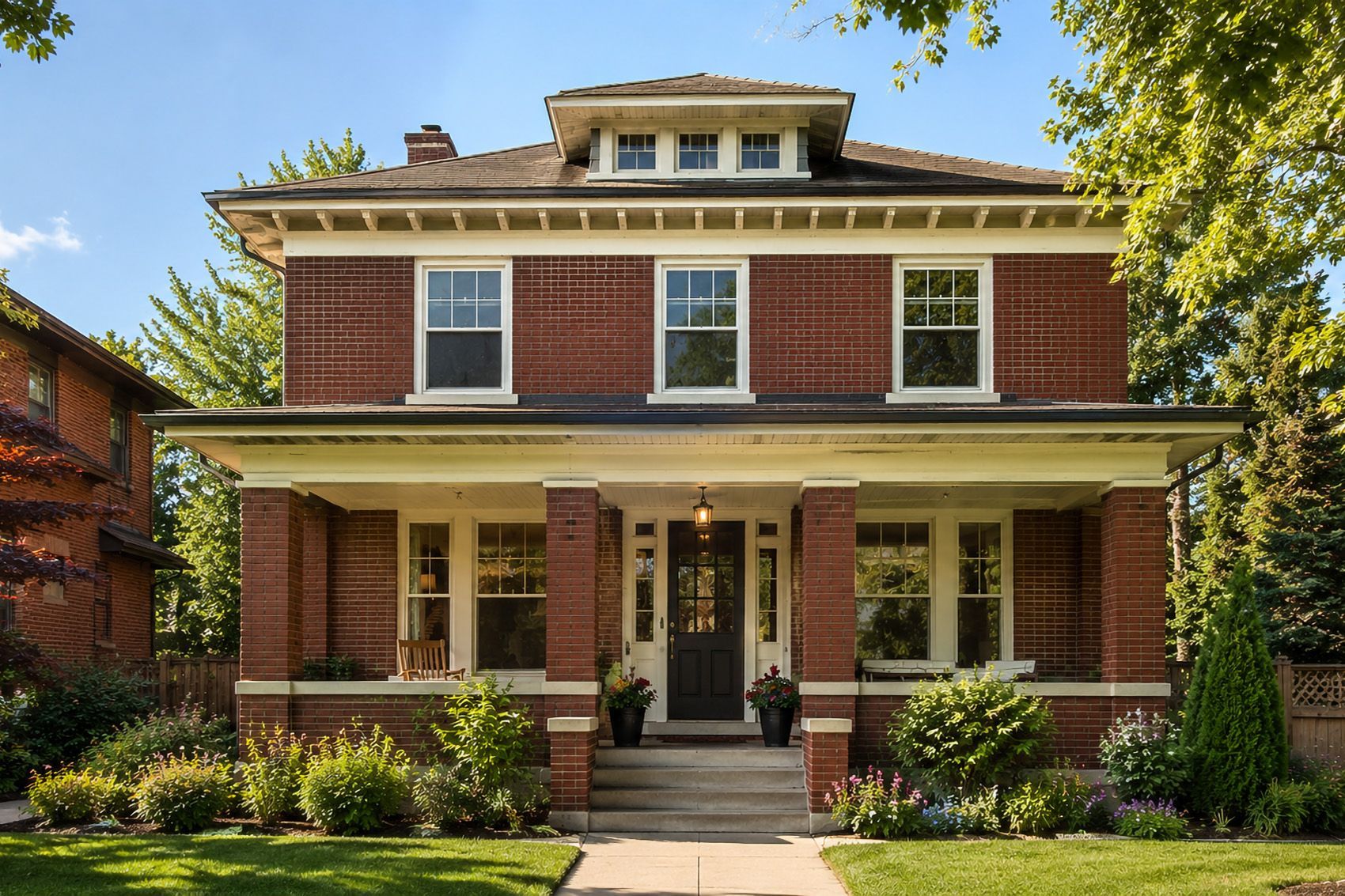
Take a representative example: a 1920s bungalow in Park Hill or a Denver Square in Wash Park with original wood double-hung windows that have aged past the point of comfortable use. The sashes may stick, the single-pane glass offers little insulation, the weatherstripping is long gone, and winter drafts make rooms near the windows uncomfortable. The homeowner wants modern comfort and efficiency but also wants the home to look right and to satisfy preservation review.
In a situation like this, the path that tends to work is a replacement window engineered to reproduce the original's proportions and sightlines, with simulated or true divided lites that match the historic muntin pattern, in a material and finish appropriate to the home. The goal is a window that reads correctly from the street, satisfies the preservation guidelines' emphasis on matching the original design as closely as possible, and quietly delivers modern insulating performance behind a historically accurate appearance. The same logic applies whether the home is a Capitol Hill Victorian, a Congress Park Tudor, or a Curtis Park cottage; the style differs but the principle of faithful matching does not.
Balancing Preservation With Modern Performance
The Efficiency Tension
The central tension in any historic window project is between preservation and performance. Original single-pane wood windows, however beautiful, are poor insulators by modern standards, and a home full of them is expensive to heat and often uncomfortable near the glass. Yet the preservation framework, rightly, prioritizes keeping a home's historic character intact. A homeowner can feel caught between wanting a warmer, more efficient home and wanting to honor the building's history and satisfy the rules.
The resolution is that modern window technology has gotten good enough to deliver both. A well-made replacement can reproduce a historic window's appearance closely while incorporating an insulated glass unit, a Low-E coating, and modern weatherstripping that the original never had. The result honors the look the preservation guidelines protect while quietly solving the efficiency problem the original window created. This is the heart of a successful historic replacement: the facade keeps its period character and the home performs dramatically better than it did.
Meeting Colorado's Standards Within Historic Constraints
There is an added layer in 2026, which is that any new window sold in Colorado must meet the Energy Star Northern Climate Zone standard. For a historic replacement, this means the window going in not only has to satisfy preservation review for its appearance but also has to meet the state's current efficiency requirement. These two requirements are compatible, since quality historic-appropriate replacement windows are built with the insulated, Low-E, argon-filled glass packages that meet the standard, but it does mean the product selection has to thread both needles at once.
This is one more reason historic replacement rewards working with people who know both sides of the equation. For a fuller view of how the 2026 efficiency law, altitude, frame materials, and resale all fit together in a Colorado window project, our Ultimate Guide to Window Replacement in Denver: 2026 Edition covers the broader picture, which applies to historic homes just as it does to newer ones, with the preservation layer added on top.
Choosing the Right Product for a Historic Home
What a Historic-Appropriate Window Needs
The product requirements for a historic replacement are more demanding than for a standard one. The window needs to be available in the right proportions and sizes to match the original openings, often custom-sized rather than pulled from standard dimensions. It needs authentic-looking divided lites, ideally simulated divided lites with proper dimensional muntins rather than flat grilles between glass, to reproduce the historic pattern convincingly. It needs frame and sash profiles that match the slim sightlines of the era rather than the bulkier proportions of many stock windows. And it needs to come in finishes and colors appropriate to the home's period and the district's character.
Material matters here too. Wood, or clad-wood with a wood interior and a protective exterior cladding, is often the most historically appropriate choice for these homes, since it most closely reproduces the look and substance of the original windows while adding modern durability and low maintenance on the exterior. The combination of historically accurate appearance and modern performance is exactly what a good historic replacement product delivers.
Where Premium Lines Earn Their Place
This is the kind of project where a premium, highly customizable window line clearly earns its cost. The Marvin Signature collection, and the Ultimate line in particular, is well suited to historic Denver homes precisely because it can be built to reproduce those original details rather than approximate them. For a homeowner trying to satisfy preservation review while gaining modern efficiency, that ability to match the original closely is exactly what makes the difference between a replacement that looks right and one that does not.
We work with the brands we trust most for Colorado homes, Marvin, ProVia, and Anlin, and for historic work the Signature collection's combination of customization and craftsmanship tends to be the natural fit. The point is not that there is only one option, but that historic homes demand a level of accuracy and customization that rewards a product line built for exactly that, paired with an installer who understands both the preservation requirements and the craft of fitting a modern window into a century-old opening.
Planning a Historic Window Project
Start Early and Expect a Longer Timeline
The single most important piece of advice for a historic window project is to start early and build in time for the review process. A standard window replacement can move relatively quickly, but a historic project subject to landmark review runs through the full preservation process described earlier before permits are issued. This adds weeks or sometimes months to the front end of the project, and rushing it is not an option.
For a homeowner, this means the planning has to begin well before the desired installation date. It also means that custom historic-appropriate windows, which are often made to order, carry their own lead times on top of the review process. A homeowner hoping to have new windows in place by a particular season needs to work backward from that date and start the conversation early, ideally with an installer who can help manage both the preservation process and the product ordering in parallel.
Working With the Right Team
Historic window replacement is not a do-it-yourself project or a job for a general installer unfamiliar with preservation work. The combination of regulatory review, the craft of matching historic detail, the need to meet modern efficiency standards, and the delicacy of working on a valuable older home all argue for working with people who do this kind of work regularly. An experienced team can guide a homeowner through the landmark process, help select a product that will satisfy both preservation review and the efficiency standard, and execute an installation that respects the existing structure.
The reward for getting it right is substantial. A historic Denver home with windows that honor its character while performing like modern ones is more comfortable, more efficient, more valuable, and more true to itself than one with either deteriorating originals or inappropriate replacements. The investment in doing it properly, with the right team and the right products, is what preserves both the home's history and its livability for the decades ahead.
People Also Ask About Historic Window Replacement in Denver
1. Do I need approval to replace windows in a Denver historic district?
In most cases, yes. If your home is an individually designated Denver landmark or sits within a locally designated historic district, exterior work that requires a permit, including window replacement, generally triggers a Denver Landmark Preservation review before permits are issued. This can apply whether your specific property is classified as contributing or non-contributing within the district, though the review process differs between the two.
The best first step is to confirm your property's status through Denver's landmark finder or by contacting Landmark Preservation directly. Because the rules and review processes can change over time, and because the specifics depend on your exact property and district, verifying the current requirements at the outset is the surest way to plan a project correctly. An installer experienced in these districts can help you understand what your particular situation requires.
2. Can I replace original windows, or do I have to repair them?
Preservation guidelines generally favor repairing an original window where it can reasonably be saved, and for original or historic windows the commission often requires a professional assessment of their condition before approving replacement. The strong preference in historic preservation is to retain and repair character-defining original features when feasible, rather than replace them.
Even so, replacement is permitted when an original window is truly beyond reasonable repair, and the guideline in that case is to match the replacement to the original design as closely as possible. The determination involves the window's condition, how character-defining it is, and its visibility and location on the building. This is exactly the kind of question the pre-application meeting and any required assessment are designed to resolve, which is why early engagement with the process matters.
3. Will modern efficient windows look wrong on my historic home?
They do not have to, and this is where product selection makes all the difference. A cheap, generic replacement with bulky frames and flat grilles will look obviously wrong on a historic facade. A quality historic-appropriate window, custom-sized with accurate proportions, slim sightlines, and authentic divided lites, can reproduce the original's appearance closely while incorporating modern insulated glass behind that historically correct look.
The key is choosing a window built for this kind of work and an installer who understands historic detail. Done well, the home keeps the look it has always had from the street while gaining the comfort and efficiency the original windows never offered. The visible character is preserved; the performance is quietly modernized.
4. Do historic replacement windows still have to meet Colorado's 2026 efficiency standard?
Yes. Any new window sold in Colorado as of 2026 must meet the Energy Star Northern Climate Zone standard, and that applies to historic replacements as well as to windows in newer homes. The window going into a historic home has to satisfy both the preservation review for its appearance and the state's efficiency requirement for its performance.
Fortunately, these requirements are compatible. Quality historic-appropriate replacement windows are built with insulated, Low-E, argon-filled glass packages that meet the efficiency standard while reproducing the historic appearance preservation review requires. The product simply has to be selected to satisfy both, which is one more reason historic projects benefit from expertise on both the preservation and the performance sides.
5. How long does a historic window replacement take?
Longer than a standard replacement, mostly because of the review process on the front end. A historic project subject to landmark review involves a pre-application meeting, a complete application, possibly a third-party assessment of the existing windows, and the commission's review, all before permits are issued and work can begin. This can add weeks or months to the timeline compared to a non-historic project.
On top of the review, historic-appropriate windows are often custom-made to match the original proportions and detailing, which carries its own manufacturing lead time. The practical implication is to start early and plan well ahead of any target installation date. A homeowner working with an experienced team can often move the preservation process and the product ordering forward in parallel, but the overall timeline still requires patience and early planning.
Our Take
At Five Seasons Windows & Doors, historic window projects are among the most rewarding work we do, and also among the most demanding. The homes in Denver's older districts, the Victorians, Foursquares, Tudors, and bungalows of Wash Park, Park Hill, Capitol Hill, Congress Park, and Curtis Park, are worth the extra care that preservation work requires. Our approach is to treat the preservation requirements and the performance requirements as two parts of one project rather than competing goals, because modern window technology truly allows a home to keep its historic character while gaining real efficiency and comfort.
For this kind of work, the product matters enormously, which is why we often point historic homeowners toward the Marvin Signature collection, and the Ultimate line in particular. It is built to be made to order for a specific opening and a specific architectural style, which is what lets it satisfy preservation review while meeting Colorado's current efficiency standard in the same window. We also work with ProVia and Anlin where they fit a project, but for the demanding accuracy of historic matching, the Signature collection's customization and craftsmanship tend to be the natural choice.
What we would tell any owner of a historic Denver home is to start early, confirm your property's preservation status, and work with a team that understands both the landmark process and the craft of historic-appropriate installation. The review process is real but navigable, the products to do it right exist, and the result, a century-old home that looks true to itself and performs like a modern one, is well worth the planning it takes to get there.
Final Takeaway
Replacing windows in one of Denver's historic homes means satisfying two goals at once: preserving the architectural character that makes the home significant, and meeting the modern standards of efficiency and comfort that Colorado now requires. In districts like Wash Park, Park Hill, Capitol Hill, Congress Park, and Curtis Park, that means understanding Denver's landmark preservation review, matching the original windows' proportions and detailing faithfully, and selecting products that satisfy both the preservation guidelines and the 2026 Energy Star Northern Climate Zone standard.
None of this is insurmountable, but all of it rewards planning and expertise. The preservation review is a real process with a pre-application meeting, possible third-party assessment, and commission approval, so timelines run longer and early planning is essential. Matching a historic window convincingly demands custom sizing, authentic divided lites, and slim sightlines that generic stock products cannot reproduce. And the right product, often a highly customizable clad-wood line, has to deliver historic accuracy and modern performance in the same window.
The encouraging truth is that a well-executed historic replacement gives a homeowner the best of both worlds: a home that looks essentially unchanged from the street, honoring the character that makes Denver's older districts special, and windows that quietly deliver the efficiency, comfort, and durability the originals never could. With the right planning, the right team, and the right products, a century-old Denver home can keep its soul and gain a modern level of performance at the same time, which is exactly what good historic preservation is meant to achieve.
Get Started Today
Five Seasons Windows & Doors is Colorado’s top-rated local window company with 230+ 5-star reviews. We offer expert advice, no-pressure quotes, and flexible project options — including phased installs. Schedule your consult today.