

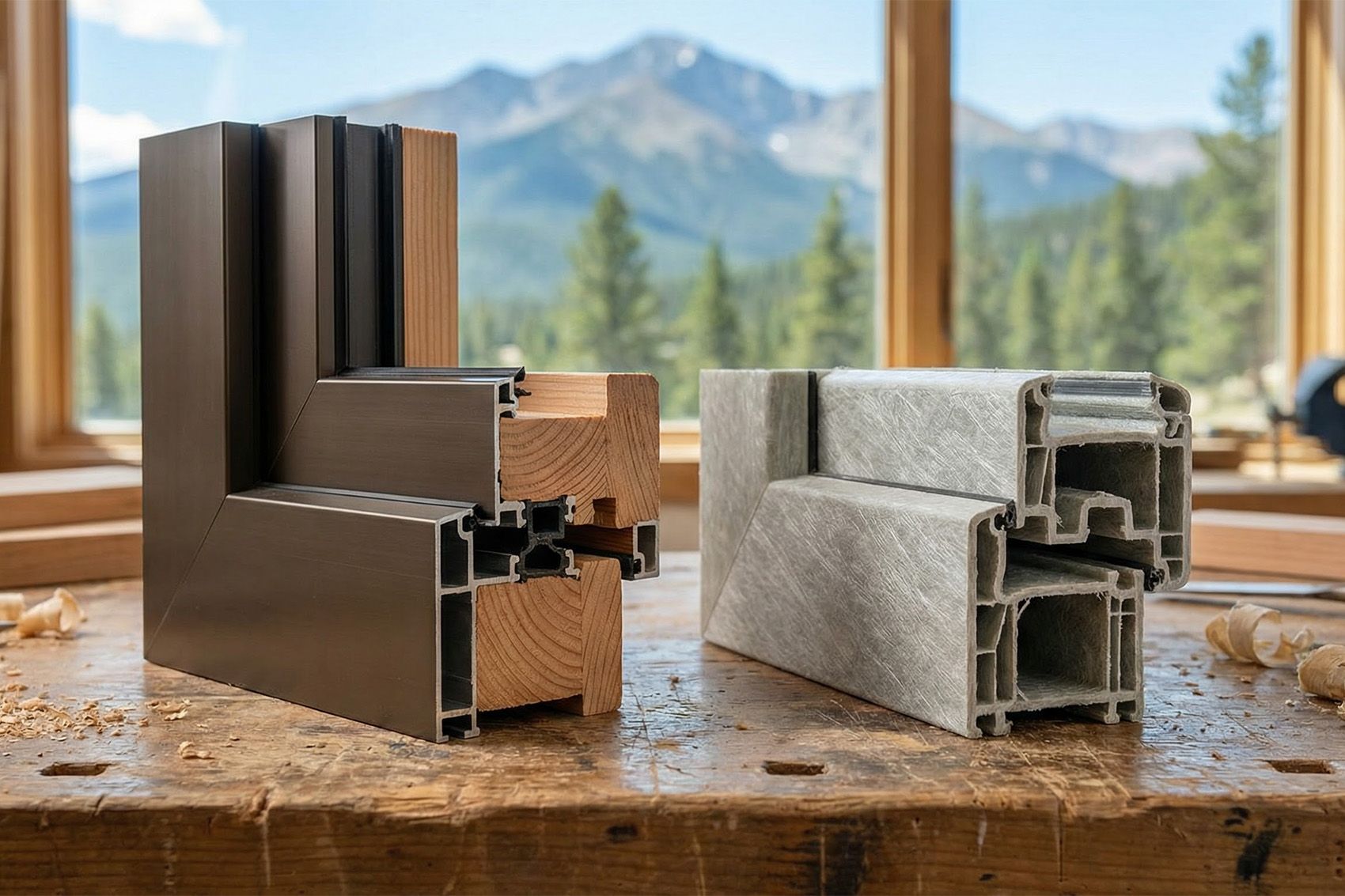
The best window materials for Colorado's climate are fiberglass and aluminum-clad wood, both of which handle the state's unique combination of intense UV exposure, dramatic temperature swings, and low humidity far better than standard vinyl or unprotected wood. At elevations ranging from 5,000 to over 10,000 feet, window frames face conditions that accelerate material degradation and test thermal stability in ways that sea-level installations rarely experience.
Colorado homeowners replacing windows often focus primarily on glass performance - low-E coatings, argon fills, U-factors. While glazing matters significantly, frame material determines how well your windows hold up structurally over decades of Colorado's demanding conditions. A premium glass package in a frame that warps, fades, or loses seal integrity delivers disappointing long-term value regardless of its initial energy ratings.
This guide examines how different frame materials perform specifically in Colorado's high-altitude environment, helping you choose windows that maintain their appearance, operation, and energy efficiency for decades rather than years.
How Colorado's Climate Challenges Window Materials
Intense UV Exposure at Altitude
UV radiation intensity increases with elevation as the atmosphere thins and filters less ultraviolet light. According to the U.S. Environmental Protection Agency, UV intensity increases about 6% per kilometer above sea level. At Denver's 5,280 feet (approximately 1.6 kilometers), this translates to roughly 10% more UV exposure than sea level. In mountain communities at 9,000-10,000 feet, exposure increases proportionally higher.
This intensified UV exposure accelerates material degradation in ways that matter significantly for window longevity. Vinyl, in particular, suffers from UV degradation. The polymers that give vinyl its flexibility break down under UV exposure, leading to brittleness, color fading, and eventual cracking. While UV stabilizers in quality vinyl products slow this process, they cannot eliminate it. At Colorado's elevations, vinyl windows age faster than identical products installed at lower altitudes.
Wood without adequate protection faces similar challenges. UV breaks down lignin - the compound that gives wood its structural strength - causing surface degradation that leads to checking, splitting, and finish failure if not properly maintained.
Extreme Temperature Cycling
Colorado's temperature swings challenge window materials differently than steadily cold or warm climates. A Front Range home might experience temperatures from -10F to 70F within a single winter week. Mountain properties regularly see 50-degree daily temperature swings during shoulder seasons.
This thermal cycling causes materials to expand and contract repeatedly. Different materials expand at different rates - a critical factor for windows where glass meets frame. When frame materials expand significantly more than glass during temperature changes, stress concentrates at the seal between them. Over years of cycling, this stress can cause seal failures, operational problems, and air infiltration.
Fiberglass expands at nearly the same rate as glass - a fundamental advantage that reduces seal stress and extends window longevity. Vinyl expands at a significantly higher rate than glass, creating substantially more stress during Colorado's temperature extremes.
Low Humidity and Drying Conditions
Colorado's low humidity benefits some materials while challenging others. The arid climate reduces moisture-related problems like rot and mold that plague windows in humid regions. However, the persistent dryness can cause wood to shrink and check if not properly sealed and maintained.
Metal components benefit from Colorado's dry air - aluminum and steel hardware corrode far more slowly here than in humid or coastal environments. This makes aluminum-clad wood an excellent choice for Colorado, combining wood's interior warmth with aluminum's exterior durability in conditions that favor aluminum's longevity.
Fiberglass: The Performance Leader for Colorado
Why Fiberglass Excels at Altitude
Fiberglass window frames offer the best combination of characteristics for Colorado's demanding conditions. The material's thermal expansion rate closely matches glass, reducing the stress that causes seal failures in extreme temperature cycling. Its inherent UV stability means the material itself does not degrade from sun exposure the way vinyl does.
Fiberglass is a composite material - glass fibers embedded in a polymer matrix. This composition provides exceptional strength-to-weight ratio while remaining dimensionally stable across temperature extremes. Quality fiberglass frames maintain their shape and seal integrity through decades of Colorado's thermal cycling.
The material's strength allows manufacturers to create narrower frame profiles than vinyl requires, maximizing glass area and views. For Colorado homeowners prioritizing mountain vistas, this means more view and less frame in each window.
Fiberglass Performance Characteristics
Fiberglass provides excellent thermal performance as a frame material. Its low thermal conductivity reduces heat transfer through the frame itself - a factor often overlooked when homeowners focus exclusively on glass specifications. Combined with appropriate glazing packages, fiberglass-framed windows achieve outstanding whole-window energy performance.
Durability represents fiberglass's strongest advantage. The material resists warping, rotting, corroding, and UV degradation. It will not swell or shrink with humidity changes. Quality fiberglass windows maintain smooth operation and tight seals for 30-40 years or longer - significantly outlasting vinyl alternatives in Colorado's conditions.
Maintenance requirements are minimal. Fiberglass frames need only occasional cleaning. The material can be painted if desired, though factory finishes on quality products maintain their appearance for decades without refinishing.
Marvin Fiberglass: Proven Performance
Marvin offers fiberglass options engineered for exceptional durability and dimensional stability. The material expands at virtually the same rate as glass, meaning seals experience minimal stress during temperature cycling - keeping windows tight and true through decades of Colorado's dramatic temperature swings. Marvin's fiberglass finishes resist fading, chalking, peeling, and cracking even in dark colors, maintaining appearance and performance through decades of altitude conditions.
Aluminum-Clad Wood: Premium Performance with Traditional Beauty
The Best of Both Worlds
Aluminum-clad wood windows combine a wood interior with an extruded aluminum exterior shell. This hybrid approach delivers the warm aesthetic and design flexibility of wood inside while providing aluminum's durability and weather resistance outside - an excellent combination for Colorado's climate.
The wood interior offers natural beauty, excellent insulating properties, and the ability to stain or paint to match any interior design. Wood provides warmth both visually and thermally that synthetic materials cannot replicate.
The aluminum exterior handles Colorado's demanding conditions exceptionally well. Aluminum does not degrade from UV exposure, will not warp or crack from temperature cycling, and requires virtually no maintenance. Colorado's dry climate eliminates the corrosion concerns that affect aluminum in humid or coastal environments, making it an ideal exterior material here.
Performance in Colorado Conditions
Aluminum-clad wood windows handle Colorado's climate challenges effectively. The aluminum exterior protects against UV damage and temperature extremes while the wood interior provides thermal break and aesthetic appeal. The combination delivers both durability and energy efficiency.
The thermal break between aluminum exterior and wood interior matters significantly for energy performance. Quality aluminum-clad wood windows prevent the exterior aluminum from conducting cold directly to the interior, maintaining comfortable interior frame temperatures even during extreme cold.
Marvin Ultimate: The Premier Aluminum-Clad Wood Option
Marvin's Ultimate line, part of their Signature Collection, represents the pinnacle of aluminum-clad wood window design. These windows feature wood interiors protected by tough extruded aluminum exteriors - a combination that performs exceptionally well in Colorado's climate.
The Ultimate collection offers the most extensive selection of shapes, styles, sizes, and options available. Choose from 19 durable extruded aluminum exterior colors, including rich hues and pearlescent finishes, plus custom color matching for specialized projects. Interior wood options include six species plus custom selections, with painted, primed, or stained finishes.
For Colorado homeowners, the Ultimate line's combination of protected wood interiors and virtually maintenance-free aluminum exteriors delivers lasting beauty without the upkeep burden that all-wood windows require. The aluminum exterior handles UV exposure and weather extremes while the wood interior provides the warmth and design flexibility that premium homes deserve.
Considerations for Aluminum-Clad Wood
Wood interiors require some maintenance awareness, though far less than all-wood windows. The interior wood should be kept clean and dry, and any finish maintained according to manufacturer recommendations. Most homeowners find this minimal maintenance worthwhile for wood's aesthetic benefits.
Cost runs higher than vinyl or all-fiberglass options, reflecting the premium materials and more complex manufacturing. For homeowners prioritizing both interior aesthetics and exterior durability, aluminum-clad wood delivers value that justifies the investment - particularly in Colorado's favorable climate for aluminum exteriors.
Vinyl: Budget-Friendly with Limitations at Altitude
Understanding Vinyl's Trade-offs
Vinyl windows offer the lowest initial cost among common frame materials, making them popular for budget-conscious projects. Quality vinyl products from reputable manufacturers can provide reasonable performance, though Colorado's conditions present specific challenges worth understanding.
The fundamental consideration is thermal expansion. Vinyl expands and contracts more than glass as temperatures change. In Colorado's climate - where temperature swings of 50 degrees occur regularly - this differential movement stresses the seals between vinyl frames and glass more than in moderate climates. Over time, this stress can contribute to seal degradation, operational changes, and increased air infiltration.
UV degradation presents another consideration at Colorado's elevations. While quality vinyl includes UV stabilizers, the intensified UV exposure at altitude accelerates wear. Vinyl windows that might last 25-30 years at sea level may show signs of wear - brittleness, color fading, surface chalking - earlier in Colorado's mountain communities.
Quality Vinyl Options: Anlin Windows
Not all vinyl windows are equal, and quality matters significantly for Colorado performance. Anlin, one of the brands we carry, has built a strong reputation for energy-efficient vinyl windows with advanced glazing systems. Their products include proprietary technologies designed to maximize energy performance - an important consideration given Colorado's heating and cooling demands.
For homeowners where budget is a primary consideration, quality vinyl from manufacturers like Anlin provides a reasonable option, particularly for Front Range locations at moderate elevations. The key is selecting well-engineered products with strong warranties rather than budget alternatives that cut corners on materials and construction.
Where Vinyl Works Best
Vinyl performs most reliably in protected applications with moderate exposure. Front Range homes at lower elevations (5,000-6,000 feet), windows on shaded exposures, and applications where cost constraints genuinely limit options all represent reasonable vinyl applications.
The decision requires honest assessment of priorities and expectations. If budget permits premium materials, fiberglass or aluminum-clad wood will typically deliver better long-term value in Colorado. If budget constraints are real, quality vinyl from established manufacturers provides an acceptable option with realistic expectations about service life.

All-Wood Windows: Beautiful but Demanding
All-wood windows offer unmatched aesthetic warmth and customization options, making them appropriate for historic preservation or designs requiring authentic wood appearance. However, wood exteriors demand significant maintenance in Colorado - annual inspection and refinishing every 3-5 years due to accelerated UV degradation and drying conditions at altitude.
For homeowners committed to this maintenance schedule, all-wood windows can provide decades of service. For those preferring lower-maintenance solutions, aluminum-clad wood delivers similar interior aesthetics with far less exterior upkeep.
Choosing Materials by Location
Front Range homes (5,000-6,000 feet) experience moderate climate challenges. Both fiberglass and aluminum-clad wood perform excellently. Quality vinyl can work acceptably for budget-conscious projects, though with shorter expected lifespan.
Mountain properties (8,000-10,000+ feet) face the most demanding conditions. Fiberglass and aluminum-clad wood are strongly recommended. Vinyl is generally not recommended due to accelerated degradation at higher elevations.
Historic homes may require matching original profiles. Options include all-wood with maintenance commitment, aluminum-clad wood that matches profiles while reducing upkeep, or fiberglass products designed for historic proportions.
People Also Ask About Window Materials for Colorado
1. What window frame material lasts longest in Colorado's climate?
Fiberglass typically provides the longest service life - 30-40 years or more - due to thermal stability, UV resistance, and dimensional consistency. Aluminum-clad wood also provides exceptional longevity (30+ years) with minimal maintenance. Vinyl's lifespan at Colorado elevations typically runs 15-20 years before showing significant wear.
2. Is vinyl a bad choice for windows in Colorado?
Vinyl is not automatically bad, but Colorado's conditions expose its limitations. The material's high thermal expansion rate causes more stress in temperature extremes, and UV at altitude accelerates degradation. Quality vinyl can provide acceptable service for 15-20 years in Front Range locations. For mountain properties or long-term ownership, fiberglass or aluminum-clad wood typically deliver better value.
3. Why does thermal expansion matter for window performance?
When frame materials and glass expand at different rates during temperature changes, stress builds at the seal between them. Colorado's dramatic temperature swings create continuous expansion cycles. Materials like fiberglass that expand at nearly the same rate as glass maintain seal integrity. Vinyl expands much more than glass and may develop seal failures and air leaks over time.
4. Are wood windows appropriate for Colorado homes?
Wood windows work well with appropriate protection and maintenance. All-wood windows require annual inspection and refinishing every 3-5 years to handle UV and drying conditions. Aluminum-clad wood windows protect the exterior while providing wood's beauty inside, dramatically reducing maintenance. For wood aesthetics, aluminum-clad options typically make more practical sense.
5. How do I choose between fiberglass and aluminum-clad wood?
Both perform excellently in Colorado. Fiberglass offers lowest maintenance, best thermal stability, and typically lower cost. Aluminum-clad wood provides interior wood warmth and extensive design customization - the premium choice for those prioritizing aesthetics. If minimal maintenance matters most, choose fiberglass. If interior wood appearance matters most, choose aluminum-clad wood.
Related Reading
Choosing the right frame material is one component of successful window replacement. Ensuring proper fit maximizes performance regardless of material selection.
For guidance on how precision sizing improves window performance and longevity, see our article on custom window fitting benefits in Colorado.
Our Take
At Five Seasons Windows & Doors, we focus on materials proven to perform in Colorado's demanding conditions. Our top recommendation is Marvin's Signature Ultimate collection - aluminum-clad wood windows combining weather-resistant aluminum exteriors with warm wood interiors. For budget-conscious projects, Anlin provides quality vinyl options with advanced glazing technology. ProVia rounds out our offerings with durable, security-focused options.
That honest approach - recommending what actually works in Colorado - explains our 230+ five-star reviews from homeowners throughout the state.
Final Takeaway
Colorado's high-altitude climate demands more from window materials than most locations. Fiberglass and aluminum-clad wood consistently outperform vinyl and unprotected wood in UV resistance, thermal stability, and long-term durability. While these premium materials cost more initially, their extended service life and maintained performance typically deliver better total value than budget alternatives that need earlier replacement. Choose materials based on realistic performance expectations for Colorado's conditions, your maintenance preferences, and your planned ownership period. The windows that serve you best are those matched to both your priorities and the demands of altitude.
Get Started Today
Five Seasons Windows & Doors is Colorado’s top-rated local window company with 230+ 5-star reviews. We offer expert advice, no-pressure quotes, and flexible project options — including phased installs. Schedule your consult today.