

Usually not by today's standards, though they still insulate better than single-pane glass. A double-pane window from the 1990s may have lost some of its gas fill, may have a failing seal, and may lack the Low-E coating that does most of the work in a modern window. Its frame and weatherstripping have also aged through three decades of sun and freeze-thaw cycles. Whether yours are still worth keeping depends on four things: whether the seals are intact, whether the glass has a Low-E coating, what the frames are made of, and whether the windows still close tightly.
The numbers show how far the standard has moved. In a technical bulletin, insulating glass manufacturer Cardinal IG Company uses the example of a clear double-pane unit with air between the panes: its glass alone rates a U-factor of 0.48, and filling it with argon only improves that to 0.46. Under ENERGY STAR Version 7.0, the main requirement for a whole window in the Northern climate zone is a U-factor of 0.22 or lower. A lower U-factor means less heat escapes, so a clear double-pane window from decades ago sits far from today's benchmark.
That does not mean every 30-year-old window needs replacing tomorrow. This guide explains what changes inside a double-pane window as it ages, how to check the windows in your own home, and when keeping them still makes sense. Along the way, we share what our customers have told us after replacing windows in older Colorado homes.
What Happens to a Double-Pane Window Over 30 Years
The Gas Fill Slowly Escapes
Many double-pane windows are filled with argon gas between the panes because it slows heat transfer better than air. The seal keeps it in, but no seal is perfect. A technical bulletin from the building science firm RDH notes that, at most, "argon may diffuse through some sealant materials at a rate of approximately 0.5% to 1% per year," and that a faster loss suggests the seal itself is compromised.
The good news is that argon is not where most of a window's efficiency comes from. Cardinal states that "the addition of argon gas provides only a small improvement in U-Factor compared to the addition of a LoĒ coating." So a window that has lost some of its argon over 30 years has lost a little performance, not most of it.
Oscar, a Highlands Ranch homeowner who works in the insulation industry, described the role of the gas in plain terms after replacing 24 windows and a sliding door:
"Being in the insulation industry I am highly particular and knowledgeable about the value that good windows bring to insulating a home via dual pane windows with the Argon gas in between the two layers of glass. Great windows make a significant reduction in heat or cold transfer into your home."
The Seal Can Fail
The bigger risk is a failed seal. The edge seal is what keeps the space between the panes sealed and dry. Over decades of heating and cooling, the seal can weaken, and once it does, moist outside air can work its way in.
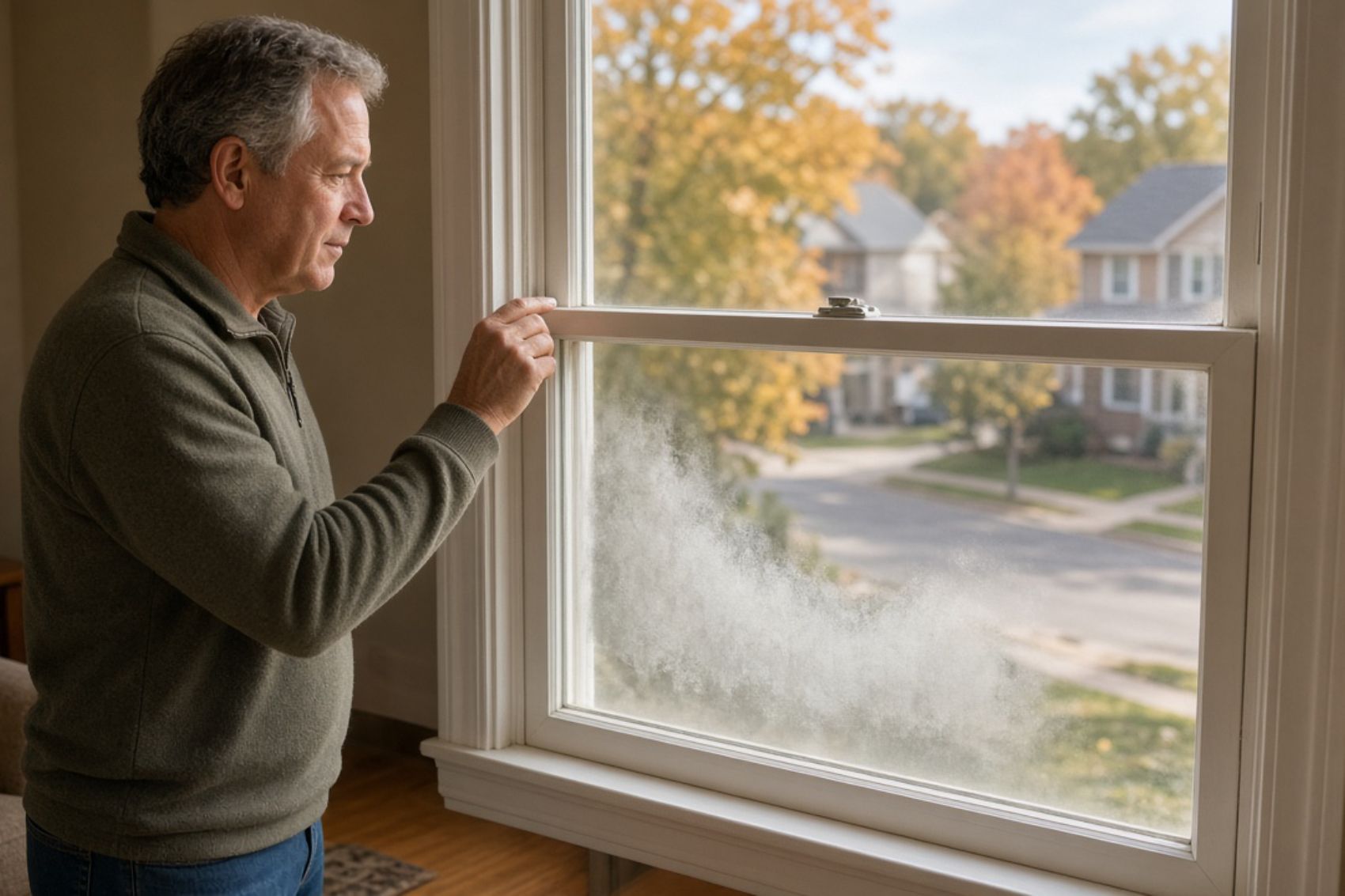
The classic sign is fog, haze, or water droplets between the two panes that you cannot wipe away from either side. Once that happens, the gas fill is gone and the sealed space is no longer doing its job. The window still has two panes of glass, but it performs more like two panes with ordinary, damp air between them, and the haze often gets worse over time.
Colorado's climate can add stress on seals. Wide daily temperature swings make the glass and frame expand and contract, and strong high-altitude sun heats the edges of the unit day after day.
Why a 1990s Window Falls Short of Today's Standards
Many Were Built Without Low-E Coatings
A Low-E coating is a microscopically thin metallic layer on the glass that reflects heat back toward its source. It keeps warmth inside in winter and turns away some of the sun's heat in summer. In modern windows, it is one of the biggest upgrades over plain double-pane glass.
Low-E technology was available decades ago. An explainer from the American Energy Innovation Council notes that the first mass-market Low-E window product was released in 1981. But a window from that era did not always have it, and some windows of that period were built with clear glass. If your 30-year-old windows have clear glass, they are missing the feature that matters most.
Frames and Weatherstripping Have Aged Too
Glass is only part of a window. Many Colorado homes built in past decades have aluminum frames, and aluminum conducts heat readily, so the frame itself turns cold in winter. Older vinyl frames can become brittle or warp after years of intense sun, and wood frames may have gaps where paint and caulk have failed.
Weatherstripping wears out as well. Over three decades, the seals around the moving sash compress, crack, or fall away. When that happens, air leaks around the window even if the glass itself is fine. A window with decent glass and a worn-out seal can feel just as drafty as a single-pane window on a windy day.
James C., who bought a home that still had its original windows, put the starting point in plain terms:
"We recently purchased a home that needed a complete overhaul (including the original 1967 aluminum windows!)."
How to Check Your Own Windows
Signs the Seal Has Failed
Start by walking through the house on a cool morning and looking closely at each window. These are the most common signs of a failed seal:
- Fog, haze, or droplets between the panes that you cannot wipe away
- A cloudy film or white residue on the inside surfaces of the glass
Fog or residue between the panes means the sealed unit has lost its insulating gas and is letting moisture in. That window is no longer performing like a double-pane window should, and it will not get better on its own.
Signs of Air Leaks and Missing Low-E
Seal failure is easy to see. Air leaks and missing coatings take a little more attention. On a cold, windy day, hold your hand near the edges of the sash and the frame. A noticeable draft points to worn weatherstripping or a sash that no longer closes tightly. Frost or heavy condensation on the inside of the glass in winter can also point to poor insulation.
To check for Low-E, look at the reflections in the glass. When you hold a light near a pane, you will see two reflections for each sheet of glass. A coated surface often shows a reflection with a slightly different tint from the others. You can also look for the manufacturer's markings on the spacer bar between the panes, which can help a window professional identify the product and its age. If you are unsure, a window consultant can usually tell at a glance.
When Keeping Your Old Windows Makes Sense
Windows That May Still Have Life Left
Not every 30-year-old window is a problem. If your windows have intact seals, a Low-E coating, frames in good shape, and sashes that close tightly without drafts, they may still be doing a reasonable job. In that case, replacing them is less urgent, and the money may do more elsewhere first.
Simple maintenance can also help in the meantime. New weatherstripping, fresh exterior caulk, and adjusting sashes that no longer lock tightly can reduce drafts. These are small fixes, but they address the air leaks that make older windows feel cold.
Looking at the Whole House
Windows are one part of how a home holds heat. Attic insulation, air sealing, and doors all play a role, and the best results often come from addressing them together. Oscar made that point after pairing new windows with other upgrades:
"This in conjunction with proper attic insulation, which I also recently had done as well, make a significant difference in the comfort and energy savings in your home."
If your windows are borderline, start with the ones that are clearly failing: fogged units, drafty sashes, and the windows on the coldest or sunniest sides of the house. Replacing the worst windows first can be a practical way to spread the investment over time.
What a Modern Replacement Window Changes
Better Glass and Better Frames
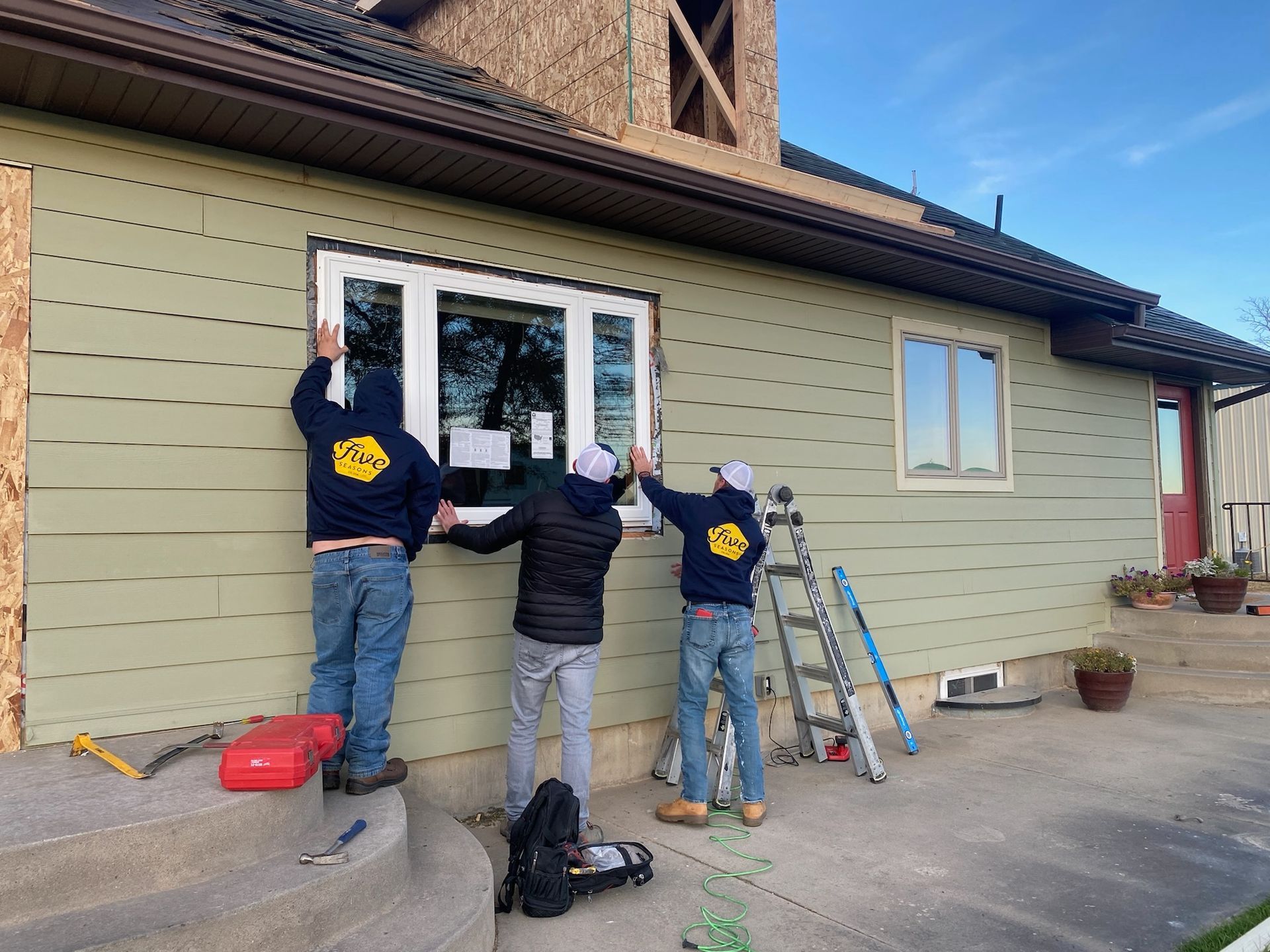
A modern replacement window combines the features an older window may lack: insulated glass with an argon fill, a Low-E coating matched to the climate, a warm-edge spacer, and a frame that resists heat flow. Every new window carries a National Fenestration Rating Council (NFRC) label with its U-factor and Solar Heat Gain Coefficient, so you can compare products on independent ratings rather than marketing claims.
The windows we install come from Marvin, Anlin, and ProVia, and the right choice depends on the home. For homeowners who want a premium look and long-term durability, the Marvin Signature Ultimate collection pairs a wood interior with aluminum cladding outside that protects the frame from Colorado sun and weather. Anlin builds vinyl windows, and Oscar noted that "the glass that Anlin Windows uses is made by Cardinal Glass," the same company whose technical data appears earlier in this guide. Cost varies with the product, size, and installation. John Kroeger, our Founder and President, has put the range at roughly $750 to more than $3,000 per window installed.
Comfort You Notice Right Away
The difference after replacing old windows often shows up first as comfort. Rooms that used to feel drafty near the glass hold their temperature better, and the furnace may not need to run as hard to keep up. Oscar summed up the result this way:
"Replacing our windows was relatively affordable and gives substantial value in helping to bring your energy bill down and keeping your home at a comfortable temperature."
How much a replacement lowers your bills depends on your current windows, your home, and how you heat and cool it, so be cautious of any quote that promises a specific savings figure. Comparing NFRC ratings for the exact windows being proposed is a more reliable way to judge the upgrade.
What We See in the Field
Some of the clearest results come from older homes, where the original windows have been working for decades. Deb's house was 63 years old when we replaced its windows, and the review described the result in a few words: "This old home is snug, warm and filled with light." The same review noted that "Older houses present challenges that didn't phase this company."
Older homes can also slow a project down. Racheal S., whose project included a very large bay window, listed "challenges working with our older home" among the reasons parts of the process ran slower than expected. John Kroeger has described our approach to those projects this way:
"Older homes and occasional supplier or scheduling issues can sometimes add complexity, but our goal is always to make sure the final result is done the right way."
The proof comes later, through a few seasons of Colorado weather. Bill R., whose project replaced most of the home's windows, several of them large, wrote a full year after installation: "We have now had a year to see how they have held up to wind, rain, and cold weather and they are doing great."
People Also Ask About Old Double-Pane Windows
How long do double-pane windows last?
There is no single answer, because it depends on the quality of the window, the seal, the frame material, and the climate. Many double-pane windows perform well for decades, but seals can fail sooner under intense sun and wide temperature swings like Colorado's. The clearest sign a double-pane unit has reached the end of its useful life is fog or moisture between the panes.
Do old double-pane windows lose their argon gas?
Yes, slowly. RDH notes that argon may diffuse through some sealants at up to roughly 0.5% to 1% per year, and faster if the seal is damaged. After 30 years, a window has likely lost some of its gas fill. Argon contributes only a small part of a window's efficiency, though, so a missing Low-E coating or a failed seal usually matters more.
Can you replace just the glass in an old double-pane window?
Sometimes. A glass-only replacement swaps the sealed unit and keeps the existing frame and sash. It can make sense when the frame is in good condition and only the seal has failed. If the frame is aluminum, warped, or drafty, new glass alone will not solve the problem, and a full replacement window is usually the better long-term choice.
Is it worth replacing 30-year-old windows?
Often, yes, especially if the seals have failed, the glass is clear without a Low-E coating, the frames are aluminum, or the windows are drafty. If your windows have intact seals, a Low-E coating, and tight-closing sashes, they may have more life in them. A window consultant can check each one and help you decide which, if any, to replace first.
How do I know if my windows have a Low-E coating?
Hold a small flashlight near the glass and look at the reflections. Each pane produces two reflections, and a coated surface usually shows a reflection with a slightly different color than the rest. You can also check the window's original paperwork or the markings on the spacer bar between the panes. A window professional can usually confirm it quickly.
Related Reading
How long a window lasts depends heavily on what it is made of and how it was built. If you are trying to decide whether your windows still have years left in them, it helps to know what to expect from each material.
For a closer look at window lifespan by material and quality, see our guide on how long replacement windows last.
Our Take
If your 30-year-old windows have clear glass, aluminum frames, or any fog between the panes, they are costing you comfort and energy, and replacing them is worth planning. If they have Low-E glass, intact seals, and sashes that close tightly, there is no rush. Start with the worst windows and fix the drafts on the rest.
That advice matches how we try to scope a project. Evan O. wrote that "They were honest with what solutions they could provide and then they followed through on them." As John Kroeger, our Founder and President, has put it: "We focus on being honest about what we can deliver and then following through."
Final Takeaway
A 30-year-old double-pane window still insulates better than single-pane glass, but it usually falls well short of today's standards. Over time, the gas fill escapes, seals can fail, frames and weatherstripping wear out, and many windows from that era were built without the Low-E coating that does most of the work in a modern window.
Check your windows for fog between the panes, drafts around the sash, and signs of a Low-E coating. Replace the ones that are clearly failing, maintain the ones that still perform, and compare NFRC ratings when you shop so you know exactly what a new window will change.
Five Seasons Windows and Doors is a family-owned window, door, and siding company serving the Denver metro area, Colorado Springs, Boulder, and the Front Range from its Englewood headquarters. The company holds a 4.9-star rating across more than 280 Google reviews and backs its installations with a lifetime workmanship warranty. Founder and President John Kroeger personally responds to customer feedback.
Get Started Today
Five Seasons Windows & Doors is Colorado’s top-rated local window company with 280+ 5-star reviews. We offer expert advice, no-pressure quotes, and flexible project options including phased installs. Schedule your consult today.