

The best window frame colors for Colorado homes balance aesthetic appeal with practical durability under intense high-altitude conditions. Popular choices include classic white for versatility, black and bronze for contemporary drama, and natural wood tones that echo the surrounding landscape - but the right selection depends on your home's architecture, your neighborhood context, and how different finishes perform against Colorado's demanding UV exposure and temperature extremes.
Color choice extends beyond simple preference. The frame finish you select affects how well your windows age, how much exterior maintenance they require, and how your home reads against Colorado's distinctive backdrop of blue skies, evergreen forests, and red rock formations. A color that looks striking in a showroom may fade disappointingly within years at altitude, while another finish might maintain its appearance for decades with minimal attention.
This article explores the most successful window frame colors for Colorado homes, examining both design considerations and the practical performance factors that determine long-term satisfaction.
How Colorado's Environment Affects Frame Color Choices
UV Intensity at Altitude
Colorado's elevation creates UV conditions far more intense than most of the country experiences. The thinner atmosphere at altitude filters less ultraviolet radiation, accelerating the degradation of paints, stains, and pigments. Colors that hold up beautifully in coastal or Midwestern climates may fade noticeably faster along the Front Range and even more rapidly in mountain communities.
This UV intensity affects different colors unequally. Darker shades absorb more solar energy, experiencing greater thermal stress. Certain pigments prove more stable than others - some reds and yellows fade faster than blues and earth tones. Factory-applied finishes generally outperform field-applied paints because controlled application conditions create more consistent coverage and adhesion.
Temperature Cycling Effects
Colorado's dramatic temperature swings stress frame finishes through constant expansion and contraction cycles. A window frame might experience 50-degree temperature changes within a single day during spring and fall, with surface temperatures on sun-facing exposures climbing even higher. Finishes must flex with these movements without cracking, peeling, or losing adhesion.
Dark-colored frames experience more extreme surface temperatures than light colors. A black frame in direct summer sun can reach temperatures far exceeding the ambient air, intensifying thermal stress on both the finish and the frame material beneath. This thermal loading matters most for south and west-facing windows, where afternoon sun exposure maximizes heat absorption.
Regional Color Context
Colorado's natural palette differs from other regions, influencing which frame colors complement rather than compete with the surroundings. The state's signature elements - red sandstone, buff-colored cliffs, deep green conifers, aspen gold, and crystalline blue skies - create a backdrop unlike the gray-green of the Pacific Northwest or the lush greens of the Eastern seaboard.
Colors that harmonize with this landscape tend toward earth tones, warm neutrals, and shades that echo natural materials. Stark whites can appear harsh against Colorado's warm rock tones, while certain grays complement the mountain palette beautifully. Understanding this regional context helps select colors that feel native rather than imported.
Popular Window Frame Colors for Colorado Homes
Classic White and Off-White
White remains the most popular window frame color nationally, and Colorado is no exception. Its versatility suits virtually any architectural style, from Victorian-era homes in Denver's historic neighborhoods to contemporary mountain retreats. White frames brighten interiors by reflecting light into rooms and create clean contrast against most exterior finishes.
The challenge with white in Colorado lies in maintenance and glare. Bright white can appear stark against the warm tones of stucco, stone, and natural wood siding common in the region. Off-white, cream, and linen tones often integrate more naturally while retaining white's versatility and light-reflecting benefits.
For homes with significant south or west exposure, white's reflective properties offer practical advantages. Light-colored frames experience less thermal stress than dark alternatives, potentially extending finish life and reducing material stress.
Black and Dark Bronze
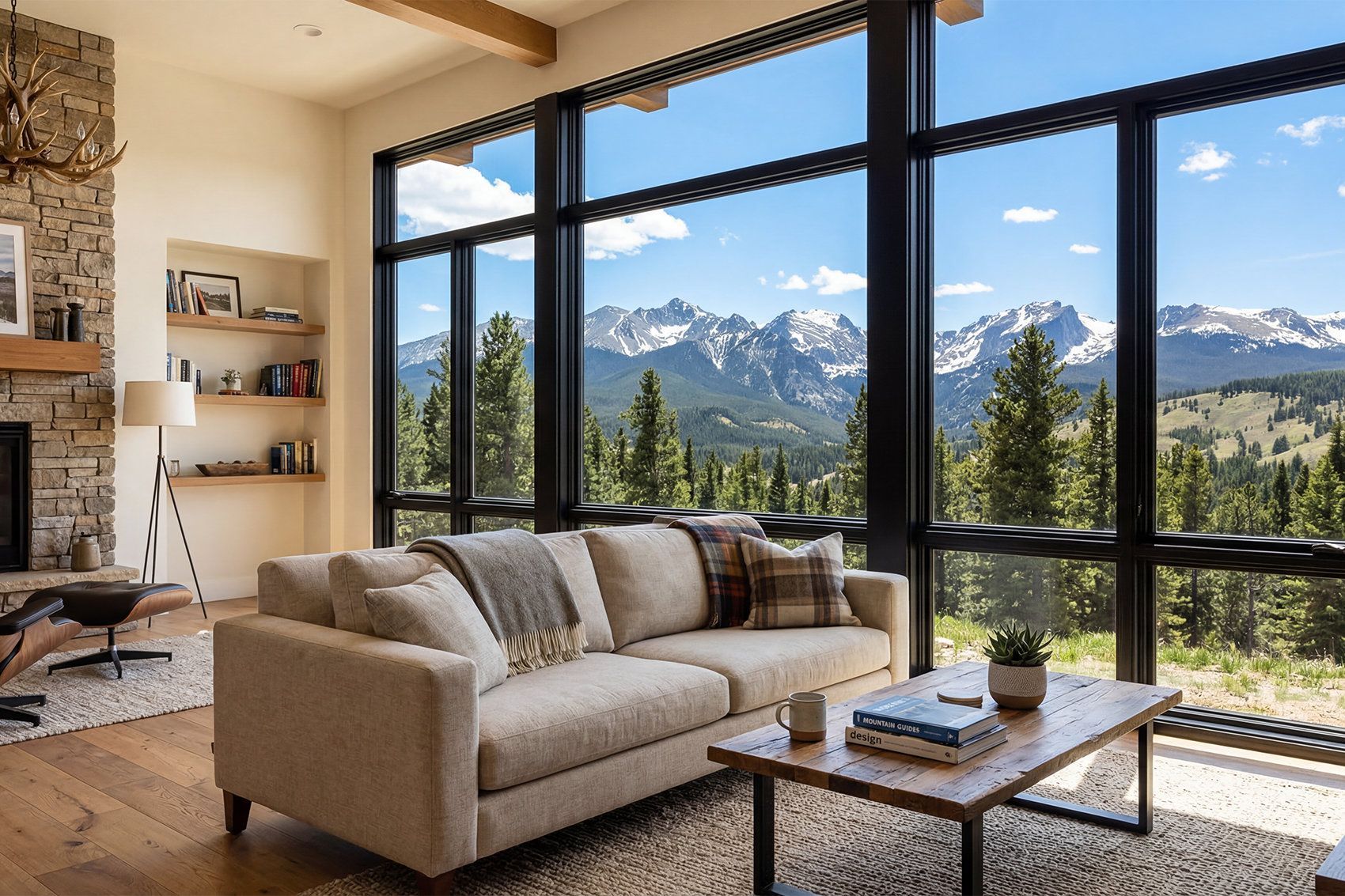
Black window frames have surged in popularity, particularly in contemporary and modern farmhouse designs. The dramatic contrast creates bold architectural statements, emphasizes window placement as design elements, and photographs strikingly against Colorado's blue skies and mountain backdrops.
However, black frames demand careful consideration in Colorado's climate. Maximum UV absorption accelerates thermal stress on both finishes and frame materials. Quality matters enormously - premium factory-applied finishes on materials like aluminum or fiberglass handle the demands far better than painted vinyl or wood. Proper selection ensures the dramatic look you want today remains attractive years from now.
Bronze and dark brown tones offer similar visual impact with somewhat better thermal performance than true black. These warmer darks often complement Colorado's earth tones more naturally than pure black, blending with stone, wood, and stucco exteriors while still providing contemporary contrast.
Natural Wood Tones
For homeowners seeking connection to Colorado's natural environment, wood-tone frames create immediate warmth and regional authenticity. Stained wood interiors paired with weather-resistant exteriors combine the best of both approaches - the natural beauty of wood where you see it daily with durable, low-maintenance performance facing the elements.
Aluminum-clad wood windows excel in this application. The interior wood can be stained to match trim, cabinetry, or flooring, while the aluminum exterior handles UV, moisture, and temperature extremes without the maintenance demands of exposed wood. Color options for the exterior cladding include everything from whites and creams to bronzes and blacks.
True wood frames with exterior stain require regular maintenance in Colorado's climate - typically every few years for UV-exposed surfaces. While beautiful, this maintenance commitment should factor into the decision, particularly for windows in difficult-to-access locations.
Gray Tones
Gray has emerged as a sophisticated middle ground between white's brightness and black's drama. The range of available grays - from warm taupe-grays to cool charcoal - allows fine-tuning to complement specific exterior colors and architectural styles.
Medium grays often integrate particularly well with Colorado's mountain aesthetic, echoing the weathered silver of aged wood, the color of granite and slate, and the tones of overcast skies. They provide more visual interest than white without the thermal challenges of very dark colors.
For contemporary homes, cool grays create sleek, modern appearances. For traditional or rustic properties, warmer gray-browns feel more natural and less industrial.
Matching Frame Colors to Architectural Styles
Mountain and Rustic Architecture
Homes designed to complement mountain settings typically succeed with earth-toned frames - warm browns, bronze, forest green, or natural wood. These colors recede into the landscape rather than competing with it, allowing the home to feel integrated with its surroundings.
Black frames can work in rustic settings when balanced with substantial wood and stone elements, creating contemporary-rustic fusion rather than pure traditional mountain style. The key lies in ensuring the windows feel intentional rather than borrowed from a different architectural vocabulary.
White frames on mountain homes often read as too suburban or coastal unless the overall design intentionally contrasts with the natural setting. If using white in mountain settings, consider creamy off-whites that feel warmer and less stark.
Contemporary and Modern Homes
Modern architecture often employs windows as primary design elements, with frame color choices contributing to the overall composition. Black and dark gray frames emphasize clean lines and create graphic contrast. Large expanses of glass with minimal dark frames achieve the "walls of glass" effect popular in contemporary mountain homes.
For homes prioritizing indoor-outdoor connection, consistent frame colors inside and out create visual continuity. Many contemporary designs specify the same dark finish throughout, unifying the window's appearance from both interior and exterior perspectives.
White or light frames suit modernist designs emphasizing brightness and openness. The key is consistency - modern aesthetics typically benefit from committing to a single frame color throughout rather than mixing choices.
Traditional and Historic Homes
Historic homes often have established precedents for appropriate window colors. Victorian, Craftsman, and early 20th-century styles typically used painted wood frames in whites, creams, or colors coordinated with broader exterior paint schemes.
When replacing windows in historic properties, matching existing trim colors maintains architectural integrity. Many historic color palettes favor deep, saturated tones - forest green, burgundy, navy - that differ from contemporary neutral preferences. Preserving these color relationships honors the original design intent.
For homes in designated historic districts, color choices may require approval from local preservation boards. Even outside formal districts, maintaining period-appropriate colors preserves neighborhood character and often enhances resale appeal.
Frame Materials and Color Performance
Aluminum-Clad Wood
Aluminum-clad wood windows offer the broadest color flexibility with excellent durability. The factory-applied finishes on quality aluminum cladding resist UV degradation, chalk, and fade far better than field-applied paint. Premium manufacturers offer dozens of standard colors plus custom matching capabilities.
The aluminum exterior can be specified in virtually any color - whites, blacks, bronzes, grays, or custom matches - while the interior wood accepts stain or paint for a completely different look inside. This flexibility suits homeowners wanting natural wood interiors with low-maintenance, contemporary-colored exteriors.
Marvin's Signature Ultimate collection exemplifies this approach, offering extensive exterior color options across a wide range of finishes, from historic colors to contemporary palettes. The extruded aluminum cladding handles Colorado's UV and temperature extremes while the interior wood brings warmth to living spaces.
Fiberglass
Fiberglass frames accept paint well and maintain color stability effectively in Colorado's climate. The material's dimensional stability means finishes experience less stress from expansion and contraction than some alternatives.
Factory-finished fiberglass offers excellent color retention. The material's smooth surface accepts finish evenly, and quality manufacturers apply coatings designed for long-term UV resistance. While fiberglass color options were once limited, current offerings include full ranges of whites, grays, browns, and blacks.
Vinyl
Vinyl window color options have expanded considerably, though limitations remain. While white and tan dominated early vinyl offerings, manufacturers now produce vinyl frames in grays, blacks, and wood-grain finishes.
However, darker vinyl colors raise durability concerns in Colorado. Dark pigments absorb more solar energy, and vinyl's thermal expansion characteristics can create problems with very dark colors in intense sun. Some manufacturers void warranties for dark vinyl colors in high-UV environments. If considering dark vinyl frames, verify warranty terms and manufacturer recommendations for Colorado applications.
Interior vs. Exterior Color Considerations
Coordinating Both Sides
Window frames present both interior and exterior faces, creating opportunity for either unified or contrasting color approaches. Some homeowners prefer consistent color inside and out for visual simplicity. Others choose different colors to optimize each view - perhaps a bold exterior color for curb appeal with neutral white interiors that complement any room decor.
Aluminum-clad wood windows handle this dual requirement most elegantly, allowing completely independent color choices for each surface. The wood interior can be stained to match flooring or millwork while the aluminum exterior takes whatever color serves the facade best.
Solid-color frames - whether fiberglass, vinyl, or aluminum - present the same color both inside and out. This simplifies selection but limits flexibility. Consider how your exterior color choice will appear from inside each room before committing.
Interior Impact
Dark window frames create different interior effects than light ones. Black frames make windows feel more prominent as design elements, creating a picture-frame effect that emphasizes views. This dramatic look suits contemporary interiors and rooms with striking vistas.
White and light-colored frames generally make rooms feel larger and brighter by reflecting light and visually receding. They brighten rooms and suit traditional interiors where windows serve functional rather than decorative roles.
Wood-toned interiors add warmth and can be coordinated with other millwork - baseboards, door casings, crown molding - for a cohesive look. This approach works particularly well in homes with substantial wood elements throughout.
Making Your Color Decision
Testing Colors in Context
Never select window frame colors from small samples alone. Colors appear dramatically different depending on lighting, surrounding colors, and scale. Request the largest samples available and view them against your actual exterior in morning, afternoon, and evening light.
If possible, observe existing installations in your area using the colors you're considering. Drive through neighborhoods, noting how different frame colors interact with various siding colors and architectural styles. Pay attention to both what you find attractive and what feels dated or out of place.
Consider photographing your home and digitally testing different frame colors before committing. While digital mockups aren't perfect, they reveal obvious mismatches before expensive decisions are made.
Resale Considerations
While you should ultimately choose colors that please you, extreme or trendy choices may affect future resale. Neutral colors - whites, blacks, bronzes, standard grays - appeal to broader buyer pools than unusual shades. If you might sell within a decade, conventional colors reduce the risk of your windows feeling dated or limiting buyer appeal.
However, homes in distinctive architectural styles often benefit from appropriate period colors rather than generic neutrals. A Craftsman home with historically accurate deep green frames may actually enhance value among buyers seeking authentic character.
Long-Term Satisfaction
Consider how your color preferences might evolve. Trendy colors that feel fresh today may feel dated within years. Classic neutrals - white, black, bronze, natural wood tones - have proven staying power because they relate to natural materials rather than fashion cycles.
If drawn to bolder colors, ensure you're genuinely committed rather than responding to current trends. The best color choice feels right both aesthetically and practically, serving your home well through decades of Colorado seasons.
People Also Ask About Window Frame Colors
What is the most popular window frame color?
White remains the most popular window frame color overall due to its versatility with any architectural style and exterior color scheme. However, black has gained significant market share, particularly for contemporary and modern farmhouse designs. In Colorado specifically, bronze and warm earth tones also rank highly because they complement the regional landscape and mountain architecture.
Do black window frames fade?
Black window frames can fade if the finish quality is inadequate for high-UV environments like Colorado. Quality factory-applied finishes on aluminum, fiberglass, or composite frames resist fading effectively. Painted vinyl and painted wood are more susceptible to UV degradation and may show fading sooner. Choosing premium frame materials with proven finishes minimizes fading concerns.
Should window frames match trim color?
Window frames don't necessarily need to match exterior trim, though coordinating colors creates a cohesive appearance. Many successful designs use contrasting approaches - white trim with black frames, or vice versa - for intentional visual interest. The key is ensuring colors relate harmoniously rather than competing. Interior frames often do match interior trim for continuity.
What window frame color makes rooms look bigger?
White and light-colored frames generally make rooms feel larger and brighter by reflecting light and visually receding. Dark frames create more dramatic visual boundaries, which can make windows appear as deliberate design features but may emphasize room dimensions more strongly. For small rooms, light frames typically serve the space better.
How do I choose window frame color for my house?
Start by identifying your home's architectural style and the established color palette of your exterior. Consider the surrounding landscape and neighborhood context. Test large samples against your actual exterior in various lighting conditions. Factor in practical concerns like UV performance for dark colors and maintenance requirements for different finishes. Finally, consider both current satisfaction and long-term resale implications.
Related Reading
Window frame color is just one element of a successful window upgrade. Material selection affects both the available color options and how well those finishes perform over time in Colorado's demanding environment.
For homeowners evaluating broader home improvements alongside window color decisions, our guide to best upgrades for Colorado homes explores how windows fit within a comprehensive upgrade strategy.
Our Take
At Five Seasons Windows & Doors, we help Colorado homeowners navigate frame color decisions with both aesthetic and practical guidance. Our Marvin Signature Ultimate windows offer extensive color options with factory finishes proven to handle altitude conditions, while Anlin provides quality choices for budget-conscious projects.
We're happy to bring samples to your home for evaluation in your actual setting and lighting. There's no pressure - just honest guidance from a team that understands which colors succeed in Colorado and which ones disappoint.
Final Takeaway
The best window frame colors for Colorado homes balance visual appeal with proven durability under intense UV and temperature extremes. Classic choices - white for versatility, black or bronze for contemporary drama, natural wood tones for warmth - succeed when executed with quality materials and factory finishes designed for high-altitude conditions. Test colors in context, consider both current preferences and long-term satisfaction, and choose frame materials whose finishes can deliver the appearance you want for decades rather than just years.
Get Started Today
Five Seasons Windows & Doors is Colorado’s top-rated local window company with 230+ 5-star reviews. We offer expert advice, no-pressure quotes, and flexible project options — including phased installs. Schedule your consult today.